A common misconception in DeFi is that gas optimization simply means waiting for a cheaper moment to click “Confirm.” Timing matters, but it is only one part of the problem. The larger question is whether a transaction is structured correctly, whether it will achieve the intended result, and whether the wallet is granting more permission than the situation requires. A transaction that costs a few dollars less but fails, swaps at an unfavorable price, or leaves an unnecessarily broad token approval behind is not truly optimized.
For users in the United States moving between decentralized exchanges, lending markets, bridges, and other EVM applications, the practical challenge is therefore three-dimensional: estimate network execution costs, simulate the proposed state change, and manage permissions over time. A browser wallet can help surface these issues, but it cannot remove the underlying risks. The strongest workflow is not “trust the warning” or “always reject.” It is learning what the warning means before deciding.
What gas optimization actually involves
On Ethereum and other EVM-compatible networks, a transaction’s fee is broadly related to two variables: the amount of computation required and the price paid for each unit of that computation. The first is often described as gas used; the second reflects current network conditions and the fee market. A simple token transfer usually consumes less computation than a multi-step interaction with a decentralized exchange, lending protocol, or liquidity pool.
That distinction creates an important mental model. Users can sometimes reduce the fee by choosing a less congested period or a network with lower prevailing costs, but they cannot safely reduce computation by arbitrarily changing a transaction’s parameters. Setting a gas limit too low may cause execution to fail, and a failed transaction can still consume gas because the network performed work before reaching the failure. Conversely, setting a limit higher than necessary does not automatically mean the entire limit will be charged, but it can make a transaction review harder to interpret and may signal that the request deserves closer inspection.
Gas optimization can also happen at the application level. A protocol may batch operations, use more efficient contract logic, or offer a route that completes a swap with fewer calls. Yet the cheapest route is not necessarily the best route. A transaction that uses fewer gas units could expose the user to greater price impact, a less liquid market, additional smart-contract risk, or a more complicated sequence of approvals. Fee minimization is one objective among several, not a universal ranking system.
For that reason, compare the total economic cost rather than the displayed network fee alone. If a route saves a small amount of gas but produces a materially worse exchange rate, the apparent optimization is negative. The same principle applies to repeated approvals: approving once may save a later transaction, but a broad allowance can create a larger security exposure if the approved contract is compromised or if the user interacts with a malicious application.
Why transaction simulation is a decision tool, not a guarantee
Transaction simulation attempts to execute the proposed call against a representation of the current blockchain state before the user signs it. In practical terms, the wallet or supporting service asks: if this contract call were processed now, what would likely happen? The result may show expected token transfers, assets received, assets spent, contract interactions, and possible failure conditions.
This is valuable because raw contract data is difficult for most people to interpret. A transaction may contain a destination address and encoded function parameters that look meaningless in a standard signing window. A simulation translates at least part of that request into a consequence: the user may be exchanging one asset for another, granting a spender permission to move tokens, depositing collateral, or receiving nothing despite paying gas. That last outcome is especially important. A transaction can be technically valid while still being economically or operationally undesirable.
Simulation also helps reveal a subtle distinction between authorization and execution. An approval transaction may not move tokens immediately. Instead, it changes a contract-controlled allowance, allowing a designated spender to transfer tokens later. A swap transaction then uses that permission. Treating the approval and the eventual transfer as the same event obscures the actual risk. The approval changes what another contract is allowed to do; the swap attempts to use that authority for a particular purpose.
Still, simulation is not a crystal ball. The blockchain state can change between simulation and confirmation. A market price may move, liquidity may be consumed, a lending position may cross a threshold, or a contract’s behavior may depend on conditions that are difficult to represent perfectly. Some applications also use complex or upgradeable contracts, and an interface may construct a request that differs from what a user thinks they selected. Simulation improves visibility; it does not certify that an application is trustworthy or that the outcome is guaranteed.
A useful rule is to ask whether the simulated result matches the user’s intent at the level of assets and permissions. If a user expects to spend one token and receive another, an unexpected third-party transfer, a large allowance, an unfamiliar contract, or an empty result should pause the workflow. Warnings are most useful when they provoke a specific question: what state is changing, who can act afterward, and what would happen if the market or contract conditions changed?
Token approvals are permissions that can outlive the transaction
Many ERC-20 tokens use an allowance system. A token holder authorizes a spender—often a protocol contract—to transfer up to a specified amount on the holder’s behalf. This architecture makes DeFi composable, because a decentralized exchange can pull the tokens needed for a trade without requiring the user to manually send them in a separate transaction. The convenience is real, but so is the persistence of the permission.
An approval can remain active after a trade is complete. If the allowance is larger than the amount used, the remaining permission may continue to exist until it is reduced or replaced. This is why “approve the maximum” is not a neutral technical detail. It can reduce repeated approval transactions and sometimes save future gas, but it also grants a broader authority than a one-time transaction requires. The appropriate choice depends on the contract, the user’s confidence in the application, the value at risk, and the likelihood of returning to that protocol.
There is no single approval policy that fits every user. A trader who frequently uses a well-understood application may prioritize fewer transactions and accept a wider allowance. A user testing a new protocol, holding a substantial balance, or interacting through a link whose origin is uncertain may prefer a limited approval or a separate wallet with less capital. The important distinction is between reducing friction and reducing exposure: those goals can point in opposite directions.
Approval management should also be separated from general wallet hygiene. Revoking an allowance can prevent a spender from using that particular permission in the future, but it does not undo transactions already completed, recover funds sent to a wrong address, or repair a compromised private key. Nor does approval revocation prove that an application is safe. It is one control in a broader process that includes verifying the domain, checking the network, reviewing the contract interaction, and maintaining sensible wallet segmentation.
For readers installing a browser wallet, the safest starting point is to use the project’s intended distribution path and inspect every permission request during setup. Those who want to review the installation route can visit the rabby extension download page, then continue to verify that the extension, browser, network, and connected application all match expectations. A wallet’s transaction preview is useful only if the software itself was obtained from a trustworthy source and the user is not being redirected through a deceptive lookalike.
A practical workflow for lower-risk, lower-cost transactions
Before signing, begin with the task rather than the fee. Identify the intended action: swap, deposit, borrow, repay, bridge, stake, or approve. Then check the active network and the asset involved. Network confusion is a basic but costly failure mode; an address or token symbol that looks familiar does not guarantee that the asset is the one intended for the current chain.
Next, inspect the simulated outcome. Look for the assets leaving the wallet, the assets expected to arrive, the contracts involved, and the amount of spending authority being granted. If the result differs from the application’s visible description, do not assume the simulation is merely technical noise. Differences can arise from protocol mechanics, but they can also indicate a malformed request, an unexpected route, or a malicious interface.
Only after the transaction makes sense should gas become the final tuning question. On a busy network, waiting may reduce the fee, but waiting can also change market conditions. For a time-sensitive trade, the cost of delay may exceed the potential gas savings. For a routine approval or a non-urgent transfer, timing is easier to optimize. On an L2 or another EVM chain, fees may be lower, but users still need to account for bridge requirements, liquidity, settlement assumptions, and the possibility that a particular application behaves differently across networks.
Afterward, review approvals periodically. A simple personal policy might be to use limited allowances for unfamiliar protocols, keep long-term holdings away from experimental activity, and revisit permissions after a campaign, trade, or protocol test is finished. This does not eliminate smart-contract risk. It reduces the number of standing permissions that can become relevant if circumstances change.
What to watch as wallet tooling develops
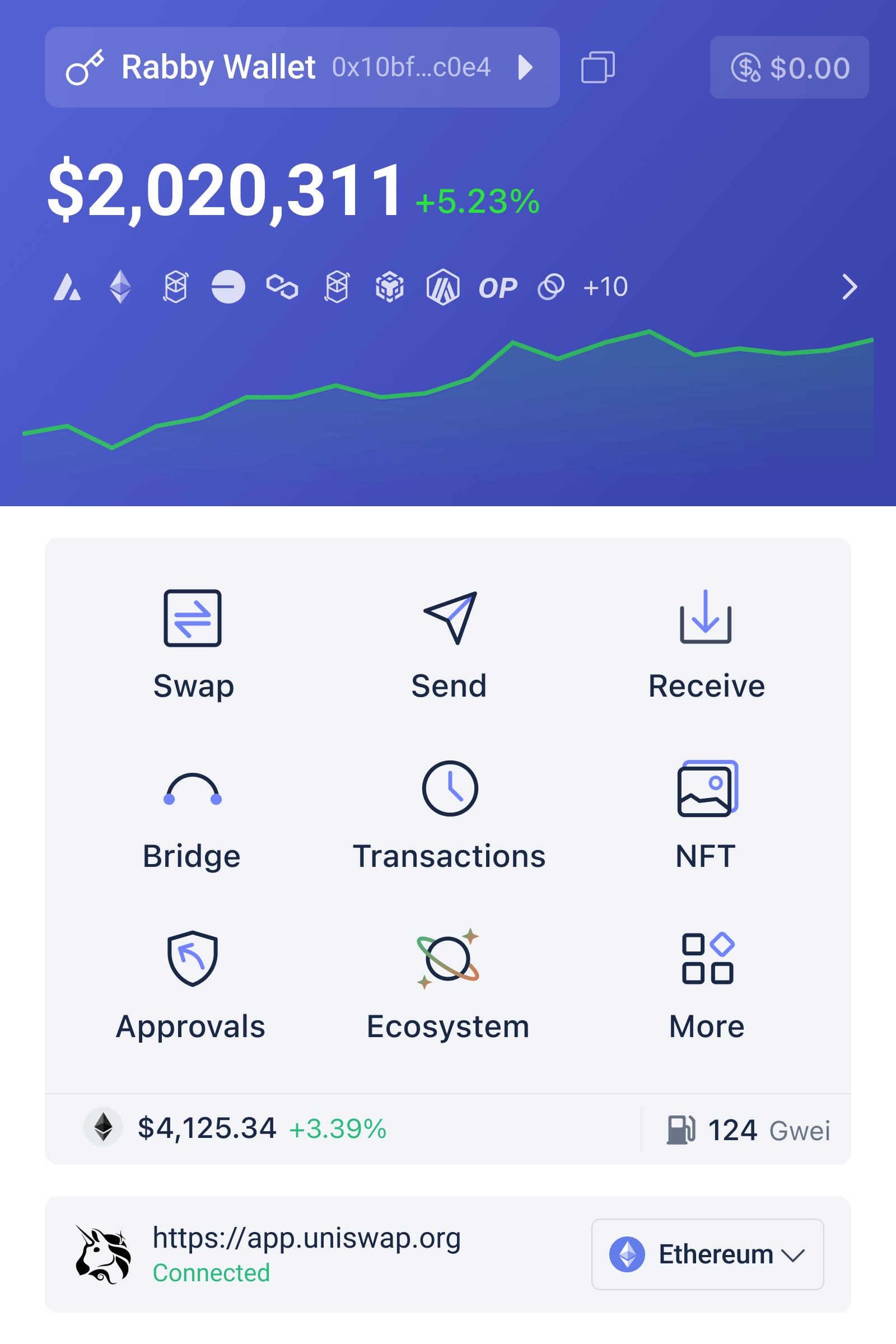
Recent Rabby project messaging positions the wallet around Ethereum and the broader EVM environment, with emphasis on use across many chains and on browser access through Chrome and Brave. The practical implication is that cross-chain visibility matters more than a single-chain fee display. As users move between networks, a useful wallet will need to make chain context, contract identity, expected asset flows, and approval scope easy to compare without encouraging false confidence.
A plausible next step for wallet tooling is more contextual transaction review: not merely “this will cost an estimated fee,” but “this call changes a persistent permission,” “the received amount depends on current market conditions,” or “the transaction includes several contract calls.” Whether such features materially improve safety will depend on their accuracy and on user attention. Too many warnings can become background decoration; too few can leave important distinctions hidden.
The durable lesson is narrower and more useful than the promise of perfect automation. Gas optimization is about choosing an efficient transaction that still achieves the intended outcome. Simulation is about testing that outcome against a changing state. Approval management is about controlling what a contract may do later. When those three ideas are considered together, a wallet becomes less like a button for sending crypto and more like an inspection layer between a user’s intention and a programmable financial system.
FAQ
Does a lower gas estimate mean a transaction is safer?
No. Gas estimates describe expected computational cost, not the honesty of the application or the quality of the economic outcome. A malicious or poorly designed transaction may be inexpensive to execute. Review the destination, simulated asset movements, contract calls, and approval scope separately from the fee.
Should I always revoke token approvals after using a DeFi application?
Not always. Revoking can reduce standing exposure, but it creates another transaction and therefore another fee, and it may be inconvenient for applications you use regularly. Limited approvals are often a reasonable compromise for unfamiliar or high-value interactions. The decision should reflect the value at risk, the contract’s role, and how often you expect to use the application.
Can transaction simulation prevent every wallet drain?
No. Simulation may expose unexpected transfers or permissions, but it cannot guarantee that a contract is safe, that the interface is authentic, or that blockchain conditions will remain unchanged after review. Use it as a structured pre-signing check, not as a substitute for verifying the application and limiting exposure.
Leave a Reply