paksblog | get latest blogs , news

Top 10 universities in pakistan
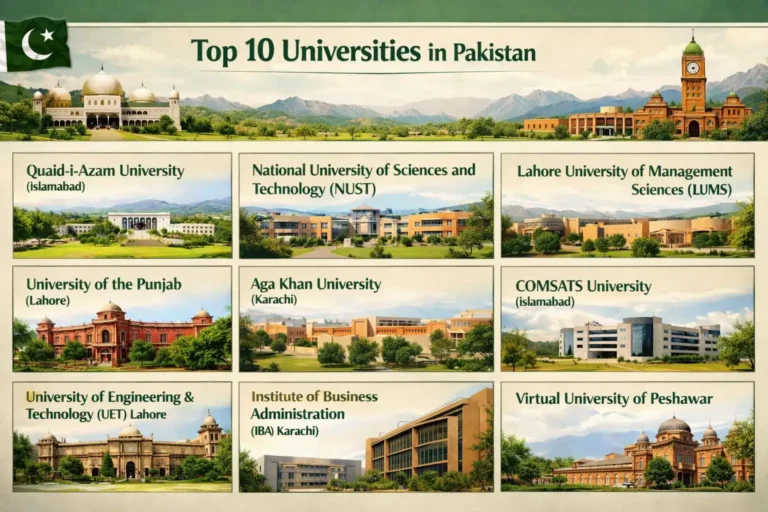
top 10 universities in pakistan

Finding the right university can make or break your academic future. If you’re a student, parent, or education counselor searching for Pakistan’s best higher education options, this guide breaks down the top 10 universities in Pakistan based on academic reputation, research output, and graduate success rates.

We’ll walk you  through how these top 10 universities are ranked and what makes them stand out. You’ll discover which public sector institutions dominate the academic landscape and how private universities are changing the game with innovative programs. We’ll also cover what it takes to get accepted and what career doors these degrees can open for graduates.

Ranking Methodology and Evaluation Criteria

Ranking Methodology and Evaluation Criteria

Academic Reputation and Research Excellence Standards

When evaluating the top 10 universities in Pakistan, academic reputation serves as the cornerstone of assessment. Universities earn recognition through their research output, publication quality, and scholarly contributions to various fields. The Higher Education Commission (HEC) of Pakistan plays a crucial role in monitoring research standards by tracking publications in peer-reviewed journals, citation indices, and the overall impact factor of research produced by faculty members.

Research excellence gets measured through several key indicators. top Universities in pakistan must demonstrate consistent publication records in internationally recognized journals, maintain active research centers, and secure funding for innovative projects. Faculty members are expected to publish regularly in high-impact journals, present their work at international conferences, and collaborate with researchers from other institutions globally. The quality of doctoral programs also reflects academic reputation, as these programs train the next generation of researchers and academics.

Top universities in pakistan compete on research quality by establishing partnerships with international institutions, hosting academic conferences, and creating specialized research institutes. Universities like Quaid-i-Azam University and the University of Punjab have built strong reputations through decades of consistent research output and academic excellence. These institutions maintain libraries with extensive collections, provide access to international databases, and support faculty research through grants and sabbatical programs.

Faculty Qualifications and Student-to-Teacher Ratios

Faculty quality directly impacts the educational experience and learning outcomes at any institution. The Top universities in Pakistan maintain strict hiring standards, requiring faculty members to hold advanced degrees from reputable institutions. Most top-tier universities prefer faculty with Ph.D. qualifications from internationally recognized universities, along with demonstrated teaching and research experience.

Student-to-teacher ratios reveal how much individual attention students can expect to receive. Smaller ratios generally indicate better learning environments, more personalized instruction, and stronger mentorship opportunities. Leading Pakistani universities maintain ratios that allow for meaningful interaction between students and professors, typically ranging from 15:1 to 25:1 depending on the program and department. Universities also invest in faculty development programs to keep their teaching staff current with the latest developments in their fields. These programs include funding for conference attendance, research sabbaticals, and continuing education opportunities. Faculty members are encouraged to pursue additional certifications, attend workshops, and engage in collaborative research projects that enhance their teaching capabilities.

Infrastructure Quality and Campus Facilities Assessment

Modern educational infrastructure creates an environment where learning and research can flourish. Top universities invest heavily in state-of-the-art laboratories, well-equipped classrooms, and comprehensive library systems. These facilities must support both undergraduate education and graduate research programs across multiple disciplines.

Campus facilities extend beyond academic buildings to include student services, recreational areas, and residential accommodations. Top Universities in pakistan  are evaluated on their ability to provide comfortable learning environments, reliable internet connectivity, and spaces that encourage both study and social interaction. Modern campuses feature computer labs with current software, science laboratories with updated equipment, and libraries with both physical and digital resources.

Safety and accessibility also factor into infrastructure assessments. Top Universities must provide secure campuses with proper lighting, security personnel, and emergency response systems. Facilities should accommodate students with disabilities and provide equal access to all educational resources.

International Recognition and Accreditation Status

International recognition validates the quality of education and research at Pakistani universities. Various global ranking systems, including QS World University Rankings, Times Higher Education, and Academic Ranking of World Universities, evaluate Pakistani institutions based on multiple criteria including academic reputation, employer reputation, and international collaboration.
Accreditation from professional bodies adds credibility to specific programs. Business schools seek accreditation from organizations like AACSB or EQUIS, while engineering programs aim for recognition from bodies like the Pakistan Engineering Council or international equivalents. These accreditations ensure that graduates meet global standards and can compete in international job markets.
Universities also pursue partnerships with international institutions to enhance their global standing. Exchange programs, joint degree offerings, and collaborative research projects all contribute to international recognition. These partnerships expose students to global perspectives and provide faculty with opportunities for international collaboration and research.

Public Sector Universities Leading Excellence
public sector universities

University of Punjab's comprehensive academic programs

The University of Punjab stands as Pakistan’s oldest and most prestigious public institution, consistently ranking among the top 10 universities in Pakistan. Founded in 1882, this Lahore-based university has built an impressive reputation through its extensive range of academic offerings spanning virtually every field of study.

With over 800 affiliated colleges across Punjab province, the university serves as the backbone of higher education in the region. The main campus alone houses 13 faculties covering everything from traditional sciences and humanities to cutting-edge technology and business studies. Students can choose from more than 300 degree programs at undergraduate, graduate, and doctoral levels.
The Faculty of Engineering and Technology attracts thousands of aspiring engineers annually, offering specialized programs in computer science, electrical engineering, mechanical engineering, and emerging fields like artificial intelligence. The business school has gained particular recognition for producing successful entrepreneurs and corporate leaders who now lead major companies across Pakistan and internationally.
Medical education remains one of Punjab University’s strongest offerings. The King Edward Medical University, affiliated with Punjab University, trains hundreds of doctors each year and maintains some of the country’s top medical research facilities. The university’s dental college and pharmacy programs also enjoy excellent reputations.
The institution’s liberal arts programs deserve special mention. The departments of English, Urdu, philosophy, and political science have produced renowned scholars, writers, and public intellectuals who have shaped Pakistan’s cultural and political landscape. The psychology department pioneered mental health research in the country and continues leading initiatives in clinical and social psychology.

Quaid-i-Azam University's research achievements

Quaid-i-Azam University in Islamabad has earned its place among Pakistan’s elite institutions through groundbreaking research initiatives and academic excellence. Quaid-i-Azam universities ranking on Top 10 universities in pakistan, Since its establishment in 1967, the university has consistently pushed the boundaries of scientific discovery and scholarly research.

The physics department has gained international recognition for its work in theoretical physics and materials science. QAU researchers have published extensively in top-tier international journals and collaborate with leading institutions worldwide, including CERN and various European research centers. The university’s particle physics research group has made significant contributions to understanding fundamental particles and their interactions.
In biotechnology and life sciences, QAU leads Pakistan’s research efforts in genetic engineering, molecular biology, and pharmaceutical development. The university’s labs have developed several important medical compounds and continue working on treatments for diseases prevalent in South Asia. Their work on plant genetics has helped develop drought-resistant crop varieties crucial for Pakistan’s agricultural sector.
The mathematics department has produced some of Pakistan’s most accomplished mathematicians, with faculty and graduates contributing to fields ranging from pure mathematics to applied computational sciences. Several QAU mathematics graduates now hold prominent positions at universities in Europe and North America.
Social sciences research at QAU has significantly influenced policy-making in Pakistan. The economics department’s work on development economics, poverty alleviation, and fiscal policy has guided government initiatives. The international relations department provides crucial analysis on regional security issues and Pakistan’s foreign policy challenges.

University of Karachi's diverse educational offerings

The University of Karachi serves as the educational hub for Pakistan’s largest city and economic center, offering an incredibly diverse range of programs that reflect Karachi’s cosmopolitan character. With over 24 faculties and institutes, the university caters to students from all socioeconomic backgrounds and academic interests.

The business administration programs at Karachi University have strong ties to the city’s vibrant commercial sector. Students benefit from internships and job placements with multinational corporations, banks, and trading companies headquartered in Karachi. The MBA program regularly attracts working professionals seeking to advance their careers in finance, marketing, and operations management.
Marine sciences represent one of the university’s unique strengths. Given Karachi’s coastal location, the Institute of Marine Sciences conducts vital research on Arabian Sea ecosystems, fisheries management, and oceanography. This research directly supports Pakistan’s fishing industry and coastal environmental protection efforts.
The university’s journalism and mass communication department has trained generations of media professionals who now work for major news organizations across Pakistan and internationally. The program combines theoretical knowledge with practical training at the university’s own radio station and media labs.
Computer science and information technology programs have expanded rapidly to meet growing demand from Karachi’s tech sector. The university maintains partnerships with software companies and provides students with hands-on experience in programming, database management, and cybersecurity. Many graduates have founded successful startups or joined major technology firms.
Pharmacy and pharmaceutical sciences programs address the healthcare needs of Pakistan’s largest urban population. Students gain practical experience at Karachi’s numerous hospitals and pharmaceutical manufacturing facilities, preparing them for careers in clinical pharmacy, drug development, and pharmaceutical management.

Private Universities Setting New Standards

Private Universities Setting New Standards

Lahore University of Management Sciences Innovation Focus

LUMS stands out as Pakistan’s premier private institution, consistently pushing boundaries in academic excellence and research innovation. The university has built its reputation on fostering entrepreneurial thinking and creating leaders who drive change across multiple sectors. With its strong emphasis on liberal arts education combined with cutting-edge business and technology programs, LUMS is widely recognized among the top IT universities in Pakistan, attracting the brightest minds from across the country and neighboring regions.

The school’s Suleman Dawood School of Business regularly ranks among the top business schools in Asia, offering MBA programs that rival international standards. Students engage with real-world business challenges through case-study methodologies and direct partnerships with multinational corporations. The university’s startup incubator has launched over 200 companies, generating millions in revenue and creating thousands of jobs.
Research initiatives at LUMS span artificial intelligence, renewable energy, and social entrepreneurship. Faculty members collaborate with international universities and publish in top-tier journals, bringing global perspectives to Pakistani students. The campus itself serves as a living laboratory for sustainable practices and innovative teaching methods.

Aga Khan University's Medical Education Leadership

Aga Khan University has revolutionized medical education in Pakistan since its establishment, setting benchmarks that other institutions strive to achieve. The Medical College produces doctors who are immediately ready for international practice, with graduates securing residencies in prestigious hospitals across North America, Europe, and the Middle East.
The university’s teaching hospital serves as both a training ground for medical students and a beacon of healthcare excellence for the region. Advanced simulation laboratories allow students to practice complex procedures in risk-free environments before treating actual patients. This hands-on approach, combined with rigorous theoretical training, creates exceptionally competent healthcare professionals.
International accreditations from bodies like the Liaison Committee on Medical Education validate AKU’s programs, ensuring graduates meet global standards. The university’s research output in medical sciences contributes significantly to healthcare knowledge, particularly in areas relevant to developing countries such as infectious diseases and maternal health.

Institute of Business Administration Karachi's Business Programs

IBA Karachi holds the distinction of being Pakistan’s oldest business school, with a legacy spanning over six decades of producing corporate leaders and entrepreneurs. The institution’s alumni network reads like a who’s who of Pakistani business, with graduates leading major corporations, banks, and government institutions.
The school’s undergraduate and graduate programs blend traditional business education with contemporary market realities. Faculty members bring extensive industry experience into classrooms, ensuring students learn from practitioners who understand current market dynamics. Case studies often focus on Pakistani and regional business scenarios, making learning immediately applicable
Corporate partnerships provide students with internship opportunities at leading companies, often resulting in job offers before graduation. The school’s placement record consistently shows employment rates exceeding 95%, with graduates commanding competitive starting salaries. Executive education programs serve working professionals seeking career advancement, further strengthening industry connections.

COMSATS University's Technology and Engineering Strengths

COMSATS University has emerged as a technological powerhouse, producing engineers and computer scientists who drive Pakistan’s digital transformation. With campuses across major cities, the university makes quality technical education accessible to students nationwide while maintaining consistent academic standards.
The computer science and engineering programs emphasize practical problem-solving skills alongside theoretical knowledge. Students work on projects addressing real Pakistani challenges, from developing mobile applications for agricultural communities to designing renewable energy solutions for rural areas. This approach creates graduates who understand how technology can improve lives and drive economic development.
Industry collaborations with tech companies provide students access to cutting-edge tools and methodologies. Many graduates join leading software houses or launch their own tech startups, contributing to Pakistan’s growing reputation as a regional technology hub. The university’s research centers focus on emerging technologies like blockchain, machine learning, and cybersecurity, positioning Pakistan at the forefront of technological advancement.

Specialized Institutions for Professional Development

Specialized Institutions for Professional Development

National University of Sciences and Technology's engineering excellence

NUST has carved out a reputation as Pakistan’s premier destination for engineering education. The university’s School of Mechanical and Manufacturing Engineering produces graduates who go on to work for major multinational corporations and lead innovative projects across the globe. What sets NUST apart is its commitment to hands-on learning through state-of-the-art laboratories and industry partnerships.
The electrical engineering program at NUST deserves special recognition for its cutting-edge curriculum covering renewable energy systems, robotics, and telecommunications. Students work on real-world projects during their final year, often collaborating with companies like Pakistan Telecommunication Company Limited and K-Electric. This practical approach ensures graduates hit the ground running in their careers.
NUST’s aerospace engineering program stands out as one of the few in the region, preparing students for Pakistan’s growing aviation and space technology sectors. The university’s wind tunnel facility and flight simulator give students invaluable experience before they enter the workforce. Many alumni now work for Pakistan International Airlines, Pakistan Air Force, and international aerospace companies.
The computer science department has gained recognition for its artificial intelligence and cybersecurity research. Faculty members regularly publish in top-tier international journals, and students participate in global programming competitions like ACM-ICPC. The department’s strong ties with Silicon Valley companies have created pathways for students to secure internships and full-time positions abroad.

Pakistan Institute of Engineering and Applied Sciences research contributions

PIEAS operates as a unique institution focusing on nuclear science, engineering, and technology research. As part of the Pakistan Atomic Energy Commission, the institute plays a crucial role in the country’s nuclear program while maintaining high academic standards. The physics department conducts groundbreaking research in particle physics and has collaborations with CERN, the European Organization for Nuclear Research.
The nuclear engineering program at PIEAS produces specialists who work in Pakistan’s nuclear power plants and research facilities. Students gain hands-on experience with reactor technology and radiation safety protocols. The institute’s research reactor provides an unparalleled learning environment that few universities worldwide can match. Graduates often pursue advanced degrees at prestigious international institutions or join Pakistan’s nuclear regulatory bodies.
PIEAS has made significant contributions to materials science research, particularly in developing advanced materials for nuclear applications. The institute’s laboratories house sophisticated equipment for characterizing materials at the atomic level. Faculty members collaborate with international researchers on projects funded by organizations like the International Atomic Energy Agency.
The computer science and information technology department at PIEAS focuses on applications in nuclear and engineering fields. Students develop software for nuclear reactor simulations, radiation monitoring systems, and scientific data analysis. This specialized focus gives graduates a competitive edge in high-tech industries requiring security clearances and technical expertise.

University of Health Sciences medical training programs

The University of Health Sciences in Lahore has established itself as a leader in medical education and healthcare training across Pakistan. The university oversees medical education standards for numerous affiliated colleges, ensuring consistent quality in doctor training programs. Its medical colleges produce thousands of qualified physicians each year who serve in hospitals, clinics, and research institutions throughout the country.
The nursing programs offered through UHS affiliates address Pakistan’s critical shortage of qualified healthcare professionals. These programs combine theoretical knowledge with extensive clinical rotations in major teaching hospitals. Students learn modern nursing practices, patient care techniques, and healthcare management skills that prepare them for leadership roles in medical facilities.
UHS has pioneered telemedicine and digital health initiatives in Pakistan’s medical education landscape. The university’s e-learning platforms allow medical students in remote areas to access high-quality lectures and training materials. This approach has democratized medical education and helped address healthcare disparities between urban and rural regions.
The university’s research initiatives focus on diseases prevalent in South Asia, including hepatitis, diabetes, and cardiovascular conditions. Medical students participate in research projects that directly impact public health policy and treatment protocols. Many graduates go on to specialize in fields like cardiology, oncology, and infectious diseases, contributing to Pakistan’s medical expertise pool.

Regional Distribution and Geographic Accessibility

regoinal distribution and geographical accessbility

Punjab Province Educational Hubs and Opportunities

Punjab stands as Pakistan’s educational powerhouse, housing some of the most prestigious institutions that consistently rank among the top 10 universities in Pakistan. The province’s capital, Lahore, serves as the primary academic center with legendary institutions like the University of the Punjab, established in 1882, and Lahore University of Management Sciences (LUMS), which has gained international recognition for its business and engineering programs.
The University of Engineering and Technology (UET) Lahore has carved out a stellar reputation in technical education, producing engineers who contribute significantly to Pakistan’s infrastructure development. Government College University Lahore, with its rich heritage dating back to 1864, continues to attract students nationwide with its comprehensive academic offerings and beautiful colonial architecture.
Islamabad, though technically in the federal territory, complements Punjab’s educational landscape with Quaid-i-Azam University and the National University of Sciences and Technology (NUST). These institutions benefit from the capital’s proximity to government resources and international organizations, creating unique opportunities for research collaboration and policy engagement.
The University of Agriculture Faisalabad specializes in agricultural sciences and plays a crucial role in Pakistan’s food security initiatives. Students here gain practical experience through extensive farmland and research facilities that directly impact the country’s agricultural sector.

Sindh Region University Options and Advantages

Karachi, Pakistan’s largest city and economic hub, hosts several universities that make it to the top rankings. The University of Karachi, established in 1951, remains one of the largest universities in the country, offering diverse programs from humanities to natural sciences. Its alumni network spans across industries, providing excellent networking opportunities for graduates.

The Aga Khan University stands out as a premier private institution with world-class medical and nursing programs. Its hospital and research facilities attract students from across South Asia, and its graduates often secure positions in leading healthcare institutions globally. The university’s emphasis on research and community service creates well-rounded professionals who make significant contributions to healthcare.
Sindh Madressatul Islam University, one of the oldest institutions in the region, offers traditional academic programs with modern teaching methodologies. The Institute of Business Administration (IBA) Karachi has built a strong reputation in business education, with many of its graduates leading major corporations in Pakistan and abroad.
NED University of Engineering and Technology provides excellent engineering education with strong industry connections throughout Karachi’s industrial sector. Students benefit from internship opportunities in the city’s numerous manufacturing and technology companies.

Khyber Pakhtunkhwa and Balochistan Emerging Institutions

The University of Peshawar, established in 1950, serves as the educational cornerstone of Khyber Pakhtunkhwa. With programs spanning multiple disciplines, it has been instrumental in developing the human resources of the region. The university’s strategic location near the Afghan border provides unique opportunities for research in regional studies and international relations.
The University of Engineering and Technology Peshawar focuses on technical education tailored to the region’s infrastructure needs. Students here often work on projects related to hydroelectric power, mining, and construction – industries that are vital to the province’s economic development.

In Balochistan, the University of Balochistan in Quetta represents the primary higher education institution serving the largest province by area. Despite facing geographical and resource challenges, the university has made significant strides in providing quality education to students from remote areas. Its programs in geology and mining engineering align perfectly with the province’s rich mineral resources.

These emerging institutions face unique challenges including security concerns, limited resources, and geographical isolation. However, they also offer distinct advantages such as smaller class sizes, personalized attention from faculty, and direct connections to local industries and government initiatives. Students who choose these universities often find themselves at the forefront of regional development projects and have opportunities to make immediate, tangible impacts on their communities.
The geographic distribution of quality higher education across Pakistan ensures that students from different regions can access excellent academic opportunities while staying connected to their cultural roots and local development needs.

Admission Requirements and Application Process
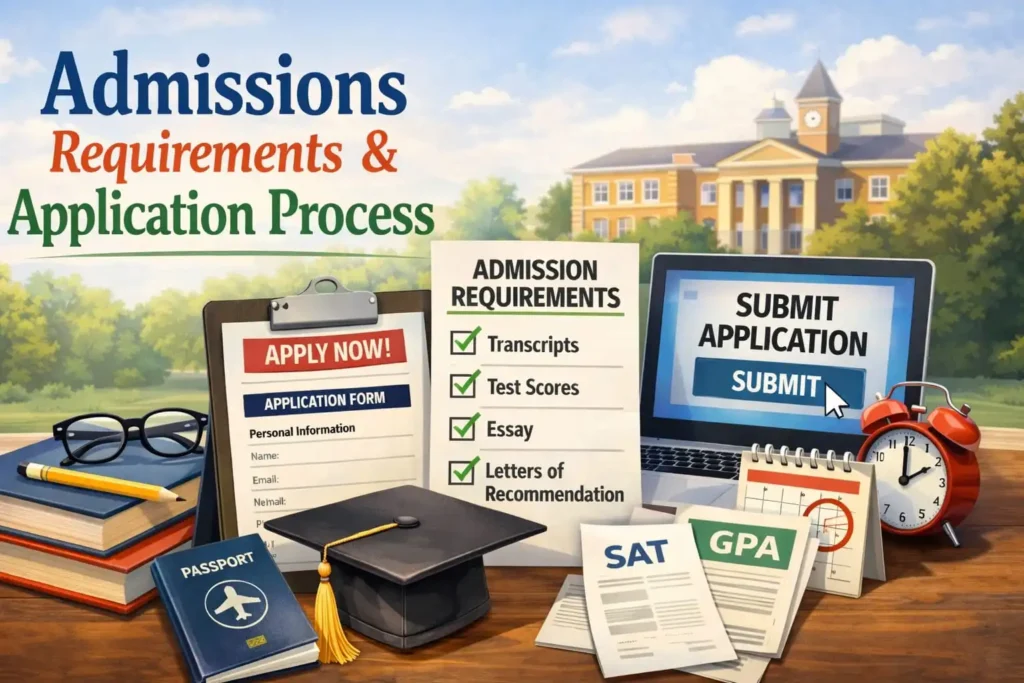
admission requirment & application process

Entry test requirements and preparation strategies

Getting into the top 10 universities in Pakistan requires clearing specific entry tests that vary by institution and field of study. Most universities conduct their own standardized tests, while some accept national-level examinations like the Higher Education Commission (HEC) approved tests.

University-specific tests dominate the admission landscape. Lahore University of Management Sciences (LUMS) administers the LUMS Admission Test (LAT), covering mathematics, English, and analytical reasoning. The University of Engineering and Technology (UET) requires passing the Engineering College Admission Test (ECAT) for technical programs. Medical colleges under universities like King Edward Medical University mandate the Medical College Admission Test (MCAT).

Test formats and content areas typically include:

  • Quantitative reasoning and mathematics
  • English language proficiency
  • Subject-specific knowledge (for specialized programs)
  • Analytical and logical reasoning
  • General knowledge and current affairs
  • Preparation strategies that successful candidates follow include starting preparation at least 6-8 months before test dates. Many students enroll in coaching academies or online preparation courses. Past papers and mock tests prove invaluable for understanding question patterns and time management. Regular practice with timed conditions helps build exam confidence.
Popular preparation resources include Kips Academy materials, Dogar Publishers’ test series, and online platforms offering practice questions. Subject-wise preparation books for mathematics, physics, chemistry, and English are readily available in bookstores across major cities.

Merit-based selection criteria and documentation

Universities evaluate candidates through comprehensive merit calculations that combine multiple factors. Academic performance carries significant weight, typically accounting for 50-70% of the final merit score.

Academic record evaluation focuses on:

  • Matriculation (SSC) marks with specific weightage

  • Intermediate (HSSC) or equivalent examination scores

  • Relevant subject performance for chosen fields

Documentation requirements include:

  • Original and attested copies of educational certificates

  • Detailed mark sheets from matriculation and intermediate

  • National identity card or B-Form

  • Domicile certificate for quota considerations

  • Character certificate from the last attended institution

  • Medical fitness certificate (for specific programs)

  • Passport-size photographs

Merit calculation formulas vary across institutions. A typical breakdown might allocate 40% weightage to matriculation marks, 50% to intermediate scores, and 10% to entry test performance. Some universities adjust these percentages based on program competitiveness.

Reserved seats and quotas play important roles in admissions. Universities maintain quotas for rural areas, different provinces, disabled students, and specific regions. Understanding quota eligibility can significantly impact admission chances for qualifying candidates.

International student admission procedures

International applicants face additional requirements and procedures when applying to Pakistani universities. The process involves credential evaluation, visa arrangements, and specific documentation protocols.
Credential equivalency represents the first major step. The Higher Education Commission evaluates foreign academic credentials to determine their Pakistani equivalent. This process requires submitting original transcripts, degree certificates, and detailed course descriptions to HEC’s equivalence committee

Required documentation for international students includes:

  • Passport copies with valid visa status

  • Educational transcripts with official translations

  • HEC equivalence certificate

  • Financial support documentation

  • Health insurance coverage proof

  • No-objection certificate from home country (if applicable)

Application timelines for international students typically open earlier than domestic admissions. Universities recommend starting the application process 8-10 months before intended enrollment dates to allow sufficient time for documentation processing and visa arrangements.

Financial considerations include tuition fees, living expenses, and currency conversion factors. Many universities offer installment payment plans for international students. Scholarship opportunities exist through government programs like the Pakistan Higher Education Commission scholarships and bilateral educational agreements between countries.

Student visa requirements involve coordination with Pakistani embassies or consulates in home countries. Universities often provide admission letters and support documentation needed for visa applications. The student visa process typically takes 4-6 weeks after submitting complete applications.

Career Prospects and Alumni Success Stories

Employment Rates and Industry Placement Statistics

Top universities in pakistan consistently deliver impressive employment outcomes, with graduates from leading institutions securing positions across diverse sectors. Engineering programs from universities like NUST and LUMS report placement rates exceeding 85% within six months of graduation, while business and management graduates achieve similar success rates. The technology sector has become a major employer, with software engineering and computer science graduates finding opportunities in both local startups and multinational corporations.

Medical graduates from universities such as Aga Khan University and King Edward Medical University enjoy near-universal placement, with many securing residency positions in prestigious hospitals both domestically and internationally. The pharmaceutical and healthcare industries actively recruit from these institutions, recognizing their rigorous academic standards.
Banking and finance sectors heavily recruit from IBA Karachi and LUMS, with major institutions like Habib Bank Limited, MCB Bank, and Standard Chartered offering structured graduate programs. These partnerships ensure students transition smoothly from academic environments to professional careers.
Manufacturing and industrial sectors, including textiles, automotive, and energy companies, regularly hire from universities like UET Lahore and NED University. These institutions maintain strong connections with industry leaders, facilitating internship programs that often convert into full-time positions.

Notable Graduates and Their Professional Achievements

Top universities in pakistan have produced remarkable alumni who’ve made significant contributions across various fields. LUMS graduate Jehan Ara founded P@SHA, Pakistan’s premier IT industry association, driving the country’s digital transformation agenda. Her work has positioned Pakistan as a competitive player in the global technology landscape.

Dr. Shamshad Akhtar, a graduate of Punjab University, served as Executive Secretary of the United Nations Economic and Social Commission for Asia and the Pacific, demonstrating the international caliber of Pakistani university graduates. Her contributions to economic policy and development have earned global recognition.
From the business world, Jahangir Khan Tareen, an alumnus of Government College University, built one of Pakistan’s largest sugar and agriculture empires, showcasing entrepreneurial excellence. Similarly, Arif Naqvi from LUMS founded Abraaj Group, once one of the largest private equity firms in emerging markets.
The entertainment industry has been enriched by graduates like Mahira Khan from the National College of Arts, who became Pakistan’s most recognizable actress internationally. Her success demonstrates the diverse career paths available to university graduates.
Technology sector leaders include Ali Gul from FAST University, who co-founded Rozee.pk, Pakistan’s leading job portal. Such success stories inspire current students and highlight the entrepreneurial opportunities available to graduates.

Networking Opportunities and Career Development Support

Top Universities in pakistan actively foster professional networks through alumni associations, mentorship programs, and industry partnerships. LUMS maintains an extensive global alumni network with chapters across major international cities, facilitating career opportunities for graduates worldwide. Regular networking events connect students with industry professionals, creating valuable mentoring relationships.
Career development centers at top universities offer comprehensive support services, including resume writing workshops, interview preparation sessions, and professional skill development programs. These centers maintain databases of job opportunities and coordinate campus recruitment drives where leading companies interview final-year students.

Student societies and professional clubs provide platforms for networking and skill development. Business schools organize case competitions, bringing together students with industry experts and potential employers. Engineering schools conduct technical symposiums where students present projects to industry panels.

International exchange programs and partnerships with foreign universities expand networking opportunities globally. Students participating in these programs often secure international internships and job offers, building careers that span multiple countries.

Salary Expectations and Job Market Advantages

Starting salaries for graduates from top Pakistani universities vary significantly by field and location. Engineering graduates typically earn between PKR 50,000 to 80,000 monthly in entry-level positions, with rapid growth potential. Software engineers command premium salaries, often starting at PKR 70,000 to 100,000, reflecting the high demand for technical skills.
Business graduates entering banking or consulting roles can expect starting salaries ranging from PKR 60,000 to 90,000, with performance-based bonuses adding substantial value. Management trainees at multinational corporations often receive comprehensive packages including housing allowances and health benefits.
Medical graduates beginning residency programs earn modest starting salaries but have excellent long-term earning potential. Specialists and consultants in private practice can earn substantial incomes, with successful practitioners earning millions monthly.
The job market advantages for graduates from prestigious universities include enhanced credibility with employers, access to exclusive recruitment opportunities, and faster career progression. Many companies specifically target these institutions for their hiring needs, recognizing the quality of education and caliber of graduates. This institutional reputation opens doors that might otherwise remain closed, providing significant career advantages throughout professional life.

Conclusion

conclusion about top 10 universities in pakistan
Pakistan’s higher education landscape offers incredible opportunities across public powerhouses like University of Punjab and LUMS, innovative private institutions, and specialized colleges that excel in specific fields. The country’s top universities span from Karachi to Lahore to Islamabad, making quality education accessible no matter where you live. These institutions consistently produce graduates who go on to lead major corporations, start successful businesses, and make meaningful contributions both locally and internationally.
If you’re planning your academic journey, take time to research each university’s strengths, admission requirements, and campus culture. Don’t just chase rankings – find the place that matches your career goals, learning style, and personal values. Whether you’re drawn to research opportunities, industry connections, or specific programs, Pakistan’s top universities have something special to offer every ambitious student ready to shape their future.

1 thought on “top 10 universities in pakistan”

  1. Pingback: Best IT Universities in Pakistan | Top Tech Institutes 2026

Comments are closed.