Negli ultimi dieci anni i pagamenti prepagati hanno conquistato una fetta sempre più ampia del mercato dei giochi d’azzardo online. Giocatori attenti alla privacy, a coloro che preferiscono non collegare direttamente il proprio conto bancario a un sito di scommesse, e i neofiti che temono le complicazioni delle verifiche KYC, trovano in voucher, carte virtuali e codici moneta un’alternativa comoda e, soprattutto, anonima. Questa tendenza è stata alimentata anche dalle normative europee più stringenti in materia di antiriciclaggio e protezione dei dati, che hanno spinto gli operatori a cercare soluzioni “senza conto” ma comunque sicure.
Il collegamento tra anonimato e festività è più evidente di quanto si creda. Con l’avvicinarsi del Capodanno, i migliori casino online lanciano promozioni spettacolari e jackpot che superano i cinque milioni di euro. Per chi vuole partecipare a queste offerte senza rivelare la propria identità, i pagamenti prepagati rappresentano il veicolo ideale. Un punto di riferimento pratico per approfondire le opzioni disponibili è il sito casino non aams, dove è possibile trovare guide aggiornate sui metodi di deposito più discreti.
1. Evoluzione storica dei metodi di pagamento prepagati nei casinò online
Le prime carte prepagate risalgono alla fine degli anni ’90, quando i provider di telecomunicazioni cominciarono a distribuire “gift card” per ricaricare minuti telefonici. I casinò online, allora ancora agli albori, le adottarono per offrire ai giocatori una via d’uscita dalle tradizionali carte di credito, ancora poco diffuse in Europa. I primi voucher erano semplici codici stampati su fogli di plastica, da inserire nella sezione “Deposito” del sito.
Con l’avvento del 2001, l’Unione Europea introdusse la Direttiva sulla privacy (e‑privacy) e, poco dopo, la normativa antiriciclaggio (AML). Queste regole imponevano ai casinò di verificare l’identità degli utenti, ma allo stesso tempo consentivano l’uso di metodi “cash‑to‑code” che non richiedevano un collegamento diretto a un conto bancario. Gli operatori risposero con lanciare programmi di pagamento “senza conto”, basati su voucher digitali, carte prepagate ricaricabili e, più recentemente, su soluzioni basate su blockchain.
Il fattore trainante è stato il desiderio dei giocatori di mantenere separata la vita finanziaria dalla passione per il gioco. L’anonimato, però, non è più un lusso ma una necessità percepita, soprattutto in paesi dove le legislazioni sul gioco d’azzardo sono restrittive. La crescente diffusione degli smartphone ha poi accelerato l’adozione di wallet digitali, rendendo possibile l’acquisto di codici Paysafecard o di criptovalute in pochi click, direttamente dal dispositivo mobile.
Anno
Metodo prepagato
Caratteristiche chiave
Mercato dominante
1999
Gift card telefoniche
Codice a 10 cifre, ricaricabile con contanti
Italia, Germania
2004
Paysafecard
Cash‑to‑code, 16 cifre, nessuna verifica KYC
UE, Nord America
2012
Carte prepagate Visa/Mastercard
Numero carta, PIN, limite giornaliero
Globale
2018
Criptovalute (BTC, ETH)
Wallet anonimo, conferma blockchain
Asia, USA
2022
Wallet AI‑driven (es. TokenPay)
Tokenizzazione, biometric login
UE, Australia
Le normative europee hanno influito in maniera decisiva: la PSD2 ha introdotto l’autenticazione forte del cliente, ma ha lasciato spazio a soluzioni che operano al di fuori del circuito bancario tradizionale, mantenendo così l’anonimato del giocatore. Oggi, i migliori casino online offrono una gamma di metodi prepagati che risponde sia alle esigenze di sicurezza sia a quelle di privacy.
2. Paysafecard: la svolta dell’anonimato nel 2004 e il suo percorso fino al 2024
Paysafecard nasce in Austria nel 2004 con l’obiettivo di trasformare il contante in codice digitale. Il modello “cash‑to‑code” consente di acquistare un voucher da 10 € a 100 € presso punti vendita fisici – tabaccai, supermercati e stazioni di servizio – senza fornire dati personali. Il codice a 16 cifre viene poi inserito nella pagina di deposito del casinò, e il denaro è immediatamente disponibile per il gioco.
Nel primo quinquennio, la diffusione di Paysafecard è stata trainata dal mercato tedesco e francese, dove le restrizioni sui pagamenti online erano più rigide. Secondo le statistiche di settore, entro il 2010 più del 30 % delle transazioni in siti non AAMS proveniva da voucher Paysafecard. L’espansione verso il Nord America è avvenuta nel 2013, grazie a partnership con catene di convenience che hanno introdotto i punti di ricarica nei supermercati statunitensi. In Asia, l’adozione è stata più lenta, ma dal 2018 le vendite di voucher in Giappone e Corea del Sud hanno registrato una crescita annua del 12 %.
Paysafecard ha risposto alle richieste di sicurezza introducendo il “Paysafecard 2.0” nel 2016, con limiti di deposito più elevati (fino a 5 000 €) e la possibilità di collegare più codici a un unico profilo di pagamento. Nel 2020 la piattaforma ha lanciato un programma di gioco responsabile: ogni volta che un giocatore supera una soglia di spesa, il sistema invia un avviso di “budget limit” direttamente al suo indirizzo email, senza rivelare alcun dato bancario. Questa funzione ha contribuito a ridurre le segnalazioni di gioco compulsivo del 8 % nei casinò che hanno attivato l’opzione.
Nel 2024 Paysafecard continua a dominare il segmento dei pagamenti anonimi, con più di 150 milioni di voucher attivi in Europa e una quota di mercato del 22 % nei casinò online esteri. La sua capacità di coniugare anonimato, velocità di accredito (in pochi secondi) e una rete capillare di punti vendita la rende la scelta preferita per chi vuole puntare sui jackpot di Capodanno senza esporre i propri dati finanziari.
3. I jackpot di Capodanno: perché i giocatori li associano ai pagamenti prepagati
I jackpot festivi sono una tradizione consolidata nei casinò online sin dalla metà degli anni 2000. Originariamente, le promozioni di fine anno erano limitate a bonus di deposito e giri gratuiti su slot a tema natalizio. Con il tempo, gli operatori hanno introdotto i “Progressive New Year Jackpots”, fondi che crescono di centinaia di migliaia di euro ogni giorno fino al 31 dicembre. Il risultato è un climax di entusiasmo che spinge milioni di giocatori a tentare la fortuna in pochi giorni.
Le statistiche mostrano che il volume di scommesse nei periodi natalizi‑capodanno supera il 45 % rispetto alla media mensile. Nel 2023, ad esempio, i casinò non AAMS hanno registrato un picco di 1,8 miliardi di euro di puntate tra il 20 dicembre e il 5 gennaio, con un incremento del 27 % rispetto allo stesso intervallo del 2022. Questo balzo è alimentato non solo da bonus più generosi, ma anche dalla percezione di “grande occasione” che i jackpot rappresentano.
Il legame tra questi grandi premi e i pagamenti prepagati è evidente. I voucher come Paysafecard consentono ai giocatori di depositare rapidamente somme consistenti senza dover attendere verifiche KYC o approvazioni bancarie, fattori che potrebbero ritardare l’accesso al jackpot poco prima della scadenza. Inoltre, l’anonimato è particolarmente apprezzato durante le festività, quando molti utenti preferiscono mantenere private le proprie attività di gioco.
Perché i voucher sono preferiti durante i jackpot di Capodanno
Rapidità: il credito è disponibile in tempo reale, ideale per le scommesse last‑minute.
Discrezione: nessun dato bancario appare nei registri del casinò, riducendo il rischio di spam o richieste di credito.
Limiti flessibili: è possibile acquistare più voucher da 10 € a 100 € per raggiungere rapidamente il requisito di puntata minima del jackpot.
Un esempio concreto è il gioco “Mega Fortune” di NetEnt, il cui jackpot di Capodanno 2023 ha raggiunto 5,2 milioni di euro. Un giocatore italiano ha utilizzato cinque voucher Paysafecard da 100 € per accumulare la puntata necessaria di 500 €, vincendo così 250 000 € di premio. Storie simili sono riportate su diversi siti non AAMS, dove la combinazione di anonimato e velocità di deposito ha permesso a molti di partecipare a promozioni altrimenti inaccessibili.
4. Sicurezza e anonimato: confronti tra Paysafecard, criptovalute e carte virtuali
Quando si sceglie un metodo di pagamento prepagato, la sicurezza è il fattore decisivo. Paysafecard, le criptovalute e le carte virtuali offrono livelli diversi di tracciabilità, protezione contro le frodi e gestione dei dati personali.
Caratteristica
Paysafecard
Criptovalute (es. BTC)
Carte virtuali (es. Neteller)
Anonimato
Alto (solo codice)
Molto alto (wallet non KYC, ma exchange può richiedere ID)
Medio (richiede email, talvolta verifica)
Tracciabilità
Bassa (solo codice)
Bassa sulla blockchain, alta se l’exchange è KYC
Alta (registro transazioni interno)
Rischio frode
Basso (codice una tantum)
Medio‑alto (phishing di wallet)
Medio (furto di credenziali)
Velocità accredito
Immediata
Variabile (conferma blocchi)
Immediata
Limiti di deposito
Fino a 5 000 € per voucher aggregato
Illimitati, dipende dal wallet
Fino a 10 000 € giornalieri
Pro e contro sintetizzati
Paysafecard: eccellente per chi vuole anonimato totale e depositi istantanei, ma i limiti giornalieri possono frustrare chi punta a jackpot molto alti.
Criptovalute: la massima privacy teorica, ma la volatilità dei prezzi e la complessità di gestione del wallet rappresentano ostacoli per l’utente medio.
Carte virtuali: offrono un buon equilibrio tra sicurezza e velocità, ma richiedono almeno un indirizzo email verificato, riducendo l’anonimato.
Case study di violazioni di sicurezza
Nel 2021 un provider di voucher in Germania ha subito una violazione di dati che ha esposto i numeri di serie dei voucher venduti, ma non le informazioni personali dei clienti, poiché i codici erano già stati utilizzati. L’incidente ha spinto Paysafecard a introdurre un sistema di “code revocation” che invalida i codici compromessi entro 30 minuti.
Nel 2022 un exchange di criptovalute ha subito un attacco phishing che ha rubato le credenziali di accesso a diversi wallet. Gli utenti hanno perso fondi, ma la natura pseudonima della blockchain ha reso difficile il recupero. La lezione è chiara: la sicurezza del wallet dipende dalla disciplina dell’utente.
Per i giocatori che desiderano massimizzare la privacy, la regola d’oro è: scegliere il metodo più adatto al proprio profilo di rischio, utilizzare l’autenticazione a due fattori e monitorare regolarmente le proprie transazioni. Siti come Adriaraceway forniscono elenchi di risorse utili per configurare correttamente questi strumenti, senza fare affermazioni di autorità.
5. Il futuro dei pagamenti “cash‑less” nei casinò: trend emergenti post‑2024
Dopo il 2024, il panorama dei pagamenti nei casinò online si sta dirigendo verso una nuova generazione di soluzioni basate su tokenizzazione, intelligenza artificiale e biometria. La tokenizzazione trasforma i dati sensibili del pagamento in token non reversibili, riducendo drasticamente il rischio di furto di informazioni. Alcuni provider hanno già lanciato “TokenPay”, un wallet digitale che genera un token unico per ogni transazione, valido per 24 ore e utilizzabile solo su piattaforme autorizzate.
L’intelligenza artificiale entra in gioco per personalizzare l’esperienza di pagamento: algoritmi analizzano il comportamento di spesa del giocatore e suggeriscono il metodo più veloce e sicuro in base alla posizione geografica, al dispositivo e al livello di verifica richiesto. Questo approccio è particolarmente utile durante le promozioni di Capodanno, dove la rapidità di deposito può fare la differenza tra partecipare o perdere l’opportunità di un jackpot.
Le soluzioni biometriche, come l’autenticazione tramite impronta digitale o riconoscimento facciale, stanno diventando standard nei wallet mobile. Un esempio è “BioCash”, un’app che collega il conto bancario a un identificatore biometrico, consentendo depositi istantanei senza digitare PIN o password. La combinazione di biometria e tokenizzazione rende quasi impossibile la clonazione dei dati di pagamento.
Previsioni per i jackpot di Capodanno
Maggiore personalizzazione: i casinò potranno offrire bonus “instant‑win” attivati dal wallet AI, sbloccando crediti extra subito dopo il deposito.
Limiti più alti: grazie alla tokenizzazione, gli operatori saranno più disposti a consentire depositi di 10 000 € o più senza ulteriori verifiche, aumentando la partecipazione ai jackpot.
Promozioni cross‑border: le normative europee stanno evolvendo verso l’armonizzazione dei requisiti AML, permettendo ai giocatori di utilizzare lo stesso wallet in più giurisdizioni senza dover aprire nuovi account.
Possibili cambiamenti normativi includono l’estensione della PSD3, che potrebbe introdurre requisiti di “tracciabilità limitata” per i pagamenti anonimi, obbligando i provider a mantenere un registro criptato dei codici generati. Tuttavia, la tendenza generale è verso una maggiore flessibilità per i consumatori, soprattutto nei mercati dei “siti non AAMS” dove la domanda di privacy è più forte.
6. Come scegliere il metodo prepagato ideale per massimizzare le probabilità di vincita ai jackpot di fine anno
La scelta del metodo di pagamento non influisce direttamente sulle probabilità di vincita, ma può migliorare la gestione del bankroll e la rapidità di accesso alle promozioni. Ecco una checklist pratica per orientarsi:
Commissioni: verifica se il provider addebita costi di attivazione o di conversione valuta. Paysafecard solitamente applica una commissione fissa del 2 % per ricariche internazionali.
Limiti di deposito: confronta i massimali giornalieri e mensili; per jackpot di 1 milione € è consigliabile un limite di almeno 5 000 €.
Velocità di accredito: scegli soluzioni che garantiscano l’accesso immediato ai fondi, fondamentale per le scommesse last‑minute.
Livello di anonimato: valuta se preferisci totale anonimato (voucher) o una leggera tracciabilità per usufruire di bonus più generosi (carte virtuali).
Supporto mobile: assicurati che l’app del provider sia ottimizzata per i dispositivi iOS e Android, poiché la maggior parte delle scommesse di Capodanno avviene dal cellulare.
Strategie di gestione del bankroll con voucher anonimi
Dividi il budget in micro‑voucher: acquista più codici da 20 € o 50 € anziché un unico voucher da 200 €, così potrai distribuire le puntate su più giochi e ridurre il rischio di perdita totale.
Utilizza i “depositi a scaglione”: prima di accedere al jackpot, deposita il 30 % del budget, gioca alcune mani per verificare la volatilità, poi aggiungi il resto se la sessione è favorevole.
Imposta limiti di perdita: la maggior parte dei wallet prepagati permette di bloccare l’uso di ulteriori voucher una volta superata una soglia di spesa giornaliera.
Esempi di configurazioni vincenti
Giocatore A: budget totale 1 200 €, suddiviso in 12 voucher da 100 €. Deposita 300 € (tre voucher) per giocare a “Starburst” con volatilità media, poi aggiunge altri 400 € per puntare su “Mega Fortune” quando il jackpot supera i 4 milioni €. Il risultato: vincita di 250 000 € con una percentuale di ritorno (RTP) del 96 %.
Giocatore B: utilizza una carta virtuale con limite giornaliero di 5 000 €, combinata con una crypto‑wallet per le puntate più alte. Mantiene il 70 % del bankroll in fiat per i giochi a bassa volatilità e il 30 % in Bitcoin per scommesse “high‑risk/high‑reward”. Durante il periodo natalizio, ottiene un bonus del 150 % sul deposito, aumentando il potenziale di vincita al jackpot di 3,5 milioni €.
Per approfondire le opzioni più adatte al tuo stile di gioco, visita Adriaraceway, dove troverai guide pratiche e comparazioni aggiornate su voucher, crypto e carte virtuali.
Conclusione
Dalla nascita delle prime gift card fino all’avvento dei wallet AI‑driven, i pagamenti prepagati hanno ridefinito il modo in cui i giocatori accedono ai migliori casino online e partecipano ai jackpot di Capodanno. Paysafecard rimane il simbolo dell’anonimato veloce, ma le criptovalute e le carte virtuali offrono alternative valide a seconda del profilo di rischio. Guardando al futuro, tokenizzazione, intelligenza artificiale e biometria promettono di rendere i pagamenti ancora più sicuri e personalizzati, senza sacrificare la privacy.
L’informazione è la miglior arma contro le truffe e il gioco irresponsabile: scegliere il metodo di deposito più adatto, monitorare le proprie spese e sfruttare le promozioni stagionali con prudenza sono i passi fondamentali per godersi i jackpot di Capodanno in tutta serenità. Esplora le risorse disponibili, sperimenta con moderazione e, soprattutto, ricorda che il vero divertimento sta nel gioco responsabile.
The Ultimate Guide to the Best Engineering Universities in Pakistan
Why Choosing the Right Engineering University in Pakistan Matters
Selecting the appropriate engineering university in Pakistan is a pivotal decision for students aiming to establish a prosperous career in the technical domain. The engineering sector is heavily influenced by the caliber of education, exposure to industry practices, and the accreditation status of the programs offered. Therefore, it is essential for students to engage in thorough research and adopt a long-term perspective when considering their options among the premier engineering institutions in Pakistan, rather than opting for immediate convenience.
In addition, leading engineering universities in pakistan maintain robust connections with the industry, facilitating a seamless transition for students into the workforce. Opportunities for internships, involvement in industrial projects, and access to career counseling services are integral components of the educational experience, enabling students to secure positions in multinational corporations, government agencies, and innovative tech startups.
Engineering universities in Pakistan boasts a number of esteemed engineering universities that provide programs recognized and accredited on an international scale. Institutions such as the National University of Sciences and Technology (NUST), University of Engineering and Technology (UET) Lahore, Pakistan Institute of Engineering and Applied Sciences (PIEAS), Ghulam Ishaq Khan Institute (GIKI), and Foundation for Advancement of Science and Technology (FAST) are renowned for their comprehensive engineering curricula, state-of-the-art laboratories, and distinguished faculty members. These universities consistently rank highly in both national and international assessments, underscoring their commitment to academic excellence and significant contributions to research.
Accreditation is a crucial element that underscores the importance of making an informed choice. Universities that are recognized by the Pakistan Engineering Council (PEC) guarantee that their graduates adhere to the professional standards necessary for success both within the country and abroad. Earning a degree from an accredited program not only enhances a graduate’s employability but also opens doors to international opportunities and eligibility for advanced studies globally.
Furthermore, the availability of modern campus facilities and a variety of specialization options significantly contribute to the overall educational experience. The top engineering universities in Pakistan offer a wide range of disciplines, including Electrical, Mechanical, Civil, Software, and Artificial Intelligence Engineering. Access to cutting-edge research centers, innovation labs, and startup incubators not only nurtures creativity but also equips students with the practical skills necessary to thrive in a competitive job market.
In today’s competitive landscape, engineering education is not just about earning a degree—it is about building competence, professional networks, and gaining global exposure. The best engineering universities equip students with cutting-edge technical skills, industry knowledge, and innovation-driven mindsets that prepare them for future challenges. Therefore, choosing the right engineering university lays the foundation for professional growth, financial stability, and meaningful technological contributions to Pakistan’s future.
Top 10 Best Engineering Universities in Pakistan: Overview & Rankings
Pakistan has witnessed remarkable advancements in engineering education over the last twenty years, resulting in a steady stream of highly qualified graduates who are making their mark both domestically and internationally. For students aspiring to obtain a top-notch education, selecting from the leading best engineering universities in Pakistan is essential, as it ensures access to quality instruction, practical industry experience, and promising career opportunities. The evaluation of these institutions is heavily influenced by factors such as university rankings, accreditation status, faculty expertise, modern laboratories, industry partnerships, and research contributions, which serve as critical indicators of their overall excellence.
Moreover, the top engineering universities in Pakistan offer specialized programs in fields such as civil, mechanical, electrical, software, and computer engineering, enabling students to align their education with evolving industry demands. By choosing a reputable institution, students gain access to advanced learning resources, internship opportunities, international collaborations, and strong professional networks that significantly enhance their career prospects in both local and global markets.
In accordance with the rankings and academic performance metrics recognized by the Higher Education Commission (HEC), several institutions consistently emerge among the best engineering universities in Pakistan. These universities are evaluated based on multiple criteria, including teaching quality, research output, faculty qualifications, innovation, and industry engagement. Renowned institutions such as National University of Sciences and Technology (NUST), Pakistan Institute of Engineering and Applied Sciences (PIEAS), and Ghulam Ishaq Khan Institute of Engineering Sciences and Technology (GIKI) consistently secure top positions due to their advanced laboratories, internationally recognized academic programs, strong research culture, global collaborations, and high graduate employability rates. As a result, these institutions remain preferred choices for students seeking world-class engineering education and excellent career prospects in Pakistan and beyond.
Additionally, other esteemed universities that rank among the best engineering universities in Pakistan include the University of Engineering and Technology (UET) Lahore, UET Taxila, and the Institute of Space Technology (IST). These institutions are highly regarded for their strong programs in fundamental engineering disciplines such as Civil, Mechanical, and Electrical Engineering, which are critical to the nation’s development.
The list of best engineering universities in Pakistan also includes Mehran University of Engineering and Technology, NED University of Engineering and Technology, University of Engineering and Technology Peshawar, and Air University. These institutions are recognized by the Higher Education Commission (HEC) and offer accredited engineering programs that meet the rigorous standards established by the Pakistan Engineering Council. Such accreditation is essential because it ensures that graduates possess the technical knowledge, practical skills, and professional competencies required to compete in both local and international job markets. As a result, students from these universities enjoy enhanced employability, greater career opportunities, and stronger prospects for professional growth in the rapidly evolving engineering sector.
Overview of Top 10 Engineering Universities
NUST – Islamabad
PIEAS – Islamabad
GIKI – Topi
UET Lahore
UET Taxila
IST – Islamabad
UET Peshawar / KPK UET
Mehran University – Jamshoro
NED University – Karachi
Air University – Islamabad
selecting from HEC recognized and highly ranked institutes ensures quality education, global recognition, and strong career opportunities. Students should compare rankings, specializations, and facilities before finalizing admission in Pakistan’s top engineering universities.
Key Factors to Consider When Selecting an Engineering University
The list of best engineering universities in Pakistan also includes Mehran University of Engineering and Technology (MUET), NED University of Engineering and Technology, the University of Engineering and Technology (UET) Peshawar, and Air University. These institutions are recognized by the Higher Education Commission (HEC) and offer engineering programs accredited by the Pakistan Engineering Council (PEC), ensuring that their curricula meet national and international quality standards. Through modern laboratories, experienced faculty, industry collaborations, and research-focused learning environments, these universities provide students with the technical expertise and practical skills needed to excel in the engineering profession. As a result, graduates benefit from improved employability, diverse career opportunities, and strong prospects for professional advancement in Pakistan’s growing industrial and technological sectors.
Faculty Expertise
The caliber of an engineering program is fundamentally linked to the expertise of its faculty. Engineering universities that boast highly qualified professors, seasoned industry practitioners, and active researchers offer students a rich blend of theoretical knowledge and practical experience. The mentorship provided by faculty members is instrumental in steering students toward innovative projects, research publications, and specialized career paths, thereby enhancing their educational journey and professional readiness. Furthermore, leading engineering universities foster a culture of innovation and critical thinking, enabling students to develop the skills required to succeed in an increasingly competitive and technology-driven world.
Research Facilities
In the realm of engineering education, access to advanced research facilities is paramount. Engineering universities equipped with modern laboratories, innovation hubs, and well-funded research initiatives empower students to tackle real-world engineering challenges effectively. Such exposure not only strengthens their technical competencies but also fosters creativity, problem-solving abilities, and innovation. Furthermore, leading engineering universities provide opportunities to collaborate with industry partners and research organizations, preparing students for higher studies, research careers, and leadership roles in technology-driven industries where practical experience is highly valued.
Industry Partnerships
The presence of robust industry partnerships sets leading engineering universities apart from their counterparts. Collaborations with major corporations, technology firms, and manufacturing organizations create valuable opportunities for internships, joint research projects, guest lectures, and technology transfer initiatives. These industry connections ensure that students remain informed about current professional practices, evolving market demands, and emerging technological trends. As a result, engineering universities can provide a more practical and career-oriented learning experience, equipping graduates with the skills, knowledge, and professional networks needed to succeed in an increasingly competitive global job market.
Campus Life
A well-rounded campus life is essential for holistic personal development. Given the rigorous nature of engineering studies, universities that provide a variety of extracurricular activities, such as clubs, engineering societies, sports, and leadership programs, play a significant role in fostering essential soft skills, teamwork, and self-confidence. These attributes are critical for achieving success in professional environments, where collaboration and interpersonal skills are often as important as technical expertise.
Internships and Job Placements
Internships and job placement opportunities are essential components that significantly enhance the perceived value of a university. Institutions that offer well-structured internship programs, cooperative education experiences, and organized campus recruitment initiatives play a pivotal role in boosting the employability of their graduates. By facilitating these practical experiences, universities not only equip students with the necessary skills and knowledge but also ease their transition into the competitive job market, thereby increasing their chances of securing desirable positions upon graduation.
Alumni Network
A robust alumni network serves as a testament to an institution’s enduring legacy and its impact within various industries. Graduates who have achieved success in prominent companies often take on the role of mentors, guiding current students through their academic and professional journeys. This network can provide invaluable resources, including referrals and insights into job openings, which can lead to significant global career opportunities for students.In summary, assessing these critical elements is vital for prospective students aiming to choose an engineering university that not only prioritizes academic excellence but also fosters long-term career development and success.
Popular Engineering Programs Offered by Leading Pakistani Universities
Pakistan’s premier engineering universities provide a wide array of undergraduate programs tailored to address the evolving technological and industrial landscape. Students have the opportunity to specialize in various fields, aligning their education with their career aspirations, whether in infrastructure development or cutting-edge digital technologies. Among the most popular degrees are the Bachelor of Engineering (BE) and the Bachelor of Science (BS) in Engineering, both of which emphasize a robust theoretical understanding coupled with hands-on technical training, preparing graduates for the demands of the workforce.
Bachelor of Engineering (BE)
The Bachelor of Engineering (BE) is a well-established and esteemed qualification offered by numerous leading public universities in Pakistan. This degree emphasizes fundamental engineering concepts, practical design applications, and effective problem-solving techniques relevant to industrial settings. BE programs typically cover essential disciplines such as Civil, Electrical, and Mechanical Engineering, all of which are accredited by the Pakistan Engineering Council (PEC), ensuring that graduates receive professional recognition and are well-prepared for their careers.
Bachelor of Science (BS) in Engineering
In recent years, the Bachelor of Science (BS) in Engineering has surged in popularity, particularly in fields driven by technological advancements. BS programs are designed with contemporary curricula that adhere to international educational standards, incorporating elements of research, innovation, and the latest technological trends. Institutions like NUST, FAST, and PIEAS offer BS degrees in areas such as Software, Electrical, and Computer Engineering, equipping students with the skills necessary to thrive in a rapidly changing job market.
Civil Engineering Programs in Pakistan
Civil engineering programs in Pakistan continue to attract significant interest, largely due to the country’s increasing infrastructure demands. These programs provide students with comprehensive knowledge in areas such as structural design, transportation engineering, geotechnics, and construction management, paving the way for careers in public works, real estate development, and large-scale construction projects that are vital to national progress.
Electrical Engineering Degree in Pakistan
An electrical engineering degree in Pakistan provides students with knowledge in power systems, telecommunications, electronics, and control systems. Graduates can find employment in energy sectors, telecommunications companies, automation industries, and renewable energy initiatives.
Mechanical and Software Engineering Courses
Mechanical engineering emphasizes manufacturing, thermodynamics, robotics, and automotive design, whereas software engineering courses equip students for careers in programming, artificial intelligence, cybersecurity, and application development — some of the most rapidly expanding technology sectors worldwide.leading Pakistani universities offer comprehensive engineering programs that combine academic rigor with practical exposure, enabling students to pursue specialized and future-ready careers in engineering.
Admission Requirements & Application Process for Top Pakistani Engineering Institutes
Gaining admission to top engineering universities in Pakistan necessitates thorough preparation, strong academic performance, and prompt submission of applications.
It is crucial for students aspiring to join competitive BE or BS engineering programs to comprehend the admission criteria for engineering in Pakistan, which encompasses entry tests, eligibility requirements, and necessary documentation.
Entry Test Requirements (ECAT)
Most leading public-sector engineering institutions necessitate that students successfully complete an entry examination, typically referred to as ECAT (Engineering College Admission Test). This standardized assessment measures candidates in:
Mathematics
Physics
Chemistry or Computer Science
English comprehension
High ECAT scores significantly improve admission chances, especially in competitive fields like Electrical, Mechanical, and Software Engineering. Some universities conduct their own tests (e.g., NET, GIKI Test), but ECAT remains widely recognized across Punjab engineering institutions.
Eligibility for BE/BS Programs
In order to apply for BE or BS engineering degrees, students are required to fulfill certain academic criteria:
Minimum Qualification:
Students with an Intermediate (FSc Pre-Engineering) qualification or its equivalent are eligible to apply.
Students from the ICS stream may seek admission in Software or Computer-related fields.
A-Level candidates are required to submit their IBCC equivalence certificate.
Minimum Marks Requirement:
Generally, an aggregate of 60% to 70% is expected, although this may differ by university.
Merit is determined based on a combination of:
Entry test scores,
Intermediate examination results,
Matric/O-Level performance.
Higher aggregate scores are necessary for admission into prestigious institutions due to the limited number of available seats.
Application Procedure
Application Deadlines & Tips
The admission process usually follows these steps:
Online Registration – Create an account on the university admission portal
Form Submission – Fill academic and personal details
Document Upload – شهادات, transcripts, CNIC/B-Form, photos
Fee Payment – Entry test or application processing fee
Test & Interview – Appear in entry test (if required)
Merit List Announcement – Selected candidates confirm admission
Engineering admissions in Pakistan generally open between May – August each year.Engineering admissions in Pakistan generally open between May – August each year.
Helpful Tips:
Apply to multiple universities to increase chances
Prepare for ECAT at least 3–6 months early
Keep documents attested and ready
Track merit lists regularly
Don’t miss fee submission deadlinesIn summary, comprehending the requirements for entry tests, the eligibility criteria for BE/BS programs, and the application timelines enables students to effectively navigate the competitive admission process and attain placement in the leading engineering institutes of Pakistan.
Scholarships and Financial Aid Opportunities for Aspiring Engineers
Pursuing a degree in engineering can pose financial difficulties, particularly when attending the top engineering universities in Pakistan, where tuition and academic costs may be elevated due to superior facilities and adherence to international standards. Nevertheless, there are numerous scholarships and financial aid programs available to assist talented and deserving students in reaching their educational aspirations.
One of the most prominent funding organizations is the Higher Education Commission (HEC), which provides a broad array of engineering scholarships in Pakistan. These scholarships encompass both fully funded and partially funded programs that cover tuition fees, monthly stipends, accommodation, and research assistance. HEC scholarships for engineers are granted based on both merit and financial need, thereby ensuring equitable opportunities for students from various financial backgrounds.
Merit-Based Grants and University Scholarships
Numerous prestigious engineering universities in Pakistan offer institutional scholarships to outstanding students. Grants based on merit are generally awarded according to:
Performance in entry tests
Results from Intermediate / A-Level examinations
Grade Point Average (GPA) for semesters
Students who rank at the top may be granted either partial or complete waivers of tuition fees, thereby promoting academic excellence throughout their engineering education.
Need-Based Financial Assistance Programs
Financial aid offices at universities evaluate the economic situations of students to provide need-based support. This support may encompass:
Reductions in tuition fees
Payment plans in installments
Emergency funds for students
Many students from middle and lower-income families have successfully completed their engineering degrees simply because their university offered need-based aid. So never hesitate to apply — your financial situation should never stop you from chasing your dream.
Government Scholarships for Engineering Students
The Pakistani government runs several powerful scholarship programs specifically designed for engineering students. These are the ones you must know about:
HEC Need-Based Scholarships — The Higher Education Commission offers financial support to students whose family income falls below a certain level. It covers tuition fees and also provides a monthly stipend to help with living expenses.
PEEF Scholarships (Punjab Educational Endowment Fund) — This is one of the most popular scholarships for students from Punjab. It is awarded based on both merit and financial need and covers a significant portion of tuition costs.
Ehsaas Undergraduate Scholarship — Under the Ehsaas Program, deserving students from low-income families can receive up to Rs. 40,000 per semester. This program focuses on students who truly cannot afford higher education without support.
Private & NGO Scholarships
Apart from government programs, several private organizations and NGOs are actively helping engineering students:
Akhuwat Foundation — Akhuwat offers interest-free education loans that work more like scholarships for students who cannot repay easily. Thousands of Pakistani students have benefited from this program.
Ihsan Trust — This organization supports talented but financially weak students by covering their tuition and hostel fees. They believe no bright student should drop out due to money problems.
University Internal Funds — Almost every top engineering university in Pakistan has its own internal fund for emergency financial help. If a student suddenly faces a financial crisis mid-semester, they can apply directly to the university’s financial aid office.
Quick Tips to Get a Scholarship
Getting a scholarship is not just about being smart — it is also about being prepared. Here are a few simple tips that actually work:
Apply as early as possible — most scholarships open between June and August
Keep your documents ready — CNIC, income certificate, matriculation and intermediate results
Maintain a strong GPA throughout your semesters — merit scholarships renew every semester
Apply to more than one scholarship at the same time — there is no rule against it
Write a honest and personal scholarship application letter — committees respond to real stories
Final Thought on Scholarships
Money should never be the reason an intelligent student gives up on engineering. Pakistan has more scholarship options today than ever before. Whether you are a top ranker or a student from a struggling family — there is a program out there for you. Do your research, apply on time, and never stop pushing forward.
Career Scope After Graduating from the Best Engineering Universities in Pakistan
One of the biggest questions every engineering student asks is — “What will I do after graduation?” The good news is that engineering is one of the most career-rich fields in Pakistan right now. Whether you want to work locally, go abroad, join a government department, or freelance from home — graduating from the best engineering universities in Pakistan opens all these doors for you.
Which Engineering Fields Have the Most Jobs?
Not all engineering fields are equal when it comes to job opportunities. Here is a simple breakdown of the most in-demand fields right now:
Software Engineering — This is without a doubt the hottest field in Pakistan today. Software engineers are hired by tech startups, multinational companies, and global remote employers. Fresh graduates from universities like FAST and NUST are getting starting salaries between Rs. 80,000 to Rs. 150,000 per month — and experienced ones earn much more.
Electrical Engineering — Power sector, telecom companies, renewable energy firms, and electronics manufacturing all need electrical engineers. WAPDA, PTCL, and private solar energy companies are always hiring. This field also has strong overseas demand especially in Gulf countries.
Civil Engineering — Pakistan’s construction and infrastructure industry is booming. CPEC projects, housing societies, government development authorities, and private construction firms constantly need civil engineers. This field offers very stable long-term career growth.
Mechanical Engineering — Automotive industry, manufacturing plants, oil and gas sector, and heavy industries all rely on mechanical engineers. Companies like Pakistan Steel, OGDCL, and Pak-Arab Refinery regularly hire mechanical engineering graduates.
Artificial Intelligence & Computer Engineering — This is the future. AI engineers and data scientists are among the highest paid professionals globally right now. Universities among the best engineering universities in Pakistan like NUST and GIKI have already launched dedicated AI programs to prepare students for this growing demand.
Government Jobs for Engineers
Many engineering graduates in Pakistan prefer government sector jobs because of job stability, pension benefits, and long term security. Some top government employers for engineers include:
WAPDA — Water and Power Development Authority
OGDCL — Oil and Gas Development Company
NHA — National Highway Authority
SUPARCO — Space and Upper Atmosphere Research Commission
Pakistan Army Corps of Engineers
Railways and Pakistan Civil Aviation Authority
Government jobs also offer housing allowances, medical benefits, and lifelong job security which most private jobs simply cannot match.
Private Sector and Multinational Companies
Pakistan’s private sector is growing fast and multinationals are always looking for talented engineers. Companies like Engro, Fauji Fertilizer, Telenor, Jazz, Packages Limited, and dozens of tech companies actively recruit from the best engineering universities in Pakistan every single year. Campus recruitment drives at NUST, UET, and GIKI are extremely competitive — which is exactly why your university choice matters so much.
Freelancing — A Game Changer for Pakistani Engineers
Pakistan is among the top freelancing countries in the world and engineers are leading this revolution. Software engineers, web developers, AI specialists, and even mechanical CAD designers are earning in dollars from the comfort of their homes. Platforms like Upwork, Fiverr, and Toptal have thousands of Pakistani engineers earning anywhere from $500 to $5000 per month as freelancers.
This means even if the local job market feels tough — a skilled engineer in Pakistan can always build a strong independent income online.
Overseas Opportunities for Pakistani Engineers
Thousands of Pakistani engineers are working successfully abroad right now. The most popular destinations are:
UAE, Saudi Arabia, and Qatar — especially for civil, electrical, and mechanical engineers
USA, Canada, and UK — mostly for software and computer engineers
Germany and Australia — growing demand for all engineering disciplines
A degree from a PEC accredited and HEC recognized university is your passport to these opportunities. Many countries readily accept degrees from the best engineering universities in Pakistan when applying for overseas positions.
Average Salary of Engineers in Pakistan
Engineering Field
Fresh Graduate Salary
Software Engineering
Rs. 80,000 – Rs. 150,000
AI / Data Science
Rs. 100,000 – Rs. 200,000
Electrical Engineering
Rs. 60,000 – Rs. 120,000
Civil Engineering
Rs. 50,000 – Rs. 100,000
Mechanical Engineering
Rs. 50,000 – Rs. 90,000
These numbers grow significantly with just 2 to 3 years of experience and the right skill set.
Bottom Line
Engineering in Pakistan is not just a degree — it is a lifetime investment. The career opportunities are wide, the demand is growing every year, and the earning potential is very real. Whether you dream of building bridges, coding apps, generating clean energy, or working abroad — choosing from the best engineering universities in Pakistan gives you the strongest foundation to make it all happen.
Public vs Private Engineering Universities in Pakistan — Which One is Better?
This is one of the most common questions students and parents ask when planning for engineering admissions. Both public and private universities have their own strengths and weaknesses. The right choice honestly depends on your budget, your goals, and your academic strength. Let us break it down simply so you can decide with confidence.
What is the Main Difference?
Public engineering universities are funded by the government which means their fee structure is much lower compared to private institutions. Private universities on the other hand are self funded and charge higher fees but often offer more modern facilities, flexible programs, and a more corporate style learning environment.
Both types are HEC recognized and PEC accredited — so a degree from either is valid and respected in Pakistan and abroad.
Fee Comparison — Public vs Private
This is usually the biggest factor for most families in Pakistan:
University Type
Average Fee Per Semester
Public University (e.g. UET, NUST)
Rs. 30,000 – Rs. 80,000
Private University (e.g. FAST, Habib)
Rs. 120,000 – Rs. 250,000
Public universities are significantly more affordable. However NUST and PIEAS are public but slightly more expensive than average due to their world class facilities and research infrastructure.
Top Public Engineering Universities in Pakistan
These are the most respected government funded engineering universities:
NUST — National University of Sciences and Technology, Islamabad Consistently ranked as one of the best engineering universities in Pakistan. Offers excellent research facilities, strong industry connections, and high graduate employability. Admission is purely merit based through NET exam.
UET Lahore — University of Engineering and Technology One of the oldest and most prestigious engineering institutions in Pakistan. Known for producing highly skilled civil, mechanical, and electrical engineers for over 100 years. Affordable fees with strong alumni network.
PIEAS — Pakistan Institute of Engineering and Applied Sciences Ranked number one in Pakistan by HEC multiple times. Extremely competitive admission process but offers world class education completely subsidized by the government. Best choice for students interested in nuclear and energy engineering.
GIKI — Ghulam Ishaq Khan Institute, Topi Though privately chartered, GIKI operates more like a public institution with moderate fees and exceptional academic standards. Highly respected by industry employers across Pakistan.
Mehran University, NED University, UET Taxila These are strong regional universities offering quality engineering education at very affordable costs. Great options for students who want a solid degree without spending too much.
Top Private Engineering Universities in Pakistan
These private universities are well known for quality education and modern learning environments:
FAST — NUCES One of the best private engineering universities in Pakistan especially for software and computer engineering. Strong industry links, excellent placement record, and campuses in multiple cities including Karachi, Lahore, Islamabad, and Peshawar.
Habib University, Karachi A relatively newer university but already building a strong reputation for liberal engineering education with a focus on critical thinking and innovation. Modern campus with excellent facilities.
Bahria University Offers strong programs in software, electrical, and civil engineering. Well connected with Pakistan Navy and defense sector employers. Multiple campuses across Pakistan.
COMSATS University Operates as a semi government institution but functions similarly to private universities in terms of facilities and programs. Affordable fees with decent research output and multiple campuses nationwide.
Quality Comparison — Who Teaches Better?
This is where many people get confused. Here is the honest reality:
Top public universities like NUST, PIEAS, and GIKI have some of the most qualified faculty in Pakistan — many with PhDs from top international universities. Their research output and lab facilities are genuinely world class.
However strong private universities like FAST and Habib University also hire highly qualified faculty and maintain very modern teaching methods. Their smaller class sizes often mean more personalized attention for students.
The quality gap between top public and top private universities is not as big as people think. The real gap is between top tier universities and low ranked institutions — whether public or private.
Who Should Choose a Public University?
You should go for a public university if:
Budget is a concern for your family
You have strong academic results and can clear competitive entry tests
You want access to government scholarships and HEC funded programs
You are interested in research, defence, or government sector careers
You want the most recognized degree name on your CV in Pakistan
Who Should Choose a Private University?
You should consider a private university if:
You can afford the higher fees or have a private scholarship
You could not clear public university entry tests but still want quality education
You prefer a more modern campus environment and flexible course structure
You are interested in tech startups, corporate sector, or overseas careers
You want smaller class sizes and more interaction with faculty
Honest Verdict
If you can get into NUST, PIEAS, GIKI, or UET — go for it without thinking twice. These are among the best engineering universities in Pakistan and their degrees carry enormous value both locally and internationally.
If you cannot secure admission in a top public university — do not settle for a low ranked institution just because it is cheap. Instead choose a reputable private university like FAST or Habib University where the quality of education will genuinely prepare you for a strong career.
At the end of the day the university name matters — but your skills, attitude, and hard work matter even more.
Frequently Asked Questions About the Best Engineering Universities in Pakistan
These are the most common questions students and parents search on Google. We have answered each one in simple and honest words so you can get clarity fast.
Q1. Which is the No.1 engineering university in Pakistan?
NUST (National University of Sciences and Technology) in Islamabad is widely considered the number one engineering university in Pakistan. It consistently ranks at the top in HEC national rankings and also performs well in international university rankings. PIEAS is also ranked number one by HEC in certain categories especially for research output. Both are outstanding choices depending on your field of interest.
Q2. Is NUST better than UET Lahore?
Both are excellent universities, but they serve slightly different strengths. NUST is stronger in technology, software, and research-based programs and offers a modern campus environment with extensive research opportunities. It is also consistently ranked among the top 10 universities in Pakistan, reflecting its academic excellence, innovation, and global recognition. UET Lahore, on the other hand, is one of the oldest and most respected engineering institutions in the country, with a particularly strong reputation in civil, mechanical, and electrical engineering. If you gain admission to either university, you will receive a quality education and excellent career prospects. Ultimately, your skills, dedication, and hard work will have a greater impact on your success than the university name alone.
Q3. What is the total fee of engineering in Pakistan?
The fee depends on whether you choose a public or private university:
University Type
Approximate Total Degree Cost
Public University
Rs. 3 Lac – Rs. 8 Lac (4 years)
Semi Government (NUST, GIKI)
Rs. 8 Lac – Rs. 15 Lac (4 years)
Private University
Rs. 20 Lac – Rs. 40 Lac (4 years)
Scholarships can significantly reduce these costs so always apply for financial aid alongside your admission application.
Q4. Which engineering has the most jobs in Pakistan?
Software engineering and electrical engineering currently have the highest job demand in Pakistan. Software engineers are especially in high demand both locally and internationally with strong freelancing opportunities as well. Civil engineering also has very stable demand due to ongoing infrastructure and construction projects across the country. AI and data science engineering is the fastest growing field right now and will dominate hiring in the coming years.
Q5. Which is the easiest engineering university to get into in Pakistan?
Regional public universities like Mehran University in Jamshoro, NED University in Karachi, and UET Taxila generally have slightly lower entry requirements compared to NUST or PIEAS. Among private universities, many institutions do not require ECAT and conduct their own admission tests with lower cutoff scores. However easier admission does not always mean lower quality — always check HEC ranking and PEC accreditation before applying.
Q6. Can I get an engineering degree without ECAT in Pakistan?
Yes you can. Many private engineering universities in Pakistan do not require ECAT. They conduct their own entry tests or accept students based on intermediate marks alone. Universities like FAST, Bahria, and COMSATS have their own admission criteria. However for top public universities like UET, NUST entry tests are compulsory and cannot be skipped.
Q7. Is a degree from a Pakistani engineering university valid abroad?
Yes — but only if the university is HEC recognized and PEC accredited. Degrees from top engineering universities in Pakistan like NUST, UET, PIEAS, and GIKI are accepted in many countries including UAE, Saudi Arabia, UK, Canada, and Australia. Some countries may require additional credential evaluation but a degree from a reputable Pakistani university is generally well respected internationally
Q8. What is the scope of engineering in Pakistan in 2026?
The scope of engineering in Pakistan in 2026 is stronger than ever. The tech industry is booming, CPEC infrastructure projects are ongoing, the energy sector is expanding, and demand for AI and software engineers is growing rapidly both locally and globally. Students graduating from the best engineering universities in Pakistan today are entering one of the most opportunity rich job markets in the country’s history.
Q9. How many years does an engineering degree take in Pakistan?
A standard BE or BS engineering degree in Pakistan takes 4 years to complete — divided into 8 semesters. Some universities also offer 5 year programs for specific disciplines. After graduation students can pursue a 2 year MS degree for further specialization or research.
Q10. Should I choose engineering if I am average in math?
Engineering requires a solid understanding of mathematics and physics — there is no way around that. However being average right now does not mean you cannot improve. Many successful engineers were not top students in school. What matters more is your commitment to learning, your willingness to practice regularly, and your genuine interest in the field. If you are passionate about engineering — put in the work and you will get there.
NUST (National University of Sciences and Technology) in Islamabad is widely considered the number one engineering university in Pakistan. It consistently ranks at the top in HEC national rankings and also performs well in international university rankings. PIEAS is also ranked number one by HEC in certain categories especially for research output. Both are outstanding choices depending on your field of interest.
Both are excellent universities, but they serve slightly different strengths. NUST is stronger in technology, software, and research-based programs and offers a modern campus environment with extensive research opportunities. It is also consistently ranked among the top 10 universities in Pakistan, reflecting its academic excellence, innovation, and global recognition. UET Lahore, on the other hand, is one of the oldest and most respected engineering institutions in the country, with a particularly strong reputation in civil, mechanical, and electrical engineering. If you gain admission to either university, you will receive a quality education and excellent career prospects. Ultimately, your skills, dedication, and hard work will have a greater impact on your success than the university name alone.
The fee depends on whether you choose a public or private university:
University Type
Approximate Total Degree Cost
Public University
Rs. 3 Lac – Rs. 8 Lac (4 years)
Semi Government (NUST, GIKI)
Rs. 8 Lac – Rs. 15 Lac (4 years)
Private University
Rs. 20 Lac – Rs. 40 Lac (4 years)
Scholarships can significantly reduce these costs so always apply for financial aid alongside your admission application.
Software engineering and electrical engineering currently have the highest job demand in Pakistan. Software engineers are especially in high demand both locally and internationally with strong freelancing opportunities as well. Civil engineering also has very stable demand due to ongoing infrastructure and construction projects across the country. AI and data science engineering is the fastest growing field right now and will dominate hiring in the coming years.
Regional public universities like Mehran University in Jamshoro, NED University in Karachi, and UET Taxila generally have slightly lower entry requirements compared to NUST or PIEAS. Among private universities, many institutions do not require ECAT and conduct their own admission tests with lower cutoff scores. However easier admission does not always mean lower quality — always check HEC ranking and PEC accreditation before applying.
Yes you can. Many private engineering universities in Pakistan do not require ECAT. They conduct their own entry tests or accept students based on intermediate marks alone. Universities like FAST, Bahria, and COMSATS have their own admission criteria. However for top public universities like UET, NUST entry tests are compulsory and cannot be skipped.
Yes — but only if the university is HEC recognized and PEC accredited. Degrees from top engineering universities in Pakistan like NUST, UET, PIEAS, and GIKI are accepted in many countries including UAE, Saudi Arabia, UK, Canada, and Australia. Some countries may require additional credential evaluation but a degree from a reputable Pakistani university is generally well respected internationally
The scope of engineering in Pakistan in 2026 is stronger than ever. The tech industry is booming, CPEC infrastructure projects are ongoing, the energy sector is expanding, and demand for AI and software engineers is growing rapidly both locally and globally. Students graduating from the best engineering universities in Pakistan today are entering one of the most opportunity rich job markets in the country’s history.
A standard BE or BS engineering degree in Pakistan takes 4 years to complete — divided into 8 semesters. Some universities also offer 5 year programs for specific disciplines. After graduation students can pursue a 2 year MS degree for further specialization or research.
Engineering requires a solid understanding of mathematics and physics — there is no way around that. However being average right now does not mean you cannot improve. Many successful engineers were not top students in school. What matters more is your commitment to learning, your willingness to practice regularly, and your genuine interest in the field. If you are passionate about engineering — put in the work and you will get there.
conclusion
Choosing the right university from the best engineering universities in Pakistan is the first and most important step toward a successful engineering career. Whether you go for NUST, UET, PIEAS, FAST, or any other HEC recognized institution — what truly matters is your dedication, your preparation, and your passion for the field. Take your time to compare universities, apply for every scholarship you qualify for, prepare seriously for your entry tests, and never let financial challenges stop you from chasing your dream. Pakistan needs skilled engineers now more than ever — and that next great engineer could be you. Start your journey today and make every effort count.
Negli ultimi cinque anni i casinò live hanno trasformato il panorama del gioco d’azzardo online, portando l’esperienza di un tavolo reale direttamente sullo schermo di casa o sul palmo della mano. La proliferazione di connessioni 5G, di browser sempre più potenti e di app native ha reso possibile giocare su quasi tutti i dispositivi, ma la scelta tra desktop e mobile rimane un punto cruciale per chi vuole massimizzare divertimento e rendimento. Per chi vuole approfondire le differenze tra i vari operatori, una panoramica utile è disponibile su siti scommesse non aams.
In questo articolo analizzeremo gli aspetti tecnici, l’interfaccia utente, le performance di streaming, la sicurezza, le promozioni e altri fattori che determinano quale piattaforma offre la migliore esperienza live. I criteri di valutazione includono latenza, qualità video, interazione con il dealer, consumo di dati e accessibilità, così da fornire una guida completa per giocatori esperti e principianti.
1. Architettura tecnica: come funzionano i casinò live su desktop e su mobile
I casinò live si basano su una catena di server dedicati che acquisiscono il flusso video da studi dotati di tavoli reali, lo comprimono in tempo reale e lo inviano ai giocatori tramite protocolli di streaming a bassa latenza. Su desktop, la maggior parte dei provider utilizza connessioni via WebSocket o HTTP/2, mentre le app mobile spesso si affidano a SDK proprietari che gestiscono la comunicazione in modo più efficiente su reti cellulari.
Il server di streaming deve bilanciare larghezza di banda e potenza di calcolo. Un PC con scheda di rete gigabit può ricevere un flusso 1080p a 30 fps senza problemi, mentre uno smartphone su 4G può essere limitato a 720p per mantenere stabile la connessione. Le differenze di sistema operativo influiscono sul supporto dei codec: Windows e macOS offrono driver video ottimizzati per H.264/H.265, mentre iOS e Android dipendono da librerie native che, se non aggiornate, possono introdurre ritardi.
1.1. Codifica e compressione del video in tempo reale
Il codec più diffuso è H.264, apprezzato per la sua compatibilità universale e per la bassa latenza. Tuttavia, molti operatori stanno testando H.265 (HEVC), che riduce il consumo di banda fino al 50 % mantenendo qualità 1080p. La latenza tipica di H.264 varia tra 150 ms e 250 ms; H.265 può scendere a 120 ms, ma richiede hardware più recente per la decodifica, soprattutto su dispositivi Android più vecchi.
1.2. Integrazione con i browser e le app native
Su desktop, i casinò live sfruttano WebGL e HTML5 per rendere interattivi i tavoli, consentendo ai giocatori di piazzare puntate con drag‑and‑drop e di visualizzare statistiche in tempo reale. Le app mobile, invece, utilizzano SDK proprietari (ad esempio SDK di Evolution Gaming o NetEnt) che offrono rendering nativo, supporto touch avanzato e integrazione con notifiche push. Questo approccio riduce il tempo di avvio della sessione e consente una gestione più fine dei buffer video.
2. Qualità dell’interfaccia utente e dell’esperienza di gioco
L’interfaccia utente (UI) è il ponte tra la tecnologia di streaming e l’esperienza percepita dal giocatore. Su desktop, i layout responsive si adattano a schermi di varie dimensioni, ma la maggior parte dei provider preferisce un design dedicato con tavoli più ampi, grafica di alta risoluzione e più opzioni di personalizzazione (tema scuro, colore dei chip, velocità di rotazione della ruota).
Su mobile, la UI deve sacrificare qualche elemento per garantire usabilità touch. I pulsanti sono più grandi, le animazioni più snelle e le informazioni ridotte al minimo indispensabile. Tuttavia, le app native consentono gesture avanzate: pinch‑to‑zoom per ingrandire il dealer, swipe per cambiare tavolo e tap prolungato per attivare la chat vocale.
Caratteristica
Desktop
Mobile
Risoluzione grafica
1080p‑4K, dettagli di sfondo
720p‑1080p, elementi semplificati
Navigazione
Menu a più livelli, hot‑keys
Barra laterale, swipe
Temi personalizzabili
Sì, numerosi
Limitati, ma con modalità “dark”
Tempo di caricamento tavolo
2‑3 s (cable)
3‑5 s (3G/4G)
La percezione del “live” dipende anche dalla presenza del dealer. Su desktop, la chat testuale è affiancata da una finestra video più grande, facilitando la lettura delle espressioni facciali. Su mobile, la finestra è più piccola, ma le notifiche push consentono di ricevere avvisi istantanei su nuove puntate o su richieste di “raise”.
3. Performance di streaming: latenza, frame rate e risoluzione
I test effettuati da diversi forum di giocatori mostrano una variazione della latenza media di 180 ms su PC collegato via fibra e di 250 ms su smartphone con connessione 4G. Il jitter (variazione della latenza) è più contenuto su rete cablata, mentre il 5G riduce il jitter a livelli simili al desktop, ma solo in aree con copertura completa.
Il frame rate influisce sulla fluidità del dealer: 30 fps è lo standard minimo per evitare sfarfallii, ma i provider più avanzati offrono 60 fps su desktop per una riproduzione più realistica. Su mobile, 30 fps resta la norma, con alcuni titoli che scendono a 24 fps per risparmiare batteria.
3.1. Risoluzione consigliata per ogni dispositivo
Per un’esperienza ottimale, si consiglia 1080p su desktop con monitor da 24‑27 pollici, mentre su smartphone con rete 5G è possibile utilizzare 720p o 1080p a seconda della capacità della CPU. I giocatori su 4G dovrebbero impostare 720p per evitare buffering.
3.2. Gestione delle interruzioni di rete
Le piattaforme di live dealer implementano meccanismi di riconnessione automatica: se il flusso cade, il client salva l’ultimo stato di gioco, riavvia il buffer e riprende la puntata entro 2‑3 secondi. Il buffer video di 2 secondi è tipico su desktop; su mobile è più ridotto (1 secondo) per limitare il consumo di dati. In caso di perdita di pacchetti, il server invia pacchetti di “keep‑alive” per mantenere la sessione attiva, evitando la perdita di puntate.
4. Interazione con i dealer: chat, gesti e personalizzazione
La chat testuale è disponibile su entrambe le piattaforme, ma su desktop è spesso integrata con una barra laterale che permette di inviare emoji, gif e messaggi predefiniti (“Good luck!”). Su mobile, le emoji sono accessibili tramite tastiera touch, mentre le chat vocali richiedono l’attivazione del microfono.
Le app mobile introducono gesti touch: un rapido tap sul dealer attiva una “mini‑camera” che mostra il volto in dettaglio, mentre uno swipe verso l’alto espande la finestra video a schermo intero. Alcuni operatori hanno sperimentato video‑call one‑to‑one, consentendo al giocatore di chiedere al dealer chiarimenti su una regola o su una puntata.
La dimensione dello schermo influisce sulla percezione della presenza umana. Su monitor 27 pollici il dealer appare quasi come in un casinò fisico, con una profondità di campo più marcata. Su smartphone, la visuale è più ristretta, ma la vicinanza del display al viso rende più facile leggere le micro‑espressioni, soprattutto se il giocatore utilizza cuffie con microfono per la chat vocale.
5. Sicurezza e conformità: protezione dei dati su entrambe le piattaforme
Tutti i casinò live certificati impiegano crittografia SSL/TLS a 256 bit per proteggere la trasmissione di dati sensibili (login, transazioni, chat). L’autenticazione a due fattori (2FA) è offerta sia su desktop che su app mobile, spesso tramite codice temporaneo via SMS o app di autenticazione.
Le app mobile richiedono permessi aggiuntivi, come l’accesso alla fotocamera (per la scansione di documenti) e al microfono (per la chat vocale). È importante verificare che le richieste di permesso siano coerenti con le funzionalità offerte; permessi eccessivi possono indicare una vulnerabilità.
Per verificare licenza e integrità del software, i giocatori possono consultare il sito di Unorules, dove è possibile trovare informazioni sui requisiti legali di ciascun operatore senza ricevere valutazioni soggettive. La verifica della licenza (ad esempio Malta Gaming Authority o UK Gambling Commission) garantisce che il provider rispetti standard di fairness e protezione del giocatore.
6. Offerte e bonus specifici per desktop e mobile
Molti operatori riservano bonus di benvenuto più generosi alla piattaforma desktop, ad esempio un 200 % fino a €500 più 50 giri gratuiti su slot live, perché la spesa media per utente desktop è più alta. Al contrario, le app mobile propongono cashback giornaliero del 10 % sulle perdite live e promozioni “mobile‑only” come 20 giri gratuiti su roulette live per chi gioca almeno 30 minuti al giorno.
Alcuni casinò offrono bonus “live betting” esclusivi per gli utenti che effettuano scommesse sportive e poi passano al tavolo live, combinando scommesse sportive, bookmaker internazionali e gioco da tavolo. Le campagne di referral spesso prevedono un bonus extra se il nuovo utente si registra tramite link mobile, incentivando la migrazione verso l’app.
7. Accessibilità e usabilità per giocatori con disabilità
Il supporto a screen reader è nativo su desktop grazie a tecnologie come NVDA o VoiceOver, mentre le app mobile devono integrare API di accessibilità iOS e Android. Entrambe le piattaforme offrono modalità ad alto contrasto, ma su desktop è possibile personalizzare i colori dei chip e delle tabelle di payout con CSS personalizzato.
Le app mobile hanno introdotto controlli personalizzabili: i giocatori possono assegnare azioni a swipe o a pressione prolungata, facilitando l’uso a chi ha limitazioni motorie. Alcuni operatori hanno implementato sottotitoli in tempo reale per le chat vocali, migliorando l’esperienza per utenti con difficoltà uditive. Per ulteriori riferimenti a risorse di accessibilità, Unorules elenca siti e guide utili senza promuovere specifici operatori.
8. Costi operativi per il giocatore: consumo di dati, batteria e hardware
Una sessione media di 2 ore su una tavola di blackjack live in 1080p consuma circa 1,2 GB di traffico su desktop. Su smartphone, lo stesso gioco a 720p richiede circa 800 MB, mentre a 1080p su 5G può arrivare a 1,5 GB.
La batteria è un fattore determinante: lo streaming video continuo scarica circa il 15‑20 % della capacità di una batteria da 4000 mAh in un’ora, soprattutto se la connessione 5G è attiva. Disattivare le notifiche push e ridurre la luminosità può prolungare l’autonomia.
Per chi desidera la massima qualità, l’investimento in hardware dedicato è consigliato: un monitor 4K da 27 pollici, cuffie con microfono a cancellazione di rumore e una webcam HD per eventuali giochi con video‑chat. Tuttavia, la maggior parte dei giocatori può ottenere un’esperienza fluida con un laptop medio e cuffie Bluetooth, riducendo costi di ingresso.
Conclusione
Desktop e mobile hanno entrambi punti di forza distinti. Il desktop eccelle in latenza minima, risoluzione superiore, personalizzazione avanzata e una UI più ricca, ideale per sessioni lunghe e per chi desidera un’esperienza “casinò da casa”. Il mobile, invece, offre flessibilità, accesso immediato ovunque, promozioni dedicate e una buona performance su reti 5G, perfetto per chi gioca in movimento o preferisce la comodità di un dispositivo unico.
Per scegliere la piattaforma più adatta, valutate la vostra connessione (fibra vs 4G/5G), il tempo medio di gioco, le promozioni che più vi interessano e le esigenze di accessibilità. Provate entrambe le opzioni: iniziate con una sessione desktop per testare la qualità video, poi passate al mobile per verificare la fluidità in condizioni di rete reale. Il “sweet spot” personale dipenderà dal bilanciamento tra performance tecniche e comfort d’uso.
Per ulteriori approfondimenti su operatori, licenze e consigli pratici, potete visitare il sito di Unorules, una risorsa neutrale dove trovare informazioni aggiornate sul mondo del gioco d’azzardo online. Buona fortuna e buon divertimento al tavolo live!
Торговая площадка КРАКЕН – одно из крупнейших сообществ в Даркнете, где продаются разные запрещенные вещества, фейковые купюры и различные корочки, предлагается взлом сайтов и пробив информации. Посетителям гарантирована максимальная конфиденциальность, а база селлеров непрерывно расширяется.
Покупки на в магазине Kraken
На Kraken имеются в наличии такие предложения:
🌿
Несколько видов наркотиков От травки и мета до ЛСД и кокаина
💱
Обналичка Биткоинов
🔐
Премиум-доступы анонимайзеров
💻
IT-услуги из тени
📄
Фальшивые документы любого образца
💳
Телефонные и банковские карты
💵
Фальшивые деньги – номиналом в 1, 2 и 5 тысяч рублей
📡
Технические приспособления – от скрытых камер и жучков до флешек для взлома
💼 Сервис предлагает и найти работу. В том числе, попробовать себя трафаретчиком и курьером, лаборантом или садоводом. Можно самому продавать препараты и другие товары.
Преимущества сайта
Ключевые плюсы покупок на Кракене:
✓
Тотальная безопасность личных данных для продавцов и покупателей по причине нахождения в сети Onion.
✓
Расчеты в Биткоинах для расчётов. Данный метод позволяет сохранить анонимность всех транзакций.
✓
Моментальное получение заказа сразу после оплаты. Клады уже спрятаны – остается лишь забирать.
✓
Защита от стать жертвой мошенников. Конфликтные ситуации решаются через тикет в поддержку сайта, без выходных и перерывов.
✓
Продуманная система оценок, дающая возможность быстро найти лучшие магазины.
✓
Доставка в разные города России и СНГ. Список доступных мест охватывает даже небольшие населённые пункты.
Инструкция: как перейти на Kraken
Сервис, продающий психоактивные вещества и поддельные документы, находится в бане государственными организациями. И зайти на него, в клирнете невозможно. Для доступа придётся использовать альтернативные домены, Tor или защищенные прокси.
🌐
VPN-сервис
Использование ВПН – популярное решение, помогающий заходить на заблокированный ресурс.
➕ защита связи, возможность изменения сетевых координат.
➖ меньшая пропускная способность, небольшой размер бесплатного трафика.
🧅
Tor Browser
Второй способ – софт Tor. Чтобы открыть маркет необходимо ввести прямой линк, с доменом «.onion».
➕ свободное распространение софта, принцип «луковичной маршрутизации», анонимность местоположения.
➖ низкая скорость скачивания.
🪞
Зеркала
Альтернативные адреса – тот же сайт, который расположен по другому адресу. Нет отличий от основной страницы.
➕ будут работать, даже если прекратил работу сервис Kraken.
➖ отсутствие шифрования от провайдера, пользователь может оказаться на сайте мошенников. Поэтому рабочие ссылки стоит искать в проверенных местах.
🔎 Для стабильности используйте Tor (Onion) ссылки — Tor BROWSER
Прежде чем делать заказы нужно пройти регистрацию. после этого можно совершать покупки, использовать форум и дополнительные услуги.
1
Кликнуть по верному линку на маркетплейс и разгадать картинку от ботов.
2
В регистрационной форме придумать никнейм и надежный пароль. Никнейм – английскими литерами.
3
Завершить регистрацию и согласиться с правилами площадки.
📌 Зарегистрированному пользователю можно использовать пароль и логин для авторизации.
сайт кракена официальный, кракен магазин даркнет, кракен даркнет ссылка, кракен официальный сайт, ссылка на площадку кракен даркнет, кракен войти на сайт даркнет, kraken сайт покупок, какой актуальный адрес даркнет кракен, как пополнить баланс на кракен даркнет, кракен ссылка на сайт
кракен даркнет тг, кракен интернет площадка, кракен сайт даркнет, актуальный сайт кракена, кракен магазин наркотиков, кракен дарк шоп, ссылки на кракен тор, кракен это магазин, кракен сайт зеркало, кракен что за сайт
kraken даркнет рынок, kraken шоп, кракен даркнет, кракен даркнет только через тор, официальная ссылка на кракен, дарнет официальный сайт, кракен интернет магазин, даркнет ссылка, кракен шоп что это, кракен зеркало тор
Как правильно использовать ссылку на Kraken в браузере: Безопасность и навигация
В современном мире цифровых активов безопасность становится главным приоритетом для каждого пользователя. Когда речь заходит о доступе к торговым платформам, таким как Kraken, вопрос правильного ввода ссылки в браузере перестает быть просто технической деталью и превращается в вопрос сохранности ваших средств.
Почему нельзя просто «найти ссылку в интернете»?
Многие пользователи совершают критическую ошибку, вбивая название биржи в поисковик и кликая по первой попавшейся ссылке. В современном интернете существует множество методов мошенничества, главным из которых является фишинг.
Фишинг – это создание точной копии официального сайта, которая визуально ничем не отличается от оригинала. Мошенники регистрируют домены, которые отличаются от официального всего одной буквой или символом (например, замена «kraken.com» на «kraken-trade.net»). Если вы введете логин и пароль на таком «зеркале», ваши данные мгновенно попадут в руки злоумышленников.
Золотые правила доступа к платформе через браузер
Чтобы быть уверенным в безопасности своего аккаунта, придерживайтесь следующих рекомендаций:
1. Ручной ввод адреса. Самый надежный способ – самостоятельно напечатать официальный адрес сайта в адресной строке браузера. Это исключает вероятность перехода по вредоносной гиперссылке.
2. Проверка SSL-сертификата. Перед вводом любых данных убедитесь, что в адресной строке рядом с ссылкой отображается значок «замочка». Это означает, что соединение зашифровано. Однако помните, что сейчас даже мошенники могут устанавливать SSL-сертификаты, поэтому «замочек» – это базовый уровень, а не абсолютная гарантия.
3. Использование закладок. Если вы часто пользуетесь платформой, один раз проверьте правильность ссылки, перейдите на официальный сайт и добавьте его в «Закладки» своего браузера. В будущем заходите на биржу только через сохраненную ссылку.
Дополнительные меры защиты в браузере
Даже если вы перешли по правильной ссылке, браузер может быть уязвим. Чтобы минимизировать риски, рекомендуется:
– Очистка кэша и cookies. Периодически очищайте данные браузера, чтобы избежать утечки сессионной информации.
– Использование режима «Инкогнито». Для проведения важных финансовых операций этот режим может быть полезен, так как он не сохраняет историю и временные файлы.
– Отказ от автозаполнения паролей. Никогда не разрешайте браузеру сохранять пароль от вашего торгового аккаунта. В случае заражения компьютера вирусом-стилером, сохраненные пароли будут украдены в первую очередь.
Заключительный совет**
Помните, что официальная поддержка Kraken никогда не будет присылать вам ссылки в личных сообщениях или через сторонние мессенджеры с просьбой «подтвердить аккаунт» или «обновить данные».
Безопасная ссылка на Kraken в браузере – это не просто правильный URL, а комплексный подход к цифровой гигиене. Будьте бдительны, перепроверяйте каждый символ в адресной строке и всегда используйте двухфакторную аутентификацию (2FA), чтобы даже в случае утечки пароля ваши активы оставались под защитой.
Вот короткое описание для вас:
Ищете актуальную ссылка на Кракен в браузере? Безопасный доступ к маркетплейсу позволяет быстро совершать покупки и управлять заказами. Используйте только проверенные зеркала, чтобы обеспечить конфиденциальность и защиту ваших данных в сети.
Полное описание
Актуальный доступ к маркету
Поиск безопасного пути к популярной площадке требует осторожности. Чтобы открыть рабочее зеркало через обычный веб-серфер, необходимо использовать специальные инструменты для обхода блокировок.
Как зайти на ресурс?
Для стабильного соединения рекомендуем использовать Tor Browser. Это гарантирует полную анонимность и защиту ваших данных. Актуальный адрес позволяет быстро совершать покупки и управлять профилем, обеспечивая надежный доступ к сервису в любом регионе без лишних задержек.
University jobs in pakistan offer exciting career opportunities for academics, researchers, and administrative professionals seeking stable employment in the education sector. This guide is designed for fresh graduates, experienced educators, and career changers who want to explore teaching and non-teaching positions at Pakistani universities.
We’ll walk you through the different types of positions available at leading institutions and break down the qualification requirements you’ll need to land these roles. You’ll also discover what to expect from the application process and learn about the competitive salary packages and benefits that make university careers attractive in today’s job market.
Types of University Positions Available
Academic teaching roles form the backbone of university jobs in Pakistan and offer diverse opportunities across all educational levels. Lecturers represent the entry-level teaching positions, typically requiring at least a master’s degree with strong academic credentials. These professionals handle undergraduate courses, conduct tutorials, and participate in departmental activities while often pursuing doctoral studies.
Assistant Professors hold the next tier in university jobs in Pakistan, demanding doctoral qualifications and demonstrated research capabilities. They teach both undergraduate and graduate students, supervise thesis projects, and contribute to academic publications. Associate Professors and full Professors represent senior academic positions within university jobs in Pakistan, requiring extensive research portfolios, leadership experience, and significant contributions to their respective fields.
Visiting faculty positions offer flexibility within university jobs in Pakistan for experienced academics who prefer short-term engagements or wish to share expertise across multiple institutions. These roles often attract industry professionals and international scholars, making visiting appointments an important part of university jobs in Pakistan by bringing practical knowledge and global perspectives into academic environments.
Subject-specific positions span every discipline imaginable – from engineering and medicine to social sciences and humanities. Universities actively seek specialists in emerging fields like artificial intelligence, biotechnology, and renewable energy to meet evolving student demands and industry requirements.
Administrative and Management Roles
University operations depend heavily on skilled administrative professionals who manage everything from student services to financial planning, making them a vital part of university jobs in Pakistan. Registrar positions oversee academic records, admissions processes, and graduation ceremonies. These roles within university jobs in Pakistan require strong organizational skills and a deep understanding of academic regulations.
Dean and department head positions combine academic leadership with administrative responsibilities. These senior roles involve strategic planning, budget management, faculty recruitment, and maintaining academic standards. Candidates typically need doctoral degrees plus substantial administrative experience.
Student affairs departments offer numerous opportunities within university jobs in Pakistan, including admissions counselors, career services coordinators, and hostel administrators. These positions focus on enhancing student experiences and providing essential support services, making student affairs a key component of university jobs in Pakistan throughout students’ academic journeys.
Financial management roles include budget analysts, accounts officers, and procurement specialists who ensure smooth financial operations. Human resources departments seek professionals to handle recruitment, employee relations, and policy implementation.
International offices increasingly important as Pakistani universities expand global partnerships. These departments need coordinators fluent in multiple languages who can manage exchange programs and international collaborations.
Research and Development Opportunities
Research positions in Pakistani universities are an important part of university jobs in Pakistan, spanning pure academic research to industry-collaborative projects. Research associates and fellows work on funded projects while developing their expertise in specific domains. These roles within university jobs in Pakistan often serve as stepping stones to permanent academic positions.
Laboratory managers and technical officers play a crucial role in university jobs in Pakistan by overseeing research facilities, maintaining equipment, and ensuring safety protocols. These positions within university jobs in Pakistan suit professionals with technical backgrounds who prefer hands-on work supporting research activities rather than leading independent projects.
Grant writers and research coordinators play an important role in university jobs in Pakistan by helping faculty secure funding from government agencies, international organizations, and private sector partners. These specialized roles within university jobs in Pakistan require excellent communication skills and a strong understanding of research methodologies across various disciplines.
Innovation and technology transfer offices seek professionals who can bridge academic research with commercial applications. These positions involve identifying patentable discoveries, negotiating licensing agreements, and fostering industry partnerships.
Support Staff Positions
Libraries remain central to university operations, creating valuable opportunities within university jobs in Pakistan for librarians, information specialists, and digital resource coordinators. Modern library roles within university jobs in Pakistan increasingly involve managing electronic databases, providing research assistance, and supporting digital literacy initiatives.
Information technology departments continuously expand their workforce to maintain campus networks, support online learning platforms, and ensure cybersecurity. These roles range from helpdesk technicians to system administrators and software developers.Maintenance and security staff ensure safe, functional campus environments. These positions include facilities managers, groundskeepers, security officers, and cleaning staff who maintain the physical infrastructure supporting academic activities.
Medical centers and health services at larger universities employ healthcare professionals including doctors, nurses, and counselors who provide essential student and staff healthcare services.Transportation departments manage campus shuttle services and vehicle maintenance, while food services coordinate dining facilities and catering operations for campus events.
Top Universities Offering Employment Opportunities
Public sector universities across Pakistan offer some of the most stable and respected university jobs in Pakistan. These institutions provide excellent job security, comprehensive benefits, and opportunities for professional growth that attract thousands of qualified candidates each year.
The University of Punjab, Lahore University of Management Sciences (LUMS), and Quaid-i-Azam University stand out as premier employers in the education sector. These universities offer positions ranging from assistant professors to senior administrative roles, with competitive starting salaries and regular increments based on performance and experience.
Key advantages of public university employment include:
Pension schemes and provident fund benefits
Medical coverage for employees and their families
Housing allowances or on-campus accommodation
Research grants and sabbatical opportunities
Job security with permanent employment status
Government universities follow standardized pay scales set by the Higher Education Commission (HEC), ensuring fair compensation across institutions offering university jobs in Pakistan. Faculty members in university jobs in Pakistan enjoy additional benefits such as conference funding, research stipends, and opportunities for international collaborations.
The University of Karachi, Punjab University, and Peshawar University regularly post openings for both academic and non-academic positions. These institutions value long-term career development and often sponsor employees for higher education and professional development programs.
Private Universities with Competitive Packages
Private universities in Pakistan have revolutionized the higher education landscape by offering attractive compensation packages within university jobs in Pakistan that often exceed public sector offerings. These institutions emphasize performance-based incentives and modern workplace benefits, making private-sector university jobs in Pakistan highly appealing for top academic and professional talent.
Aga Khan University, Institute of Business Administration (IBA) Karachi, and Lahore School of Economics lead the private sector in providing competitive university jobs in pakistan. These universities understand that quality education requires quality faculty and staff, so they invest heavily in human resources.
Private university benefits typically include:
Benefit Category
Typical Offerings
Salary Structure
Health Benefits
Professional Development
Work Environment
Growth Opportunities
Market-competitive rates, performance bonuses
Comprehensive medical insurance, wellness programs
Training budgets, conference attendance, skill development
Modern facilities, flexible working arrangements
Fast-track promotions, leadership development programs
Universities like FAST-NUCES, Beaconhouse National University, and Forman Christian College offer faculty positions with salaries that can be 30-50% higher than public sector equivalents. They also provide modern research facilities, state-of-the-art technology, and collaborative work environments.
Private institutions are particularly attractive for young professionals looking to advance quickly in their careers. They offer mentorship programs, cross-functional exposure, and opportunities to work on innovative projects that can significantly boost professional profiles.
International University Campuses in Pakistan
International university campuses represent the fastest-growing segment of university jobs in Pakistan, offering unique opportunities to work in globally recognized institutions while staying in the country. These campuses bring international standards, diverse work cultures, and exposure to global best practices.
The University of Central Punjab (affiliated with various international programs), Middlesex University Dubai’s Pakistan operations, and various Australian university partnerships have created numerous employment opportunities. These positions often come with international exposure, global networking opportunities, and chances for overseas assignments.
Distinctive features of international campus employment:
International salary benchmarks and benefits
Cross-cultural work experience
Global career mobility options
Access to international research networks
Professional development aligned with global standards
These institutions actively recruit both local and international faculty, creating diverse academic communities. They offer positions in emerging fields like data science, artificial intelligence, and sustainable development that may not be widely available in traditional Pakistani universities.
Staff members at international campuses often receive training opportunities abroad, participate in global conferences, and collaborate with faculty from multiple countries. This exposure significantly enhances professional credentials and opens doors to international career opportunitiesThe compensation packages at these institutions typically include relocation assistance for international hires, housing allowances comparable to international standards, and comprehensive insurance coverage that extends globally.
Qualification Requirements and Career Pathways
Educational Credentials for Different Position Levels
The academic ladder in Pakistani universities requires specific educational qualifications that match each position level. For lecturer positions, candidates need at least a master’s degree with exceptional academic performance, typically maintaining a CGPA above 3.5. Many universities prefer candidates with MPhil or PhD degrees, especially for permanent positions.Assistant professors must hold a PhD in their respective field along with substantial research experience to qualify for university jobs in Pakistan. The Higher Education Commission (HEC) of Pakistan sets strict criteria requiring at least three years of post-PhD research experience or teaching at the university level. For higher-level university jobs in Pakistan, associate professor roles demand additional qualifications, including published research papers in HEC-recognized journals and a minimum of eight years of teaching experience after completing their PhD.Professor positions represent the pinnacle of academic careers in university jobs in Pakistan, requiring candidates to have at least 15 years of post-PhD experience, significant research contributions, and leadership roles in academic projects. Senior professors applying for top-tier university jobs in Pakistan often need international recognition in their field along with extensive publication records in reputable journals.Administrative positions such as registrars or deans in university jobs in Pakistan typically require advanced degrees along with substantial administrative experience in higher education institutions. For senior university jobs in Pakistan, vice-chancellor positions demand exceptional academic credentials, proven leadership experience, and often require candidates to be recognized scholars with strong national or international standing.
Experience Requirements by Job Category
Academic Positions
Fresh PhD graduates can apply for lecturer positions, though many universities prefer 2-3 years of teaching or research experience. Assistant professor roles require 3-5 years of post-PhD experience, while associate professors need 8-12 years of combined teaching and research experience.
Research Positions
Research associates typically need 1-3 years of research experience, while senior research positions require 5-10 years. Principal investigators for major research projects often need 10+ years of experience with proven track records of securing research grants and leading teams.
Administrative Roles
Entry-level administrative positions like assistant registrars require 2-3 years of relevant experience. Mid-level positions such as deputy registrars need 5-8 years, while senior administrative roles require 10-15 years of progressive experience in university administration.
Technical Support Positions
Lab technicians need 1-2 years of hands-on experience with relevant equipment. Senior technical staff require 5+ years of experience managing complex laboratory setups and training junior staff.
Professional Development and Advancement Opportunities
Pakistani universities offer various pathways for career growth and skill development. The HEC provides numerous scholarship programs for faculty members to pursue higher studies abroad, including PhD scholarships for master’s degree holders and post-doctoral opportunities for PhD graduates.
Faculty Development Programs
Most universities conduct regular training workshops covering modern teaching methodologies, research techniques, and technology integration. These programs help faculty members stay current with educational trends and improve their teaching effectiveness.
Research Opportunities
Universities actively encourage faculty participation in national and international research projects. The Pakistan Science Foundation and other funding agencies provide grants for innovative research initiatives. Collaborative research with international institutions opens doors for academic exchanges and joint publications.
Leadership Training
Academic leadership programs prepare faculty members for administrative roles. These programs cover budget management, policy development, and strategic planning skills essential for university administration.
Conference Participation
Universities often fund faculty attendance at national and international conferences, enabling knowledge sharing and networking opportunities. This exposure helps academics build professional connections and stay updated with global research trends.
Certification and Licensing Requirements
The Higher Education Commission mandates specific certifications for university employment. All faculty members must obtain HEC recognition for their degrees, particularly those earned from foreign institutions. This process involves document verification and equivalence determination.
Teaching Certifications
Many universities require completion of teaching methodology courses or certificates in higher education pedagogy. The Institute for Educational Development offers specialized programs for university educators.
Research Ethics Certification
Faculty involved in research must complete ethics training programs, especially those working with human subjects or sensitive data. These certifications ensure compliance with international research standards.
Professional Memberships
Subject-specific professional bodies often require membership for career advancement. Engineers must register with the Pakistan Engineering Council, while medical faculty need certifications from the Pakistan Medical Commission.
Language Proficiency
International collaborations and research publications often require English proficiency certifications like IELTS or TOEFL, particularly for faculty seeking opportunities abroad or working on international projects.
Regular renewal of certifications and continuous professional development remain essential for maintaining employment and advancing in university jobs in Pakistan.
Application Process and Selection Criteria
Documents Required for University Job Applications
When applying for university jobs in Pakistan, candidates must prepare the following documents: Updated CV or Resume Cover Letter Attested copies of academic degrees Experience certificates CNIC copy Passport-size photographs Research publications (for faculty positions) Make sure all documents are complete and submitted before the deadline. Incomplete applications are usually rejected.
Public vs Private University Jobs in Pakistan
There is a difference between public and private sector university jobs:
Public universities
Follow government pay scales Offer more job security Recruitment process may take longer Often require HEC eligibility criteria
Private universities
Faster hiring process Competitive salary packages Performance-based promotions Flexible work environment Candidates should choose according to their career goals and qualifications.
candinate should choose according to thier career goals and qualification
Career Growth Opportunities
University jobs offer long-term career development. Faculty members can: Apply for promotions (Lecturer → Assistant Professor → Associate Professor → Professor) Participate in research projects Publish in national and international journals Attend conferences and training workshops Apply for scholarships and international collaborations Continuous professional development increases promotion chances.
Finding the right university can make or break your academic future. If you’re a student, parent, or education counselor searching for Pakistan’s best higher education options, this guide breaks down the top10 universities in Pakistan based on academic reputation, research output, and graduate success rates.
We’ll walk you through how these top 10 universities are ranked and what makes them stand out. You’ll discover which public sector institutions dominate the academic landscape and how private universities are changing the game with innovative programs. We’ll also cover what it takes to get accepted and what career doors these degrees can open for graduates.
Ranking Methodology and Evaluation Criteria
Academic Reputation and Research Excellence Standards
When evaluating the top 10 universities in Pakistan, academic reputation serves as the cornerstone of assessment. Universities earn recognition through their research output, publication quality, and scholarly contributions to various fields. The Higher Education Commission (HEC) of Pakistan plays a crucial role in monitoring research standards by tracking publications in peer-reviewed journals, citation indices, and the overall impact factor of research produced by faculty members.
Research excellence gets measured through several key indicators. top Universities in pakistan must demonstrate consistent publication records in internationally recognized journals, maintain active research centers, and secure funding for innovative projects. Faculty members are expected to publish regularly in high-impact journals, present their work at international conferences, and collaborate with researchers from other institutions globally. The quality of doctoral programs also reflects academic reputation, as these programs train the next generation of researchers and academics.
Top universities in pakistan compete on research quality by establishing partnerships with international institutions, hosting academic conferences, and creating specialized research institutes. Universities like Quaid-i-Azam University and the University of Punjab have built strong reputations through decades of consistent research output and academic excellence. These institutions maintain libraries with extensive collections, provide access to international databases, and support faculty research through grants and sabbatical programs.
Faculty Qualifications and Student-to-Teacher Ratios
Faculty quality directly impacts the educational experience and learning outcomes at any institution. The Top universities in Pakistan maintain strict hiring standards, requiring faculty members to hold advanced degrees from reputable institutions. Most top-tier universities prefer faculty with Ph.D. qualifications from internationally recognized universities, along with demonstrated teaching and research experience.
Student-to-teacher ratios reveal how much individual attention students can expect to receive. Smaller ratios generally indicate better learning environments, more personalized instruction, and stronger mentorship opportunities. Leading Pakistani universities maintain ratios that allow for meaningful interaction between students and professors, typically ranging from 15:1 to 25:1 depending on the program and department. Universities also invest in faculty development programs to keep their teaching staff current with the latest developments in their fields. These programs include funding for conference attendance, research sabbaticals, and continuing education opportunities. Faculty members are encouraged to pursue additional certifications, attend workshops, and engage in collaborative research projects that enhance their teaching capabilities.
Infrastructure Quality and Campus Facilities Assessment
Modern educational infrastructure creates an environment where learning and research can flourish. Top universities invest heavily in state-of-the-art laboratories, well-equipped classrooms, and comprehensive library systems. These facilities must support both undergraduate education and graduate research programs across multiple disciplines.
Campus facilities extend beyond academic buildings to include student services, recreational areas, and residential accommodations. Top Universities in pakistan are evaluated on their ability to provide comfortable learning environments, reliable internet connectivity, and spaces that encourage both study and social interaction. Modern campuses feature computer labs with current software, science laboratories with updated equipment, and libraries with both physical and digital resources.
Safety and accessibility also factor into infrastructure assessments. Top Universities must provide secure campuses with proper lighting, security personnel, and emergency response systems. Facilities should accommodate students with disabilities and provide equal access to all educational resources.
International Recognition and Accreditation Status
International recognition validates the quality of education and research at Pakistani universities. Various global ranking systems, including QS World University Rankings, Times Higher Education, and Academic Ranking of World Universities, evaluate Pakistani institutions based on multiple criteria including academic reputation, employer reputation, and international collaboration.
Accreditation from professional bodies adds credibility to specific programs. Business schools seek accreditation from organizations like AACSB or EQUIS, while engineering programs aim for recognition from bodies like the Pakistan Engineering Council or international equivalents. These accreditations ensure that graduates meet global standards and can compete in international job markets.Universities also pursue partnerships with international institutions to enhance their global standing. Exchange programs, joint degree offerings, and collaborative research projects all contribute to international recognition. These partnerships expose students to global perspectives and provide faculty with opportunities for international collaboration and research.
Public Sector Universities Leading Excellence
University of Punjab’s comprehensive academic programs
The University of Punjab stands as Pakistan’s oldest and most prestigious public institution, consistently ranking among the top 10 universities in Pakistan. Founded in 1882, this Lahore-based university has built an impressive reputation through its extensive range of academic offerings spanning virtually every field of study.
With over 800 affiliated colleges across Punjab province, the university serves as the backbone of higher education in the region. The main campus alone houses 13 faculties covering everything from traditional sciences and humanities to cutting-edge technology and business studies. Students can choose from more than 300 degree programs at undergraduate, graduate, and doctoral levels.The Faculty of Engineering and Technology attracts thousands of aspiring engineers annually, offering specialized programs in computer science, electrical engineering, mechanical engineering, and emerging fields like artificial intelligence. The business school has gained particular recognition for producing successful entrepreneurs and corporate leaders who now lead major companies across Pakistan and internationally.
Medical education remains one of Punjab University’s strongest offerings. The King Edward Medical University, affiliated with Punjab University, trains hundreds of doctors each year and maintains some of the country’s top medical research facilities. The university’s dental college and pharmacy programs also enjoy excellent reputations.The institution’s liberal arts programs deserve special mention. The departments of English, Urdu, philosophy, and political science have produced renowned scholars, writers, and public intellectuals who have shaped Pakistan’s cultural and political landscape. The psychology department pioneered mental health research in the country and continues leading initiatives in clinical and social psychology.
Quaid-i-Azam University’s research achievements
Quaid-i-Azam University in Islamabad has earned its place among Pakistan’s elite institutions through groundbreaking research initiatives and academic excellence. Quaid-i-Azam universities ranking on Top 10 universities in pakistan, Since its establishment in 1967, the university has consistently pushed the boundaries of scientific discovery and scholarly research.
The physics department has gained international recognition for its work in theoretical physics and materials science. QAU researchers have published extensively in top-tier international journals and collaborate with leading institutions worldwide, including CERN and various European research centers. The university’s particle physics research group has made significant contributions to understanding fundamental particles and their interactions.In biotechnology and life sciences, QAU leads Pakistan’s research efforts in genetic engineering, molecular biology, and pharmaceutical development. The university’s labs have developed several important medical compounds and continue working on treatments for diseases prevalent in South Asia. Their work on plant genetics has helped develop drought-resistant crop varieties crucial for Pakistan’s agricultural sector.The mathematics department has produced some of Pakistan’s most accomplished mathematicians, with faculty and graduates contributing to fields ranging from pure mathematics to applied computational sciences. Several QAU mathematics graduates now hold prominent positions at universities in Europe and North America.
Social sciences research at QAU has significantly influenced policy-making in Pakistan. The economics department’s work on development economics, poverty alleviation, and fiscal policy has guided government initiatives. The international relations department provides crucial analysis on regional security issues and Pakistan’s foreign policy challenges.
University of Karachi’s diverse educational offerings
The University of Karachi serves as the educational hub for Pakistan’s largest city and economic center, offering an incredibly diverse range of programs that reflect Karachi’s cosmopolitan character. With over 24 faculties and institutes, the university caters to students from all socioeconomic backgrounds and academic interests.
The business administration programs at Karachi University have strong ties to the city’s vibrant commercial sector. Students benefit from internships and job placements with multinational corporations, banks, and trading companies headquartered in Karachi. The MBA program regularly attracts working professionals seeking to advance their careers in finance, marketing, and operations management.Marine sciences represent one of the university’s unique strengths. Given Karachi’s coastal location, the Institute of Marine Sciences conducts vital research on Arabian Sea ecosystems, fisheries management, and oceanography. This research directly supports Pakistan’s fishing industry and coastal environmental protection efforts.The university’s journalism and mass communication department has trained generations of media professionals who now work for major news organizations across Pakistan and internationally. The program combines theoretical knowledge with practical training at the university’s own radio station and media labs.Computer science and information technology programs have expanded rapidly to meet growing demand from Karachi’s tech sector. The university maintains partnerships with software companies and provides students with hands-on experience in programming, database management, and cybersecurity. Many graduates have founded successful startups or joined major technology firms.
Pharmacy and pharmaceutical sciences programs address the healthcare needs of Pakistan’s largest urban population. Students gain practical experience at Karachi’s numerous hospitals and pharmaceutical manufacturing facilities, preparing them for careers in clinical pharmacy, drug development, and pharmaceutical management.
Private Universities Setting New Standards
Lahore University of Management Sciences Innovation Focus
LUMS stands out as Pakistan’s premier private institution, consistently pushing boundaries in academic excellence and research innovation. The university has built its reputation on fostering entrepreneurial thinking and creating leaders who drive change across multiple sectors. With its strong emphasis on liberal arts education combined with cutting-edge business and technology programs, LUMS is widely recognized among the top IT universities in Pakistan, attracting the brightest minds from across the country and neighboring regions.
The school’s Suleman Dawood School of Business regularly ranks among the top business schools in Asia, offering MBA programs that rival international standards. Students engage with real-world business challenges through case-study methodologies and direct partnerships with multinational corporations. The university’s startup incubator has launched over 200 companies, generating millions in revenue and creating thousands of jobs.Research initiatives at LUMS span artificial intelligence, renewable energy, and social entrepreneurship. Faculty members collaborate with international universities and publish in top-tier journals, bringing global perspectives to Pakistani students. The campus itself serves as a living laboratory for sustainable practices and innovative teaching methods.
Aga Khan University’s Medical Education Leadership
Aga Khan University has revolutionized medical education in Pakistan since its establishment, setting benchmarks that other institutions strive to achieve. The Medical College produces doctors who are immediately ready for international practice, with graduates securing residencies in prestigious hospitals across North America, Europe, and the Middle East.
The university’s teaching hospital serves as both a training ground for medical students and a beacon of healthcare excellence for the region. Advanced simulation laboratories allow students to practice complex procedures in risk-free environments before treating actual patients. This hands-on approach, combined with rigorous theoretical training, creates exceptionally competent healthcare professionals.International accreditations from bodies like the Liaison Committee on Medical Education validate AKU’s programs, ensuring graduates meet global standards. The university’s research output in medical sciences contributes significantly to healthcare knowledge, particularly in areas relevant to developing countries such as infectious diseases and maternal health.
Institute of Business Administration Karachi’s Business Programs
IBA Karachi holds the distinction of being Pakistan’s oldest business school, with a legacy spanning over six decades of producing corporate leaders and entrepreneurs. The institution’s alumni network reads like a who’s who of Pakistani business, with graduates leading major corporations, banks, and government institutions.The school’s undergraduate and graduate programs blend traditional business education with contemporary market realities. Faculty members bring extensive industry experience into classrooms, ensuring students learn from practitioners who understand current market dynamics. Case studies often focus on Pakistani and regional business scenarios, making learning immediately applicableCorporate partnerships provide students with internship opportunities at leading companies, often resulting in job offers before graduation. The school’s placement record consistently shows employment rates exceeding 95%, with graduates commanding competitive starting salaries. Executive education programs serve working professionals seeking career advancement, further strengthening industry connections.
COMSATS University’s Technology and Engineering Strengths
COMSATS University has emerged as a technological powerhouse, producing engineers and computer scientists who drive Pakistan’s digital transformation. With campuses across major cities, the university makes quality technical education accessible to students nationwide while maintaining consistent academic standards.The computer science and engineering programs emphasize practical problem-solving skills alongside theoretical knowledge. Students work on projects addressing real Pakistani challenges, from developing mobile applications for agricultural communities to designing renewable energy solutions for rural areas. This approach creates graduates who understand how technology can improve lives and drive economic development.Industry collaborations with tech companies provide students access to cutting-edge tools and methodologies. Many graduates join leading software houses or launch their own tech startups, contributing to Pakistan’s growing reputation as a regional technology hub. The university’s research centers focus on emerging technologies like blockchain, machine learning, and cybersecurity, positioning Pakistan at the forefront of technological advancement.
Specialized Institutions for Professional Development
National University of Sciences and Technology’s engineering excellence
NUST has carved out a reputation as Pakistan’s premier destination for engineering education. The university’s School of Mechanical and Manufacturing Engineering produces graduates who go on to work for major multinational corporations and lead innovative projects across the globe. What sets NUST apart is its commitment to hands-on learning through state-of-the-art laboratories and industry partnerships.
The electrical engineering program at NUST deserves special recognition for its cutting-edge curriculum covering renewable energy systems, robotics, and telecommunications. Students work on real-world projects during their final year, often collaborating with companies like Pakistan Telecommunication Company Limited and K-Electric. This practical approach ensures graduates hit the ground running in their careers.NUST’s aerospace engineering program stands out as one of the few in the region, preparing students for Pakistan’s growing aviation and space technology sectors. The university’s wind tunnel facility and flight simulator give students invaluable experience before they enter the workforce. Many alumni now work for Pakistan International Airlines, Pakistan Air Force, and international aerospace companies.The computer science department has gained recognition for its artificial intelligence and cybersecurity research. Faculty members regularly publish in top-tier international journals, and students participate in global programming competitions like ACM-ICPC. The department’s strong ties with Silicon Valley companies have created pathways for students to secure internships and full-time positions abroad.
Pakistan Institute of Engineering and Applied Sciences research contributions
PIEAS operates as a unique institution focusing on nuclear science, engineering, and technology research. As part of the Pakistan Atomic Energy Commission, the institute plays a crucial role in the country’s nuclear program while maintaining high academic standards. The physics department conducts groundbreaking research in particle physics and has collaborations with CERN, the European Organization for Nuclear Research.
The nuclear engineering program at PIEAS produces specialists who work in Pakistan’s nuclear power plants and research facilities. Students gain hands-on experience with reactor technology and radiation safety protocols. The institute’s research reactor provides an unparalleled learning environment that few universities worldwide can match. Graduates often pursue advanced degrees at prestigious international institutions or join Pakistan’s nuclear regulatory bodies.PIEAS has made significant contributions to materials science research, particularly in developing advanced materials for nuclear applications. The institute’s laboratories house sophisticated equipment for characterizing materials at the atomic level. Faculty members collaborate with international researchers on projects funded by organizations like the International Atomic Energy Agency.
The computer science and information technology department at PIEAS focuses on applications in nuclear and engineering fields. Students develop software for nuclear reactor simulations, radiation monitoring systems, and scientific data analysis. This specialized focus gives graduates a competitive edge in high-tech industries requiring security clearances and technical expertise.
University of Health Sciences medical training programs
The University of Health Sciences in Lahore has established itself as a leader in medical education and healthcare training across Pakistan. The university oversees medical education standards for numerous affiliated colleges, ensuring consistent quality in doctor training programs. Its medical colleges produce thousands of qualified physicians each year who serve in hospitals, clinics, and research institutions throughout the country.The nursing programs offered through UHS affiliates address Pakistan’s critical shortage of qualified healthcare professionals. These programs combine theoretical knowledge with extensive clinical rotations in major teaching hospitals. Students learn modern nursing practices, patient care techniques, and healthcare management skills that prepare them for leadership roles in medical facilities.UHS has pioneered telemedicine and digital health initiatives in Pakistan’s medical education landscape. The university’s e-learning platforms allow medical students in remote areas to access high-quality lectures and training materials. This approach has democratized medical education and helped address healthcare disparities between urban and rural regions.
The university’s research initiatives focus on diseases prevalent in South Asia, including hepatitis, diabetes, and cardiovascular conditions. Medical students participate in research projects that directly impact public health policy and treatment protocols. Many graduates go on to specialize in fields like cardiology, oncology, and infectious diseases, contributing to Pakistan’s medical expertise pool.
Regional Distribution and Geographic Accessibility
Punjab Province Educational Hubs and Opportunities
Punjab stands as Pakistan’s educational powerhouse, housing some of the most prestigious institutions that consistently rank among the top 10 universities in Pakistan. The province’s capital, Lahore, serves as the primary academic center with legendary institutions like the University of the Punjab, established in 1882, and Lahore University of Management Sciences (LUMS), which has gained international recognition for its business and engineering programs.
The University of Engineering and Technology (UET) Lahore has carved out a stellar reputation in technical education, producing engineers who contribute significantly to Pakistan’s infrastructure development. Government College University Lahore, with its rich heritage dating back to 1864, continues to attract students nationwide with its comprehensive academic offerings and beautiful colonial architecture.
Islamabad, though technically in the federal territory, complements Punjab’s educational landscape with Quaid-i-Azam University and the National University of Sciences and Technology (NUST). These institutions benefit from the capital’s proximity to government resources and international organizations, creating unique opportunities for research collaboration and policy engagement.
The University of Agriculture Faisalabad specializes in agricultural sciences and plays a crucial role in Pakistan’s food security initiatives. Students here gain practical experience through extensive farmland and research facilities that directly impact the country’s agricultural sector.
Sindh Region University Options and Advantages
Karachi, Pakistan’s largest city and economic hub, hosts several universities that make it to the top rankings. The University of Karachi, established in 1951, remains one of the largest universities in the country, offering diverse programs from humanities to natural sciences. Its alumni network spans across industries, providing excellent networking opportunities for graduates.
The Aga Khan University stands out as a premier private institution with world-class medical and nursing programs. Its hospital and research facilities attract students from across South Asia, and its graduates often secure positions in leading healthcare institutions globally. The university’s emphasis on research and community service creates well-rounded professionals who make significant contributions to healthcare.
Sindh Madressatul Islam University, one of the oldest institutions in the region, offers traditional academic programs with modern teaching methodologies. The Institute of Business Administration (IBA) Karachi has built a strong reputation in business education, with many of its graduates leading major corporations in Pakistan and abroad.NED University of Engineering and Technology provides excellent engineering education with strong industry connections throughout Karachi’s industrial sector. Students benefit from internship opportunities in the city’s numerous manufacturing and technology companies.
Khyber Pakhtunkhwa and Balochistan Emerging Institutions
The University of Peshawar, established in 1950, serves as the educational cornerstone of Khyber Pakhtunkhwa. With programs spanning multiple disciplines, it has been instrumental in developing the human resources of the region. The university’s strategic location near the Afghan border provides unique opportunities for research in regional studies and international relations.
The University of Engineering and Technology Peshawar focuses on technical education tailored to the region’s infrastructure needs. Students here often work on projects related to hydroelectric power, mining, and construction – industries that are vital to the province’s economic development.
In Balochistan, the University of Balochistan in Quetta represents the primary higher education institution serving the largest province by area. Despite facing geographical and resource challenges, the university has made significant strides in providing quality education to students from remote areas. Its programs in geology and mining engineering align perfectly with the province’s rich mineral resources.
These emerging institutions face unique challenges including security concerns, limited resources, and geographical isolation. However, they also offer distinct advantages such as smaller class sizes, personalized attention from faculty, and direct connections to local industries and government initiatives. Students who choose these universities often find themselves at the forefront of regional development projects and have opportunities to make immediate, tangible impacts on their communities.
The geographic distribution of quality higher education across Pakistan ensures that students from different regions can access excellent academic opportunities while staying connected to their cultural roots and local development needs.
Admission Requirements and Application Process
Entry test requirements and preparation strategies
Getting into the top 10 universities in Pakistan requires clearing specific entry tests that vary by institution and field of study. Most universities conduct their own standardized tests, while some accept national-level examinations like the Higher Education Commission (HEC) approved tests.
University-specific tests dominate the admission landscape. Lahore University of Management Sciences (LUMS) administers the LUMS Admission Test (LAT), covering mathematics, English, and analytical reasoning. The University of Engineering and Technology (UET) requires passing the Engineering College Admission Test (ECAT) for technical programs. Medical colleges under universities like King Edward Medical University mandate the Medical College Admission Test (MCAT).
Preparation strategies that successful candidates follow include starting preparation at least 6-8 months before test dates. Many students enroll in coaching academies or online preparation courses. Past papers and mock tests prove invaluable for understanding question patterns and time management. Regular practice with timed conditions helps build exam confidence.
Popular preparation resources include Kips Academy materials, Dogar Publishers’ test series, and online platforms offering practice questions. Subject-wise preparation books for mathematics, physics, chemistry, and English are readily available in bookstores across major cities.
Merit-based selection criteria and documentation
Universities evaluate candidates through comprehensive merit calculations that combine multiple factors. Academic performance carries significant weight, typically accounting for 50-70% of the final merit score.
Academic record evaluation focuses on:
Matriculation (SSC) marks with specific weightage
Intermediate (HSSC) or equivalent examination scores
Relevant subject performance for chosen fields
Documentation requirements include:
Original and attested copies of educational certificates
Detailed mark sheets from matriculation and intermediate
National identity card or B-Form
Domicile certificate for quota considerations
Character certificate from the last attended institution
Medical fitness certificate (for specific programs)
Passport-size photographs
Merit calculation formulas vary across institutions. A typical breakdown might allocate 40% weightage to matriculation marks, 50% to intermediate scores, and 10% to entry test performance. Some universities adjust these percentages based on program competitiveness.
Reserved seats and quotas play important roles in admissions. Universities maintain quotas for rural areas, different provinces, disabled students, and specific regions. Understanding quota eligibility can significantly impact admission chances for qualifying candidates.
International student admission procedures
International applicants face additional requirements and procedures when applying to Pakistani universities. The process involves credential evaluation, visa arrangements, and specific documentation protocols.Credential equivalency represents the first major step. The Higher Education Commission evaluates foreign academic credentials to determine their Pakistani equivalent. This process requires submitting original transcripts, degree certificates, and detailed course descriptions to HEC’s equivalence committee
Required documentation for international students includes:
Passport copies with valid visa status
Educational transcripts with official translations
HEC equivalence certificate
Financial support documentation
Health insurance coverage proof
No-objection certificate from home country (if applicable)
Application timelines for international students typically open earlier than domestic admissions. Universities recommend starting the application process 8-10 months before intended enrollment dates to allow sufficient time for documentation processing and visa arrangements.
Financial considerations include tuition fees, living expenses, and currency conversion factors. Many universities offer installment payment plans for international students. Scholarship opportunities exist through government programs like the Pakistan Higher Education Commission scholarships and bilateral educational agreements between countries.
Student visa requirements involve coordination with Pakistani embassies or consulates in home countries. Universities often provide admission letters and support documentation needed for visa applications. The student visa process typically takes 4-6 weeks after submitting complete applications.
Career Prospects and Alumni Success Stories
Employment Rates and Industry Placement Statistics
Top universities in pakistan consistently deliver impressive employment outcomes, with graduates from leading institutions securing positions across diverse sectors. Engineering programs from universities like NUST and LUMS report placement rates exceeding 85% within six months of graduation, while business and management graduates achieve similar success rates. The technology sector has become a major employer, with software engineering and computer science graduates finding opportunities in both local startups and multinational corporations.
Medical graduates from universities such as Aga Khan University and King Edward Medical University enjoy near-universal placement, with many securing residency positions in prestigious hospitals both domestically and internationally. The pharmaceutical and healthcare industries actively recruit from these institutions, recognizing their rigorous academic standards.
Banking and finance sectors heavily recruit from IBA Karachi and LUMS, with major institutions like Habib Bank Limited, MCB Bank, and Standard Chartered offering structured graduate programs. These partnerships ensure students transition smoothly from academic environments to professional careers.
Manufacturing and industrial sectors, including textiles, automotive, and energy companies, regularly hire from universities like UET Lahore and NED University. These institutions maintain strong connections with industry leaders, facilitating internship programs that often convert into full-time positions.
Notable Graduates and Their Professional Achievements
Top universities in pakistan have produced remarkable alumni who’ve made significant contributions across various fields. LUMS graduate Jehan Ara founded P@SHA, Pakistan’s premier IT industry association, driving the country’s digital transformation agenda. Her work has positioned Pakistan as a competitive player in the global technology landscape.
Dr. Shamshad Akhtar, a graduate of Punjab University, served as Executive Secretary of the United Nations Economic and Social Commission for Asia and the Pacific, demonstrating the international caliber of Pakistani university graduates. Her contributions to economic policy and development have earned global recognition.
From the business world, Jahangir Khan Tareen, an alumnus of Government College University, built one of Pakistan’s largest sugar and agriculture empires, showcasing entrepreneurial excellence. Similarly, Arif Naqvi from LUMS founded Abraaj Group, once one of the largest private equity firms in emerging markets.
The entertainment industry has been enriched by graduates like Mahira Khan from the National College of Arts, who became Pakistan’s most recognizable actress internationally. Her success demonstrates the diverse career paths available to university graduates.
Technology sector leaders include Ali Gul from FAST University, who co-founded Rozee.pk, Pakistan’s leading job portal. Such success stories inspire current students and highlight the entrepreneurial opportunities available to graduates.
Networking Opportunities and Career Development Support
Top Universities in pakistan actively foster professional networks through alumni associations, mentorship programs, and industry partnerships. LUMS maintains an extensive global alumni network with chapters across major international cities, facilitating career opportunities for graduates worldwide. Regular networking events connect students with industry professionals, creating valuable mentoring relationships.
Career development centers at top universities offer comprehensive support services, including resume writing workshops, interview preparation sessions, and professional skill development programs. These centers maintain databases of job opportunities and coordinate campus recruitment drives where leading companies interview final-year students.
Student societies and professional clubs provide platforms for networking and skill development. Business schools organize case competitions, bringing together students with industry experts and potential employers. Engineering schools conduct technical symposiums where students present projects to industry panels.
International exchange programs and partnerships with foreign universities expand networking opportunities globally. Students participating in these programs often secure international internships and job offers, building careers that span multiple countries.
Salary Expectations and Job Market Advantages
Starting salaries for graduates from top Pakistani universities vary significantly by field and location. Engineering graduates typically earn between PKR 50,000 to 80,000 monthly in entry-level positions, with rapid growth potential. Software engineers command premium salaries, often starting at PKR 70,000 to 100,000, reflecting the high demand for technical skills.Business graduates entering banking or consulting roles can expect starting salaries ranging from PKR 60,000 to 90,000, with performance-based bonuses adding substantial value. Management trainees at multinational corporations often receive comprehensive packages including housing allowances and health benefits.
Medical graduates beginning residency programs earn modest starting salaries but have excellent long-term earning potential. Specialists and consultants in private practice can earn substantial incomes, with successful practitioners earning millions monthly.
The job market advantages for graduates from prestigious universities include enhanced credibility with employers, access to exclusive recruitment opportunities, and faster career progression. Many companies specifically target these institutions for their hiring needs, recognizing the quality of education and caliber of graduates. This institutional reputation opens doors that might otherwise remain closed, providing significant career advantages throughout professional life.
Conclusion
Pakistan’s higher education landscape offers incredible opportunities across public powerhouses like University of Punjab and LUMS, innovative private institutions, and specialized colleges that excel in specific fields. The country’s top universities span from Karachi to Lahore to Islamabad, making quality education accessible no matter where you live. These institutions consistently produce graduates who go on to lead major corporations, start successful businesses, and make meaningful contributions both locally and internationally.If you’re planning your academic journey, take time to research each university’s strengths, admission requirements, and campus culture. Don’t just chase rankings – find the place that matches your career goals, learning style, and personal values. Whether you’re drawn to research opportunities, industry connections, or specific programs, Pakistan’s top universities have something special to offer every ambitious student ready to shape their future.
Кракен ссылка 2026: Как найти актуальный доступ и обеспечить безопасность в сети
В современном цифровом пространстве поиск актуальных ссылок на специализированные ресурсы, такие как Кракен, становится настоящим квестом для пользователей. С каждым годом механизмы модерации сети становятся жестче, а методы борьбы с теневыми площадками – изощреннее. К 2026 году доступ к подобным сервисам окончательно переместился в плоскость глубокого веба, что ставит перед пользователем ряд серьезных технических и этических вопросов.
Почему ссылки на Кракен постоянно меняются?
Основная причина нестабильности адресов – это борьба с DDoS-атаками и попытки администраторов скрыть реальный IP-сервера от правоохранительных органов и киберпреступников. Ссылки в сети часто становятся нерабочими из-за:
1. Блокировок со стороны государственных регуляторов.
2. Переезда сервиса на новые зеркала для распределения нагрузки.
3. Создания огромного количества фишинговых копий, которые имитируют интерфейс оригинала для кражи данных.
Опасности поиска ссылок в открытом доступе
В 2026 году поиск по запросу «Кракен ссылка» в обычных поисковиках – это самый опасный путь. Большинство результатов выдачи ведут на мошеннические ресурсы. Фишинговые сайты создаются с целью перехвата логинов, паролей и, что самое критичное, криптовалютных кошельков пользователей.
Если вы перешли по ссылке и сайт просит вас ввести «секретный ключ» или «код восстановления» для входа, скорее всего, вы стали жертвой мошенников. Настоящие администрационные ресурсы никогда не запрашивают данные, которые могут скомпрометировать ваши средства.
Как безопасно найти актуальный доступ в 2026 году?
Чтобы не стать жертвой киберпреступников, рекомендуется придерживаться следующих правил:
1. Использование специализированных браузеров. Доступ к таким ресурсам возможен только через сети, обеспечивающие анонимность и шифрование трафика.
2. Проверка через официальные сообщества. Ищите ссылки в закрытых чатах или верифицированных Telegram-каналах, которые имеют историю и репутацию.
3. Использование «зеркал» от проверенных агрегаторов. Существуют сервисы-навигаторы, которые в реальном времени отслеживают работоспособность ссылок и предоставляют актуальные адреса.
4. Двойная проверка URL. Всегда внимательно смотрите на написание адреса. Одна измененная буква или цифра в ссылке – главный признак фишинга.
Техническая гигиена и безопасность
Помимо поиска правильной ссылки, критически важно обеспечить безопасность своего устройства:
– VPN и прокси: Всегда используйте надежные средства смены IP-адреса.
– Виртуальные машины: Для посещения сомнительных ресурсов лучше использовать изолированную среду, чтобы вредоносное ПО не попало в основную систему.
– Двухфакторная аутентификация (2FA): Это единственный надежный способ защитить аккаунт, даже если пароль был перехвачен.
Заключение
Поиск актуальной ссылки на Кракен в 2026 году требует от пользователя не только технических навыков, но и предельной бдительности. Помните, что в сети нет «бесплатных и простых» способов входа. Единственный путь к безопасности – это критическое мышление, использование проверенных инструментов анонимности и полный отказ от ввода конфиденциальных данных на непроверенных ресурсах. Будьте осторожны и всегда проверяйте информацию из нескольких независимых источников.
Вот короткое описание:
Ищете актуальную Кракен ссылка 2026? Получите безопасный доступ к проверенному маркетплейсу прямо сейчас. Мы предоставляем только рабочие зеркала, гарантируя конфиденциальность и стабильную работу сервиса. Переходите по ссылке и будьте в курсе всех обновлений!
Полное описание
Актуальный доступ к Kraken на 2026 год
Ищете, как быстро найти рабочий адрес Kraken в 2026 году? Мы предоставляем проверенные способы входа в ваш профиль без лишних сложностей и блокировок.
Как зайти в личный кабинет?
Чтобы получить стабильный доступ к ресурсу, рекомендуем использовать официальные зеркала. Это гарантирует безопасность ваших данных и высокую скорость загрузки страниц. Актуальный переход доступен в один клик, обеспечивая полный функционал площадки в любое время.
сайт кракен что это такое,кракен наркотики ссылка,тор кракен,кракен darknet,кракен дарк шоп,кракен что за маркетплейс,даркнет вход,кракен действующая ссылка,актуальный домен кракена,даркнет вход,kraken магазин,кракен клирнет ссылка,кракен черный рынок,кракен,кракен маркет,кракен шоп ссылка,рабочие ссылки на кракен,kraken шоп,кракен ссылка даркнет,актуальный сайт кракена,кракен впн,darknet официальный сайт,кракен шоп,кракен маркет сайт,кракен это что магазин,вход в даркнет,кракен что это за сайт,kraken market зеркала,кракен зеркало тор,даркнет личный кабинет,оригинальная ссылка на кракен,kraken ru,свежая ссылка на кракен,действующая ссылка на кракен,даркнет зайти,магазин даркнет,kraken onion,кракен маркетплейс это,кракен что это за организация,kracen,kraken magazine ru,kraken сайты,kraken маркет,кракен как войти,зеркало kraken,кракен клирнет,кракен магазин даркнет,кракен новые ссылки,ссылка на кракен онион,что такое кракен маркетплейс,кракен домен,кракен тг маркетплейс,как найти кракен в торе,кракен,кракен тор ссылка,кракен даркнет тор,зеркала кракена,что такое кракен даркнет,как зайти на кракен через тор,кракен,зеркало кракен маркетплейс,кракен онлайн магазин,веб кракен,кракин маркетплейс,актуальные ссылки кракен,даркнет кракен,кракен ссылка тор,kraken рабочее зеркало,что такое кракен шоп,даркнет сайт зайти,кракен наркошоп,кракен как зайти на сайт,домен кракена,kraken dark net,kraken что это,оригинальный сайт кракен,kraken зеркала,кракен маркет что это,кракен сайт магазин,кракен платформа торговая площадка,что такое кракен магазин,ссылки на кракен тор,как зайти в кракен,кракен маркетплейс ссылки,kraken дарк нет,kraken вход krk store com,платформа кракен ссылка,даркнет ссылка,кракен ру,kraken кто это,ссылка на кракен 2026,кракен сайт наркотики,кракен актуальная ссылка,кракен сайт купить,кракен шоп что это,кракен это сайт,кракен маркет что это такое,кракен маркет это что,кракен шоп,кракен ссылка 2026,кракен сайт это,ссылка на кракен в браузере,кракен магазин наркотиков,кракен что это такое магазин,kraken маркетплейс как зайти,кракен онион,kraken зеркало рабочее,дарк нет официальный сайт,как зайти на кракен,зеркала кракен,актуальные ссылки на кракен,какой сайт у кракена,кракен магазин,кракен торговая площадка,kraken как зайти,kraken,кракен площадка ссылка,кракен интернет площадка,кракен наркошоп ссылка,кракен сайт зеркало рабочее,кракен сайт наркотиков,дарнет официальный сайт,кракен зеркала официальные,cracen,что такое кракен сайт,адрес сайта кракен,кракен что такое сайт,ссылка на кракена,кракен площадка что это,актуальное зеркало кракен,платформа кракен,кракен площадка торговая,кракен зеркало сайта,kraken ru маркетплейс,кракен маркетплейс,кракен это что за сайт,официальный сайт кракен тор,кракен даркнет рынок,рабочая ссылка на кракен,кракен маркет даркнет только через тор,кракен официальный
The world of online dating has evolved dramatically over the past decade, with specialized platforms catering to nearly every preference and demographic. For men serious about army singles dating, a focused platform changes the math entirely. Among these, dedicated spaces for specific communities have gained remarkable popularity, offering tailored experiences that general dating apps simply can’t match. When exploring these niche options, many users wonder about the value of premium subscriptions and whether they truly deliver on their promises. The concept of paying for enhanced features raises important questions about investment versus return, especially when free alternatives exist. Understanding these nuances is crucial for anyone serious about finding meaningful connections through digital platforms.
The Premium Dating Landscape: What You’re Paying For
Advanced Matching Algorithms
The complexity of these systems becomes particularly valuable when targeting specific demographics. For example, users interested in latin women dating older men benefit from platforms that understand and facilitate these connections respectfully. The best latina dating site doesn’t just match based on age preferences but ensures compatibility in life stages, expectations, and relationship dynamics.
Enhanced Communication Features
Premium subscriptions typically remove communication barriers that exist on free platforms. These might include unlimited messaging, read receipts, translation services for cross-cultural dating, or video call capabilities. For users of a latin matchmaking service, these features can be game-changers, enabling deeper connections despite geographical or language barriers.
Imagine exploring a latina dating platform where you can initiate conversations without worrying about running out of “likes” or facing paywalls for basic interaction. This freedom allows you to focus on what matters most: getting to know someone who might share your values and life goals. The ability to communicate openly and extensively is particularly valuable when building connections across cultural boundaries.
Evaluating Premium Features: Practical Benefits
Increased Visibility and Priority
On crowded dating platforms, premium memberships often provide visibility advantages that can significantly improve your results. This might include appearing more frequently in search results, receiving profile boosts, or being featured in “recommended matches” sections. For users of a latin singles dating site, this increased visibility means more potential matches seeing your profile and initiating contact.
Feature
Free Membership
Premium Membership
Profile Visibility
Limited to basic searches
Prioritized in search results
Messaging
Limited contacts per day
Unlimited messaging
Advanced Filters
Basic demographic filters
Detailed preference options
Compatibility Matching
Simple algorithm
Personality-based matching
Profile Enhancement
Standard templates
Customizable layouts
Ad-Free Experience
Ad-supported
No advertisements
Exclusive Content and Resources
Premium dating platforms often provide members with valuable resources that extend beyond matching. These might include relationship advice articles, success stories from other users, or access to dating coaches. For those using a latina dating platform, this content could include cultural insights that help navigate relationships with latin women seeking men, enhancing compatibility and understanding.
Imagine having access to expert guidance on cross-cultural dating when using a latin dating website. Such resources can help you understand the nuances of dating latin women online, from communication styles to family expectations. This educational component adds significant value beyond just matching algorithms, potentially saving you from misunderstandings that could derail promising connections.
The Cost-Benefit Analysis: Is Premium Worth It?
Time Efficiency vs. Financial Investment
The primary argument for premium dating subscriptions revolves around time efficiency. For busy professionals or those who have limited patience for endless swiping, paying for a premium membership can be justified as a time-saving investment. On a latina singles dating site, this efficiency is particularly valuable when you’re serious about finding quality connections rather than casual interactions.
Consider the opportunity cost of spending hours on free platforms that yield minimal results. A premium membership on the best site to meet latin women might cost the equivalent of a few cups of coffee per month but could save you dozens of hours of fruitless browsing. For those genuinely interested in meet latina singles with relationship potential, this efficiency can make the financial investment worthwhile.
Quality vs. Quantity of Matches
Premium platforms often emphasize quality over quantity, filtering matches more carefully and providing tools to identify compatible partners. This focus on quality can be particularly valuable when using a latin dating platform where cultural compatibility is crucial. Instead of overwhelming you with hundreds of profiles, premium services might present fewer but more promising matches.
For users specifically looking for serious Argentinian dating or connections with latin women for marriage, this quality-focused approach can be transformative. Premium subscriptions often include verification processes that help ensure profiles are genuine, reducing the risk of encountering fake accounts or individuals not serious about relationships. This authentication process adds another layer of value to the premium experience.
When Free Options Suffice
Not all dating experiences require premium features. For those just dipping their toes into online dating or not ready to commit to a specific platform, free memberships can provide sufficient functionality. Many latin women online can be found through free platforms, especially if you’re patient and willing to invest time in crafting an appealing profile.
Additionally, some users prefer the simplicity of free platforms without the pressure of subscription commitments. For casual dating or those exploring the latin dating site landscape without immediate relationship goals, free memberships might offer all the necessary features. The key is honestly assessing your priorities and relationship goals before deciding whether to upgrade.
Dating Safety and Premium Features
When participating in incontri online in sicurezza, premium platforms often provide enhanced security features that protect users’ data and personal information. These might include profile verification, photo authentication, and secure communication channels. For those connecting with latin women online, these security measures are particularly important as they build trust and ensure a safer dating environment.
Frequently asked questions
Are premium dating subscriptions worth the cost? Premium subscriptions offer advantages like enhanced matching algorithms, increased visibility, and exclusive features that can significantly improve your dating experience. The value depends on your specific goals – those seeking serious relationships often find premium features justify the cost through better matches and time savings.
How do premium features specifically help when dating latin women online? Premium platforms on the best latina dating site often include cultural compatibility features, translation services, and verification processes that facilitate connections across cultural boundaries. These features help bridge communication gaps and ensure more meaningful interactions with latina singles.
Can I find serious relationships using free dating platforms? Yes, many users find meaningful connections through free platforms. However, premium subscriptions often provide tools that help filter for relationship-oriented individuals and verify profiles, potentially increasing your chances of finding serious partners through services like latin matchmaking.
What’s the average cost of premium dating memberships? Premium memberships typically range from $10 to $30 monthly, depending on the platform and subscription length. Many sites offer discounts for longer commitments, making the best latina dating site options more affordable when paid annually rather than monthly.
Conclusions: Making an Informed Decision
When evaluating premium options, consider your specific dating objectives. Are you looking for casual connections or a serious relationship with a latina woman for marriage? Do you value
Finding the best IT universities in Pakistan can make or break your tech career. This guide is for high school
graduates, parents planning their children’s education, and professionals looking to advance their skills in
information technology.
Pakistan’s IT sector is booming, creating massive demand for skilled graduates. The right university choice impacts everything from your learning experience to job prospects after graduation.
We’ll explore the top-ranked institutions that consistently produce industry-ready graduates and examine what makes them stand out. You’ll also discover the key factors to consider when choosing an IT university, including program quality, faculty expertise, and campus facilities. Finally, we’ll break down the specialized degree options available and how industry partnerships at these universities can fast-track your career through internships and direct job placements.
Top-Ranked best IT Universities in pakistan for Career Excellence
NUST Islamabad – Leading Engineering and Technology Programs
The National University of Sciences and Technology (NUST) stands as Pakistan’s premier IT university, offering world-class education in engineering and technology. As one of the top-ranked IT universities in Pakistan, NUST has earned global recognition through its cutting-edge research facilities and consistently strong international rankings. Its School of Electrical Engineering and Computer Science (SEECS) delivers exceptional programs in computer science, software engineering, and information technology — making it a leading destination for students pursuing computer science education in Pakistan. Graduates from NUST’s IT and computer science programs go on to build successful global tech careers, cementing the university’s place among the top 10 universities in Pakistan.
NUST’s IT programs feature a curriculum designed by industry experts and academic leaders, ensuring graduates are job-ready from day one. Students at this leading IT university in Pakistan gain hands-on experience through state-of-the-art laboratories equipped with the latest technology. The university’s strong emphasis on research and innovation creates opportunities for students to work on groundbreaking projects alongside renowned faculty members — a key reason why NUST consistently ranks among the top computer science universities in Pakistan. Whether pursuing a degree in computer science, software engineering, or information technology, students benefit from an environment built for real-world impact.
The institution’s impressive placement record speaks volumes about the quality of its IT and computer science programs. Major tech companies like Systems Limited, NetSol Technologies, and Teradata actively recruit graduates from this top-ranked IT university in Pakistan. International giants also recognize NUST’s reputation as a leading computer science university — with many alumni securing coveted positions at Google, Microsoft, and Amazon. This outstanding placement success makes NUST one of the most sought-after IT universities in Pakistan for students aiming at high-impact global tech careers.
The National University of Sciences and Technology (NUST) is recognized as a leading best IT university in Pakistan, noted for its strengths in computer science, software engineering, and emerging technologies. Its advanced research labs, industry-focused curricula, and commitment to innovation prepare graduates to excel nationally and internationally. NUST’s focus on artificial intelligence, cybersecurity, data science, and engineering technologies positions it at the forefront of Pakistan’s digital advancement, making it a top choice for students pursuing IT careers.
Lab technicians need 1-2 years of hands-on experience with relevant equipment — making these roles ideal entry points for fresh graduates exploring a university job in Pakistan. Senior technical staff require 5+ years of experience managing complex laboratory setups and training junior staff, representing some of the most stable and rewarding university jobs in Pakistan for seasoned professionals.
FAST National University – Premier Computer Science Education
FAST National University has built an exceptional reputation for producing skilled computer science professionals, establishing itself as one of the most respected IT universities in Pakistan. The university’s focused approach to computer science education and technology makes it a top choice among students seeking specialized knowledge at a leading IT university. FAST operates multiple campuses across Pakistan — including Islamabad, Lahore, Karachi, and Peshawar — ensuring that quality IT and computer science education remains accessible to students nationwide.
The university’s computer science program covers essential areas like artificial intelligence, machine learning, cybersecurity, and software development — core pillars of any world-class IT university curriculum. Faculty members bring both academic excellence and industry experience to the classroom, a hallmark of the best IT universities in Pakistan. Many professors have worked with leading technology companies, bringing real-world insights to their teaching and ensuring that computer science graduates are fully prepared for the demands of today’s global tech industry.
FAST maintains strong connections with the tech industry through regular seminars, workshops, and guest lectures by industry professionals — setting it apart from other IT universities in Pakistan. The university’s annual tech fest showcases computer science and IT student projects, while providing valuable networking opportunities with potential employers. This practical, industry-driven approach ensures that graduates of this leading IT university enter the job market fully equipped with relevant skills, making FAST one of the most career-focused computer science universities in Pakistan.
The National University of Computer and Emerging Sciences (FAST-NUCES) is widely recognized as one of the best IT universities in Pakistan, known for its rigorous programs in computer science, software engineering, and data sciences. FAST fosters a strong programming culture and a merit-based environment, emphasizing analytical thinking, algorithm design, and practical software development — core strengths that define a truly world-class IT university. Its computer science graduates are in high demand in the tech industry, both in Pakistan and abroad, due to their exceptional technical expertise and problem-solving skills. By focusing on innovation, research, and emerging technologies, FAST-NUCES continues to play a key role in advancing Pakistan’s IT and software development sectors, solidifying its position among the top IT universities in Pakistan for students passionate about technology and computer science education.
COMSATS University – Comprehensive IT Degree Options
COMSATS University Islamabad offers one of the most comprehensive IT university programs in Pakistan, delivering quality education across multiple campuses nationwide. As one of the top IT universities in Pakistan, COMSATS provides diverse degree options that make quality IT education accessible to students from every corner of the country. Programs include computer science, software engineering, information technology, and emerging fields like data science and cybersecurity — covering the full spectrum of modern computer science education that today’s tech industry demands.
The university’s computer science curriculum stays current with industry trends and technological advancements, a quality that sets top IT universities in Pakistan apart from the rest. Regular curriculum reviews ensure students learn the most relevant programming languages, development frameworks, and industry best practices — keeping this IT university ahead of the curve in an ever-evolving tech landscape. COMSATS also emphasizes practical learning through internship programs and industry collaborations, ensuring that computer science graduates are industry-ready from day one.
Research opportunities abound at COMSATS, with active research centers focusing on artificial intelligence, robotics, and telecommunications — making it one of the most research-driven IT universities in Pakistan. Computer science and IT students can participate in cutting-edge research projects that address real-world problems, a defining feature of this leading IT university. These hands-on research experiences not only build valuable skills but also prepare students for future careers or graduate studies in computer science and emerging technologies.
COMSATS University Islamabad (CUI) is widely recognized as one of the best IT universities in Pakistan, known for its strong academic structure in computer science, information technology, and software engineering. As a leading IT university, COMSATS focuses on research-based learning, innovation, and the development of technical skills that precisely match the demands of today’s industry. Through well-equipped computer labs and international collaborations, this top IT university in Pakistan provides students with exposure to emerging areas like artificial intelligence, data science, and cybersecurity — the building blocks of modern computer science education. COMSATS’s unwavering dedication to quality education and technological development has firmly established it as a significant player in Pakistan’s growing IT and software industry, making it a top destination for students pursuing computer science and technology careers.
University of Punjab – Established IT Department with Strong Alumni Network
The University of Punjab’s Institute of Computer Science represents decades of excellence in IT university education, standing as a pioneer among IT universities in Pakistan. As one of Pakistan’s oldest and most prestigious institutions, Punjab University has developed a robust computer science program that combines traditional academic rigor with modern technological training — a blend that defines the very best computer science universities in Pakistan.
The institute’s strong alumni network spans across Pakistan’s tech industry and beyond, a testament to the lasting impact of its computer science and IT programs. Graduates of this renowned IT university in Pakistan hold leadership positions in major corporations, government agencies, and successful startups. This extensive network provides current computer science and IT students with invaluable mentorship opportunities, internships, and job placements — proving why Punjab University remains one of the most trusted IT universities in Pakistan for building long-term tech careers.
The university’s location in Lahore, Pakistan’s cultural and business hub, gives IT university students numerous opportunities for internships and part-time work with local tech companies — an advantage rarely matched by other IT universities in Pakistan. The institute regularly organizes career fairs and networking events specifically tailored for computer science and IT students, connecting them with potential employers and industry veterans who understand the value of a strong computer science degree from a reputable Pakistani institution.
The University of the Punjab (PU) is widely recognized as one of the oldest and most prestigious IT universities in Pakistan, standing as a major force in the country’s information technology and computer science education. Through its College of Information Technology (PUCIT) and related departments, this leading IT university provides well-designed programs in computer science, information technology, and software engineering. Punjab University focuses on combining theoretical knowledge with practical development expertise, allowing students to achieve mastery in programming, data science, and modern computing technologies — core pillars of a world-class computer science education. With its qualified faculty, state-of-the-art research facilities, and long academic tradition, PU remains one of the most trusted IT universities in Pakistan for producing skilled and industry-ready IT professionals.
UINVERSITY
FOUNDED
NOTABLE PROGRAM
KEY STRENGTH
NUST Islamabad
FAST National
COMSATS
University of Punjab
1991
1980
1998
1882
CS, SE, IT
CS, SE
CS, SE, IT, Data Science
CS, IT
Research excellence, industry partnerships
Specialized focus, multiple campuses
Comprehensive programs, accessibility
Strong alumni network, established reputation
Essential Criteria for Selecting IT Universities
Accreditation Status and International Recognition
When choosing among the best IT universities in Pakistan, accreditation serves as your first and most important quality checkpoint. The Higher Education Commission (HEC) of Pakistan provides the primary accreditation that validates an IT university’s academic standards and degree recognition — a critical factor for any serious computer science or IT student. Universities with HEC recognition ensure your computer science degree holds value both domestically and internationally, making accreditation a non-negotiable criterion when evaluating IT universities in Pakistan.
International accreditations add another layer of credibility to any IT university in Pakistan. Look for IT universities in Pakistan with partnerships or recognition from global bodies like the Washington Accord for engineering programs, or affiliations with international computer science societies. These connections often translate into better opportunities for student exchanges, joint computer science degree programs, and enhanced career prospects abroad — making internationally accredited IT universities the smartest choice for students with global ambitions.
Best IT universities in pakistan have earned recognition from international ranking agencies like QS World University Rankings and Times Higher Education. This global visibility indicates research quality, academic reputation, and employer recognition that can significantly impact your career trajectory.Regional accreditations also matter. Universities recognized by neighboring countries’ education boards can facilitate easier credit transfers and provide more flexibility for higher studies abroad. Check if your target university maintains active memberships in regional educational consortiums or technology forums.
Faculty Qualifications and Industry Experience
The teaching quality at any IT institution depends heavily on faculty expertise and real-world experience. Strong IT programs feature professors with PhD degrees from reputable institutions, preferably with a mix of local and international educational backgrounds. This diversity brings varied perspectives and teaching methodologies to the classroom.
Industry experience among faculty members creates a crucial bridge between theoretical knowledge and practical application. Professors who have worked in software companies, tech startups, or research organizations bring current industry practices into their lectures. They understand market demands, emerging technologies, and the skills employers actually seek.Look for universities where faculty members actively engage in research publications, conference presentations, and industry collaborations. Active researchers stay updated with the latest technological advances and incorporate cutting-edge knowledge into their curriculum. Many best IT universities in pakistan encourage professors to consult for businesses or run their own tech ventures.The student-to-faculty ratio also impacts learning quality. Smaller class sizes allow for more personalized attention, better mentoring opportunities, and stronger professional relationships that can benefit your career long after graduation.
Modern Lab Facilities and Technology Infrastructure
Technology infrastructure forms the backbone of quality IT education. Visit potential universities to assess their computer labs, software availability, and hardware specifications. Modern IT programs require access to current programming environments, database systems, networking equipment, and specialized software tools.
High-speed internet connectivity throughout campus enables seamless online learning, research activities, and collaboration with international institutions. Universities investing in robust network infrastructure demonstrate their commitment to providing students with real-world technical environments.
Specialized labs for different IT disciplines enhance hands-on learning. Look for dedicated spaces for cybersecurity training, artificial intelligence research, mobile app development, and cloud computing. Universities with maker spaces or innovation labs often foster entrepreneurial thinking and project-based learning.
Regular technology upgrades indicate institutional commitment to maintaining relevance. Universities that refresh their equipment every 3-4 years ensure students learn on current systems rather than outdated technologies. This investment directly impacts graduate employability and industry readiness.
Cloud computing resources and access to enterprise-level software through educational partnerships provide exposure to professional tools students will encounter in their careers. Many top universities offer students access to platforms like AWS, Microsoft Azure, or Google Cloud for project development and learning.
Specialized IT Programs and Degree Options
Computer Science and Software Engineering Tracks
Computer science and software engineering programs form the backbone of IT education in Pakistan. These tracks typically offer comprehensive curricula covering programming fundamentals, data structures, algorithms, database management, and web development. Students dive deep into languages like Python, Java, C++, and JavaScript while mastering frameworks and development methodologies.
Most computer science programs span four years, providing hands-on experience through laboratory sessions and capstone projects. Software engineering tracks focus more heavily on the systematic approach to designing, developing, and maintaining large-scale software systems. Students learn about software architecture, project management, quality assurance, and user experience design.
Popular specialization areas within these tracks include mobile app development, game development, enterprise software solutions, and cloud computing. Many programs also integrate emerging technologies like blockchain development and Internet of Things (IoT) programming to keep pace with industry demands.
Artificial Intelligence and Machine Learning Specializations
AI and ML programs have gained tremendous popularity as Pakistani universities recognize the growing demand for these skills. These specializations cover neural networks, deep learning, natural language processing, computer vision, and predictive analytics. Students work with industry-standard tools like TensorFlow, PyTorch, and scikit-learn.
Core coursework includes statistical modeling, pattern recognition, robotics, and intelligent systems design. Many programs offer concentrations in specific AI applications such as healthcare informatics, autonomous systems, or recommendation engines. Research opportunities abound, with students often collaborating on projects related to Urdu language processing, agricultural technology, or financial modeling.
The curriculum balances theoretical foundations with practical implementation. Students build chatbots, image recognition systems, and predictive models while learning about the ethical implications of AI technology. Industry partnerships provide access to real-world datasets and mentorship from AI professionals.
Cybersecurity and Network Administration Programs
Pakistan’s cybersecurity programs address the critical need for information security professionals. These specialized degrees cover ethical hacking, penetration testing, digital forensics, and incident response. Students learn to identify vulnerabilities, implement security protocols, and manage security infrastructures.
Network administration tracks focus on designing, implementing, and maintaining complex network systems. Coursework includes routing and switching, network protocols, wireless technologies, and cloud networking. Students gain hands-on experience with Cisco, Juniper, and other enterprise networking equipment through dedicated laboratories.Cybersecurity specializations often include certifications preparation for industry standards like CEH (Certified Ethical Hacker), CISSP (Certified Information Systems Security Professional), and CompTIA Security+. Many programs collaborate with government agencies and private organizations to provide internship opportunities in critical infrastructure protection.
Data Science and Analytics Degrees
Data science programs blend statistics, computer science, and domain expertise to extract insights from complex datasets. Students master programming languages like R and Python while learning advanced statistical techniques, data visualization, and machine learning algorithms. The curriculum covers big data technologies including Hadoop, Spark, and NoSQL databases.
Business analytics concentrations focus on applying data science techniques to solve real business problems. Students learn about market research, customer segmentation, supply chain optimization, and financial analysis. Many programs include case studies from Pakistani industries like textiles, telecommunications, and banking.Advanced coursework explores specialized areas such as time series analysis, recommendation systems, and A/B testing. Students complete capstone projects using real datasets from partner organizations, developing skills in data cleaning, exploratory analysis, and presentation of findings to non-technical stakeholders.
The growing emphasis on data-driven decision making across industries has made these programs highly sought after among students seeking careers in consulting, finance, healthcare, and technology sectors.
Industry Partnerships and Job Placement Opportunities
Corporate Collaboration Programs with Tech Giants
Pakistan’s leading IT universities have established strategic partnerships with major technology companies, creating direct pathways for computer science and IT students to access world-class training and career opportunities. These collaborations go beyond traditional academic boundaries, bringing real industry expertise directly into the computer science classroom — a defining feature that separates the best IT universities in Pakistan from the rest.
As top IT universities in Pakistan, NUST and FAST University maintain strong relationships with Microsoft, offering specialized Azure and .NET development programs to their computer science and IT students. Students gain hands-on experience with enterprise-level technologies while working on real-world projects — exactly the kind of practical training that defines a world-class IT university. Similarly, the University of Engineering and Technology Lahore has partnered with IBM to deliver AI and data science curricula, giving computer science students access to cutting-edge tools and methodologies that prepare them for the demands of today’s global tech industry.
Google’s Developer Student Club programs operate across multiple IT university campuses, including LUMS and Karachi University’s Institute of Computer Science, giving computer science students direct access to Google’s latest technologies and mentorship opportunities. These initiatives also open potential recruitment channels, making them one of the most valuable career-building resources available at top IT universities in Pakistan. Amazon Web Services (AWS) Academy partnerships at IT universities like COMSATS and Air University deliver cloud computing expertise to computer science graduates that is immediately applicable in today’s competitive job market.
Local tech giants like Systems Limited, TRG Pakistan, and Netsol Technologies regularly conduct workshops, hackathons, and collaborative projects with IT university students across Pakistan. These industry partnerships create a strong pipeline of job-ready computer science graduates who understand both international standards and local market requirements — a key reason why IT universities in Pakistan continue to produce some of the most sought-after tech talent in the region.
Internship Placement Success Rates
Top IT universities maintain impressive internship placement rates, with leading institutions achieving 85-95% successful placements for their students. NUST consistently reports placement rates above 90%, with students securing positions at both local and international companies during their third and fourth years.
FAST University’s internship program shows remarkable success, placing over 88% of eligible students in technology companies across Pakistan and abroad. Many students receive return offers, with approximately 60% of interns being offered full-time positions upon graduation. The university’s dedicated career services team maintains relationships with over 200 technology companies, ensuring diverse opportunities for students with different interests and skill sets.
LUMS School of Science and Engineering reports similar success rates, with their structured internship program placing students at companies like McKinsey Digital, Accenture, and local startups. The university’s emphasis on practical skills development means students arrive at internships well-prepared for immediate contribution.
Graduate Employment Statistics and Salary Packages
Employment statistics from Pakistan’s top IT universities paint an optimistic picture for graduates entering the technology sector. Leading universities report employment rates between 85-95% within six months of graduation, with many students receiving multiple job offers.
NUST graduates command some of the highest starting salaries in Pakistan’s IT sector, with fresh graduates earning between PKR 80,000 to 150,000 monthly at local companies. Those joining multinational corporations or remote positions with international companies often start at PKR 200,000 or higher. Software engineering and data science graduates typically receive the most competitive packages.
FAST University alumni show strong earning potential, with average starting salaries ranging from PKR 70,000 to 120,000 per month. The university’s strong industry connections mean many graduates skip entry-level positions entirely, starting in junior developer or analyst roles with accelerated career progression opportunities.
University
Average Starting Salary (PKR)
Employment Rate
Top Hiring Companies
NUST
FAST
LUMS
COMSATS
100,000 – 150,000
70,000 – 120,000
90,000 – 140,000
60,000 – 100,000
92%
89%
88%
85%
Systems Limited, TRG, Accenture
Netsol, IBM,
McKinsey Digital, P&G, Unilever
Telenor, Jazz, Local Startups
Many graduates who join international companies remotely or secure positions abroad report significantly higher compensation packages, often earning $800-1500 monthly as entry-level developers. These opportunities have become increasingly common as Pakistani developers gain recognition for their technical skills and English proficiency in global markets.
The technology sector’s rapid growth means career progression happens quickly for capable graduates. Many alumni report doubling their salaries within two years of graduation, particularly those who specialize in high-demand areas like cloud computing, mobile development, and artificial intelligence.
Admission Requirements and Application Process
Entry Test Requirements and Preparation Guidelines
Getting into Pakistan’s top IT universities requires passing standardized entry tests that evaluate your academic readiness and problem-solving abilities. The NTS (National Testing Service) GAT General is the most common requirement across universities, though some institutions conduct their own specialized tests.
Most best IT universities in Pakistan require a minimum GAT General score between 50-60%. However, competitive programs like Computer Science at LUMS or FAST often demand scores above 70%. The test covers verbal reasoning, quantitative analysis, and analytical writing, with special emphasis on mathematical concepts since IT universities rely heavily on logic and computational thinking.For preparation, students should focus on strengthening their mathematics foundation, particularly algebra, geometry, and basic statistics. English proficiency plays a crucial role too, as technical documentation and programming languages use English extensively. Many successful candidates recommend starting preparation 3-4 months in advance, taking practice tests weekly to build stamina and identify weak areas.
Some universities like COMSATS and UET conduct their own entry tests alongside or instead of GAT. These tests often include subject-specific questions related to physics, mathematics, and computer fundamentals. Check each university’s specific requirements early, as test formats and weightage can vary significantly.
Academic Prerequisites and GPA Standards
Academic performance in intermediate or A-levels serves as the foundation for admission evaluation. Most top-tier IT universities require a minimum of 60% marks in FSc Pre-Engineering, ICS, or equivalent qualifications. However, truly competitive programs often see admitted students with 80%+ marks.
Mathematics remains mandatory across in all IT universities, while physics is required for Computer Engineering and related disciplines. Students from non-science backgrounds can sometimes apply through additional qualifying courses, though this path requires extra preparation time.The grading system varies between institutions. Some universities use a combined merit formula weighing 50% entry test performance and 50% academic record, while others might allocate 60% to academic performance and 40% to test scores. NUST, for example, places significant emphasis on their own NET test results, while universities like COMSATS give more weight to intermediate marks.International qualifications like A-levels, American High School Diploma, or other equivalent certifications are generally accepted, but students must obtain equivalence certificates from the Inter Board Committee of Chairmen (IBCC) before applying
Application Deadlines and Documentation Needed
Application periods typically run from March to June for fall semester admissions, with most universities announcing their schedules by February. Early application submission often provides advantages, especially for scholarship consideration and hostel accommodationEssential documents include:
Academic transcripts from matriculation and intermediate/A-levels
Entry test score reports (GAT, NET, or university-specific tests)
CNIC copies of student and parents
Character certificate from the last attended institution
Medical fitness certificate from a registered medical practitioner
Recent photographs meeting specific size requirements
Some universities require additional documentation like domicile certificates for provincial quota seats, income certificates for need-based scholarships, or portfolio submissions for design-related IT programs.Digital application systems have become standard, but universities often require physical document submission or verification at later stages. Keep both digital scans and original documents readily available throughout the process.
Scholarship Opportunities for Deserving Students
Private sector partnerships create additional opportunities. Tech companies often sponsor high-performing students in exchange for internships or employment commitments. These industry-linked scholarships frequently include mentorship programs and guaranteed job placement upon graduation.Government initiatives like the Higher Education Commission’s scholarship programs provide opportunities for exceptional students. The Ehsaas Undergraduate Scholarship Program offers comprehensive support including tuition, boarding, and books for students from underprivileged backgrounds.
Many best IT universities in Pakistan maintain their own scholarship funds. LUMS offers need-blind admissions with full financial aid for qualifying students. FAST provides various scholarship categories including merit-based, need-based, and special programs for students from less developed areas.
Private sector partnerships create additional opportunities. Tech companies often sponsor high-performing students in exchange for internships or employment commitments. These industry-linked scholarships frequently include mentorship programs and guaranteed job placement upon graduation.Regional and minority quota scholarships ensure representation from all areas of Pakistan. Students from Balochistan, tribal areas, and minority communities can access reserved seats with relaxed merit requirements and additional financial support.
Conclusion
Pakistan’s top IT universities offer incredible opportunities for students ready to build successful tech careers. Schools like NUST, LUMS, and COMSATS lead the way with strong academic programs, experienced faculty, and solid connections to the tech industry. When choosing your university, focus on factors like program quality, industry partnerships, and job placement rates rather than just rankings.
The application process might seem overwhelming, but it’s your gateway to joining Pakistan’s booming tech sector. Research each university’s specific requirements early, prepare for entrance tests, and don’t hesitate to reach out to admissions offices with questions. Your choice of IT university will shape your career path, so take time to find the program that matches your goals and interests. Start your application process now and take the first step toward becoming part of Pakistan’s next generation of tech leaders.


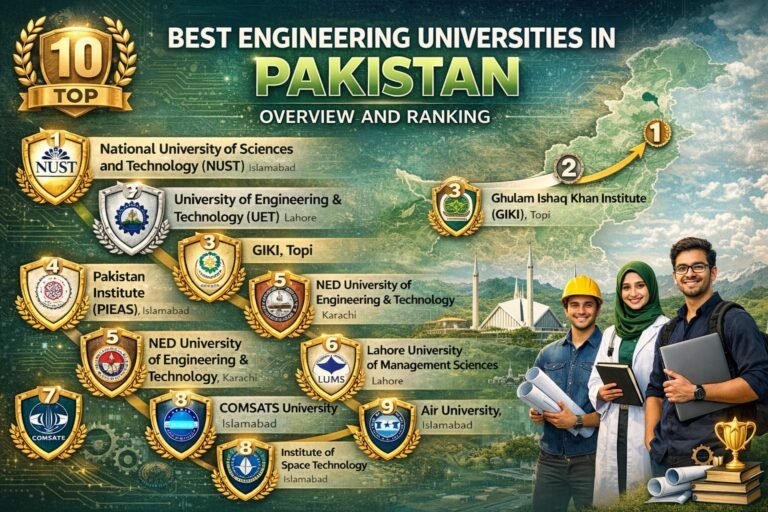
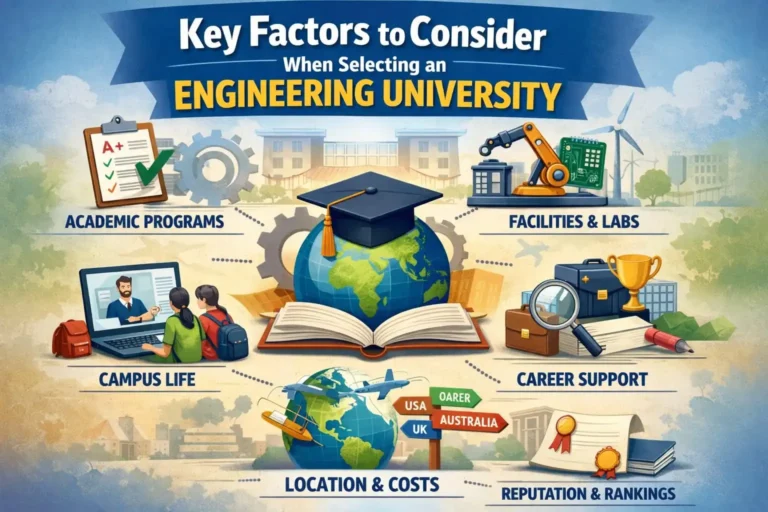
 Pakistan’s premier engineering universities provide a wide array of undergraduate programs tailored to address the evolving technological and industrial landscape. Students have the opportunity to specialize in various fields, aligning their education with their career aspirations, whether in infrastructure development or cutting-edge digital technologies. Among the most popular degrees are the Bachelor of Engineering (BE) and the Bachelor of Science (BS) in Engineering, both of which emphasize a robust theoretical understanding coupled with hands-on technical training, preparing graduates for the demands of the workforce.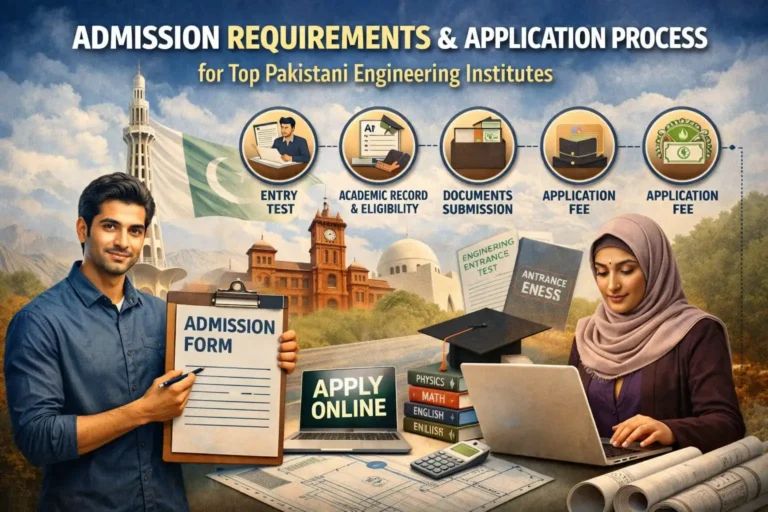


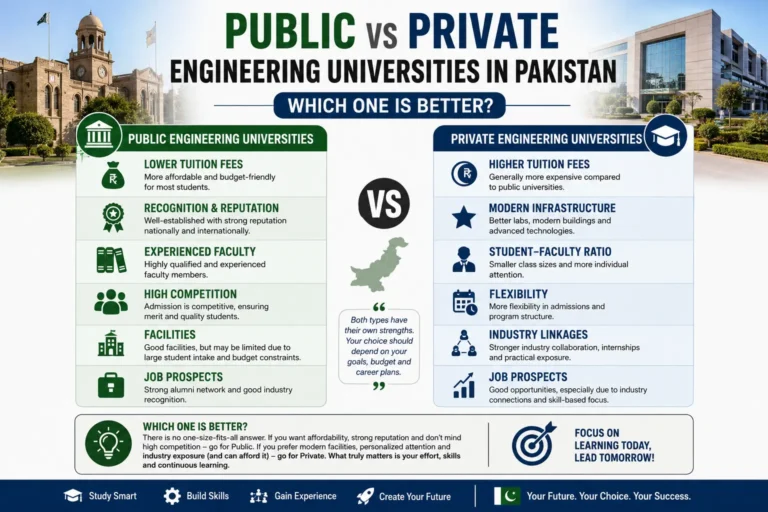




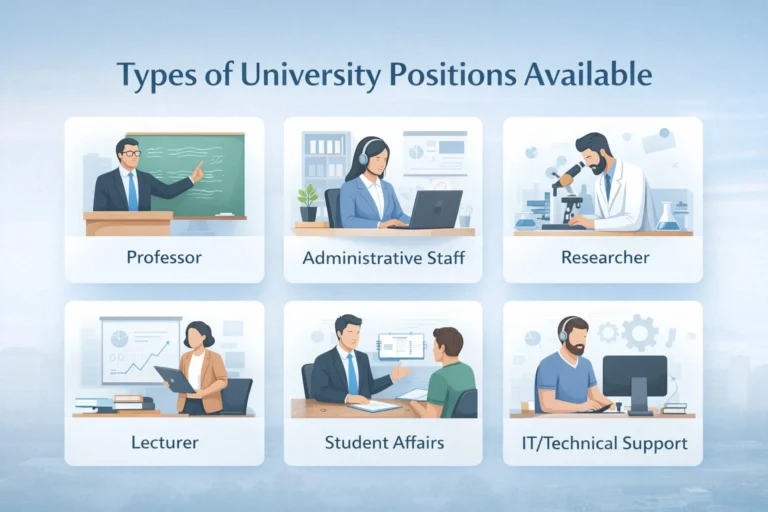
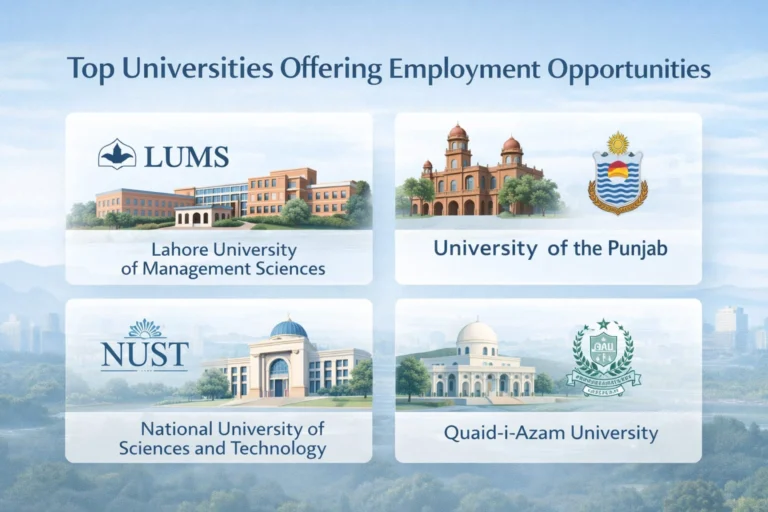
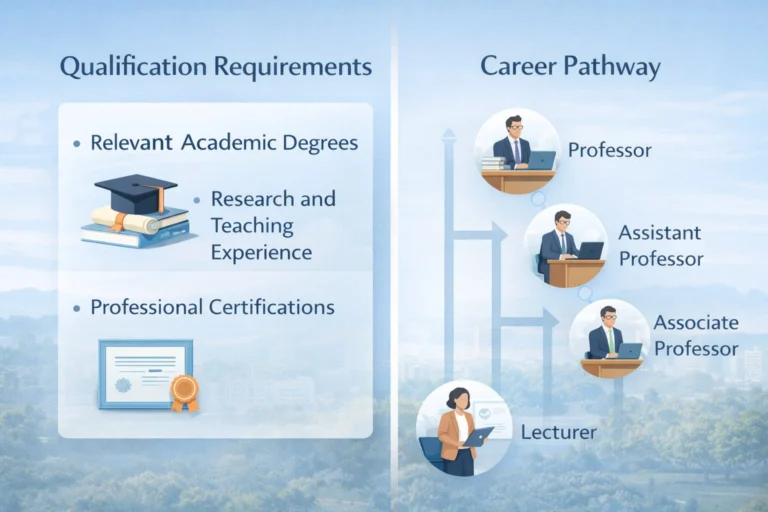
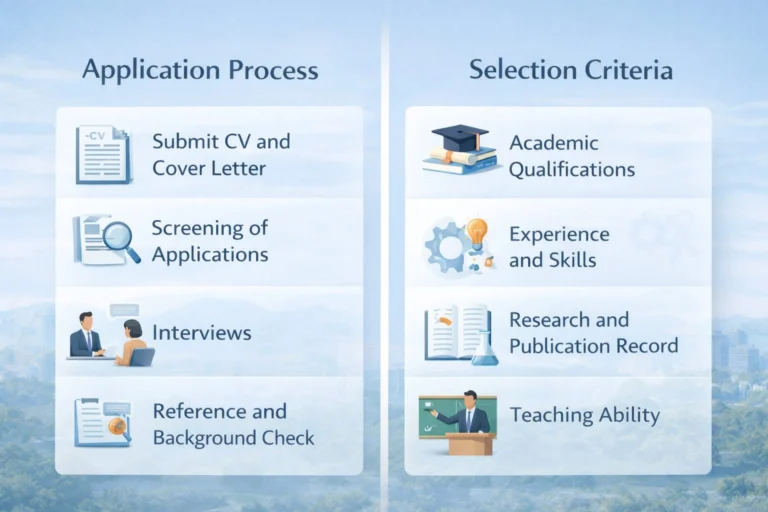
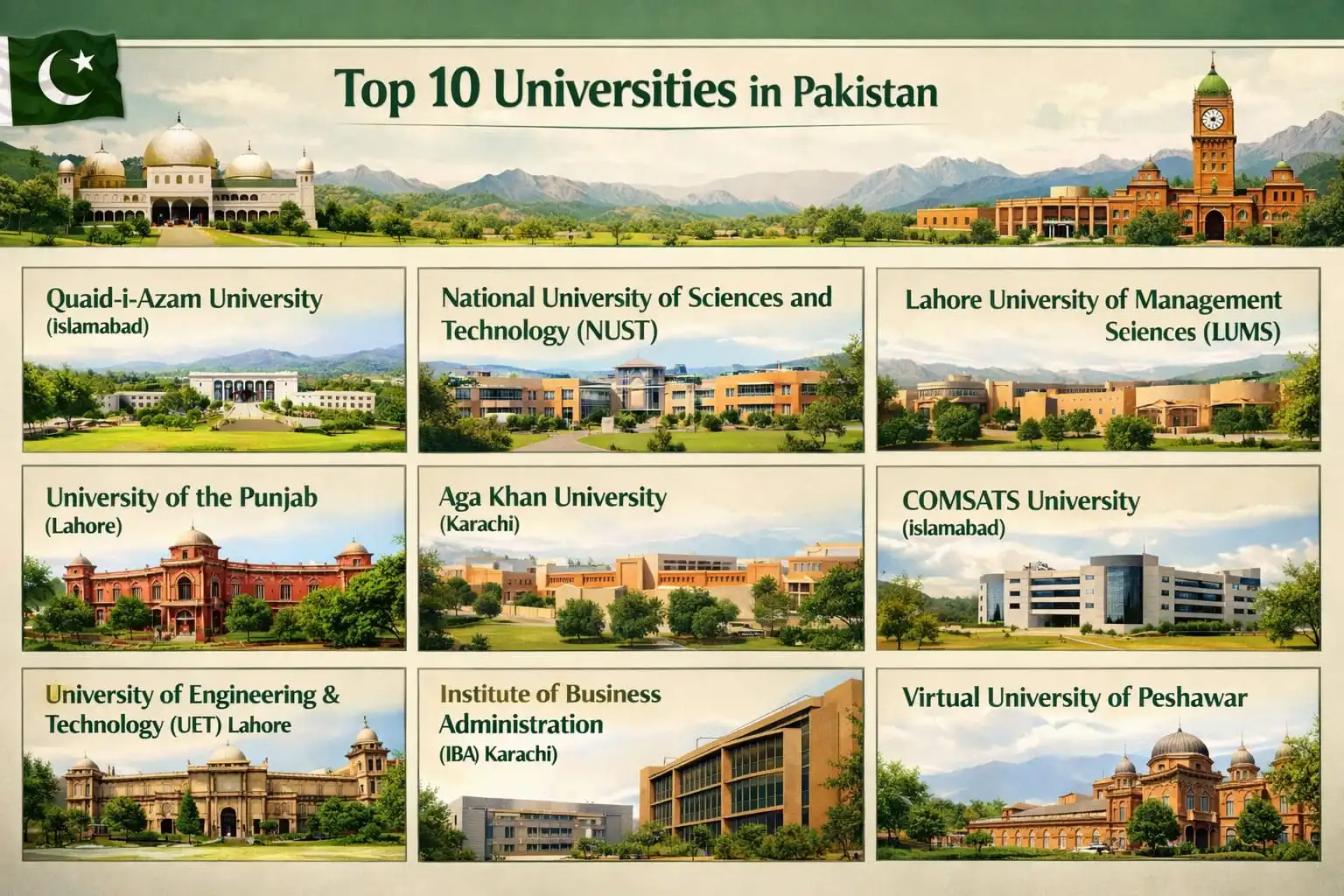






 Pakistan’s higher education landscape offers incredible opportunities across public powerhouses like University of Punjab and LUMS, innovative private institutions, and specialized colleges that excel in specific fields. The country’s top universities span from Karachi to Lahore to Islamabad, making quality education accessible no matter where you live. These institutions consistently produce graduates who go on to lead major corporations, start successful businesses, and make meaningful contributions both locally and internationally.If you’re planning your academic journey, take time to research each university’s strengths, admission requirements, and campus culture. Don’t just chase rankings – find the place that matches your career goals, learning style, and personal values. Whether you’re drawn to research opportunities, industry connections, or specific programs, Pakistan’s top universities have something special to offer every ambitious student ready to shape their future.

 Finding the best IT universities in Pakistan can make or break your tech career. This guide is for high school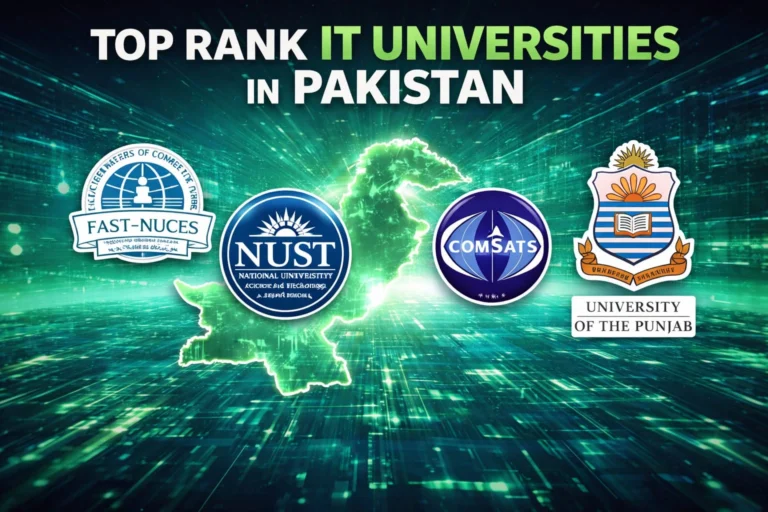
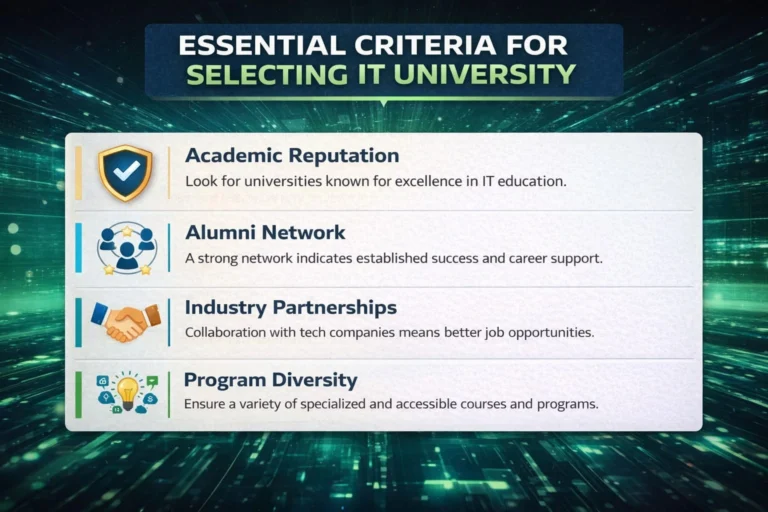
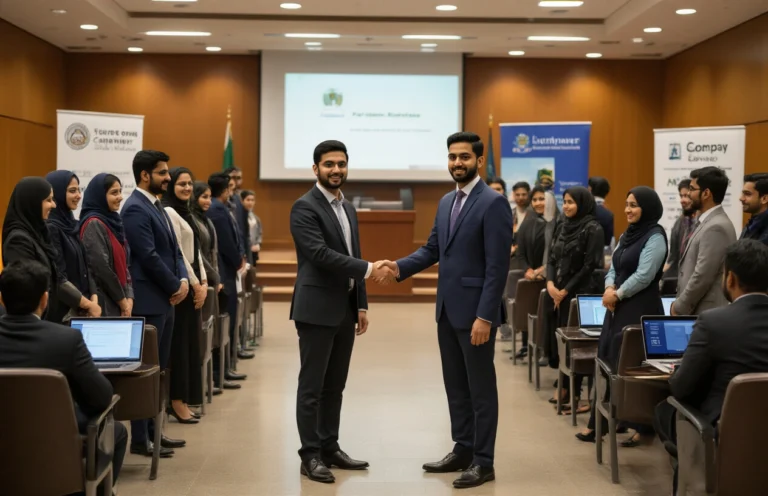

 Pakistan’s top IT universities offer incredible opportunities for students ready to build successful tech careers. Schools like NUST, LUMS, and COMSATS lead the way with strong academic programs, experienced faculty, and solid connections to the tech industry. When choosing your university, focus on factors like program quality, industry partnerships, and job placement rates rather than just rankings.