paksblog | get latest blogs , news

The Ultimate Guide to the Best Engineering Universities in Pakistan
best engineering universities in pakistan

Why Choosing the Right Engineering University in Pakistan Matters

Selecting the appropriate engineering university in Pakistan is a pivotal decision for students aiming to establish a prosperous career in the technical domain. The engineering sector is heavily influenced by the caliber of education, exposure to industry practices, and the accreditation status of the programs offered. Therefore, it is essential for students to engage in thorough research and adopt a long-term perspective when considering their options among the premier engineering institutions in Pakistan, rather than opting for immediate convenience.
Pakistan boasts a number of esteemed engineering universities that provide programs recognized and accredited on an international scale. Institutions such as the National University of Sciences and Technology (NUST), University of Engineering and Technology (UET) Lahore, Pakistan Institute of Engineering and Applied Sciences (PIEAS), Ghulam Ishaq Khan Institute (GIKI), and Foundation for Advancement of Science and Technology (FAST) are renowned for their comprehensive engineering curricula, state-of-the-art laboratories, and distinguished faculty members. These universities consistently rank highly in both national and international assessments, underscoring their commitment to academic excellence and significant contributions to research.
Accreditation is a crucial element that underscores the importance of making an informed choice. Universities that are recognized by the Pakistan Engineering Council (PEC) guarantee that their graduates adhere to the professional standards necessary for success both within the country and abroad. Earning a degree from an accredited program not only enhances a graduate’s employability but also opens doors to international opportunities and eligibility for advanced studies globally.
In addition, leading engineering universities maintain robust connections with the industry, facilitating a seamless transition for students into the workforce. Opportunities for internships, involvement in industrial projects, and access to career counseling services are integral components of the educational experience, enabling students to secure positions in multinational corporations, government agencies, and innovative tech startups.
Furthermore, the availability of modern campus facilities and a variety of specialization options significantly contribute to the overall educational experience. The top engineering universities in Pakistan offer a wide range of disciplines, including Electrical, Mechanical, Civil, Software, and Artificial Intelligence Engineering. Access to cutting-edge research centers, innovation labs, and startup incubators not only nurtures creativity but also equips students with the practical skills necessary to thrive in a competitive job market.
In today’s competitive landscape, engineering education is not just about earning a degree—it is about building competence, networks, and global exposure. Therefore, choosing the right university lays the foundation for professional growth, financial stability, and technological contribution to Pakistan’s future.

Top 10 Best Engineering Universities in Pakistan: Overview & Rankings
top 10 best engineering universities in pakistan

Pakistan has witnessed remarkable advancements in engineering education over the last twenty years, resulting in a steady stream of highly qualified graduates who are making their mark both domestically and internationally. For students aspiring to obtain a top-notch education, selecting from the leading best engineering universities in Pakistan is essential, as it ensures access to quality instruction, practical industry experience, and promising career opportunities. The evaluation of these institutions is heavily influenced by factors such as university rankings, accreditation status, and research contributions, which serve as critical indicators of their overall excellence.

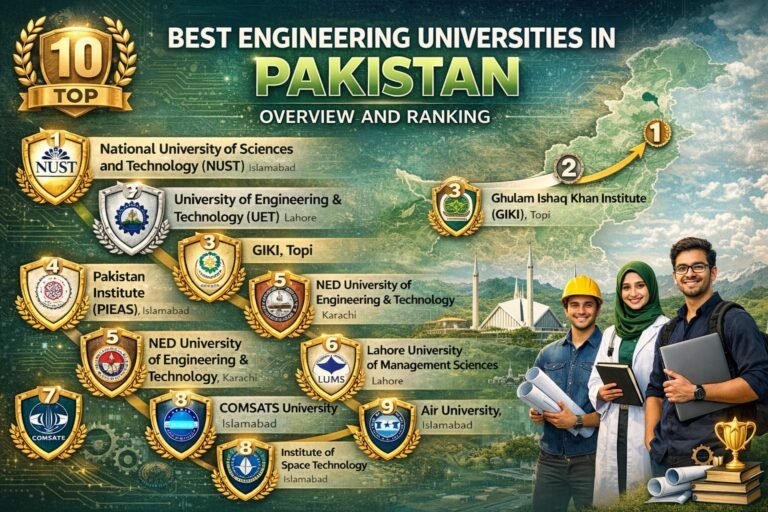
In accordance with the rankings and academic performance metrics recognized by the Higher Education Commission (HEC), several engineering institutes consistently emerge as leaders in the field. These universities are assessed on various criteria, including the quality of teaching, research output, faculty qualifications, and connections with industry. Notable institutions such as the National University of Sciences and Technology (NUST), the Pakistan Institute of Engineering and Applied Sciences (PIEAS), and the Ghulam Ishaq Khan Institute (GIKI) frequently rank at the forefront due to their state-of-the-art laboratories, international partnerships, and impressive graduate employability rates.

Additionally, other esteemed universities that rank among the best engineering in Pakistan include the University of Engineering and Technology (UET) Lahore, UET Taxila, and the Institute of Space Technology (IST). These institutions are highly regarded for their strong programs in fundamental engineering disciplines such as Civil, Mechanical, and Electrical Engineering, which are critical to the nation’s development.

The list of top engineering universities also encompasses Mehran University of Engineering & Technology, NED University of Engineering & Technology, KPK UET, and Air University. All of these universities are recognized by the HEC and offer accredited engineering programs that comply with the standards set by the Pakistan Engineering Council (PEC). This accreditation is vital, as it ensures that graduates are equipped to meet both national and international professional standards, thereby enhancing their employability and career prospects in a competitive job market.

Overview of Top 10 Engineering Universities

  • NUST – Islamabad

  • PIEAS – Islamabad

  • GIKI – Topi

  • UET Lahore

  • UET Taxila

  • IST – Islamabad

  • UET Peshawar / KPK UET

  • Mehran University – Jamshoro

  • NED University – Karachi

  • Air University – Islamabad

selecting from HEC recognized and highly ranked institutes ensures quality education, global recognition, and strong career opportunities. Students should compare rankings, specializations, and facilities before finalizing admission in Pakistan’s top engineering universities.

Key Factors to Consider When Selecting an Engineering University
key factor to consider when an selecting engineeering universities
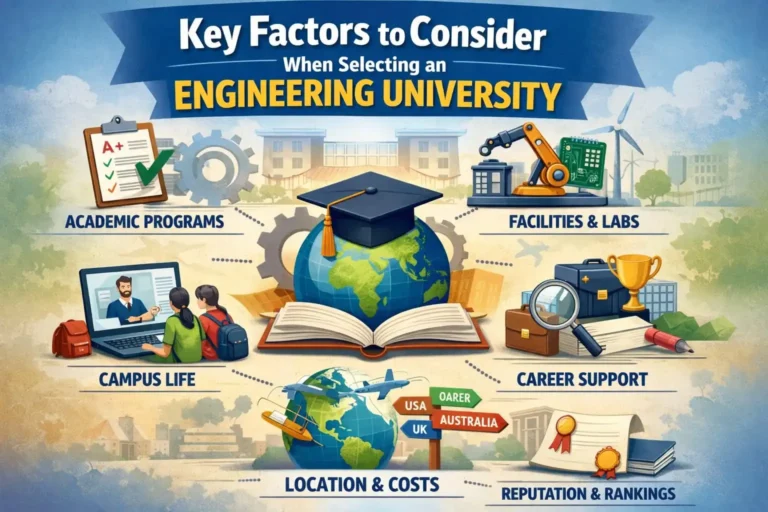
Choosing the appropriate engineering university is a crucial milestone for students aiming to thrive in technical disciplines. With a plethora of institutions providing engineering programs, it is vital to assess various factors that extend beyond mere rankings. Key considerations include the qualifications and experience of the faculty, the availability of state-of-the-art research facilities, the strength of industry partnerships, the vibrancy of campus life, and the effectiveness of internship and job placement services, as well as the robustness of the alumni network. By examining these elements, students can make well-informed decisions that align with their academic and career aspirations, ensuring a future-oriented approach to their education.

Faculty Expertise

The caliber of an engineering program is fundamentally linked to the expertise of its faculty. Universities that boast highly qualified professors, seasoned industry practitioners, and active researchers offer students a rich blend of theoretical knowledge and practical experience. The mentorship provided by faculty members is instrumental in steering students toward innovative projects, research publications, and specialized career paths, thereby enhancing their educational journey and professional readiness.

Research Facilities

In the realm of engineering education, access to advanced research facilities is paramount. Institutions equipped with modern laboratories, innovation hubs, and funded research initiatives empower students to tackle real-world engineering problems. Such exposure not only bolsters their technical skills but also prepares them for further academic pursuits or careers in research and development, where hands-on experience is invaluable.

Industry Partnerships

The presence of robust industry partnerships sets leading engineering universities apart from their counterparts. Collaborations with major corporations, technology firms, and manufacturing entities facilitate opportunities for joint ventures, guest lectures, and technology transfer initiatives. These connections ensure that students are well-versed in contemporary industry practices and emerging technological trends, equipping them with the knowledge necessary to excel in a competitive job market.

Campus Life

A well-rounded campus life is essential for holistic personal development. Given the rigorous nature of engineering studies, universities that provide a variety of extracurricular activities, such as clubs, engineering societies, sports, and leadership programs, play a significant role in fostering essential soft skills, teamwork, and self-confidence. These attributes are critical for achieving success in professional environments, where collaboration and interpersonal skills are often as important as technical expertise.

Internships and Job Placements

Internships and job placement opportunities are essential components that significantly enhance the perceived value of a university. Institutions that offer well-structured internship programs, cooperative education experiences, and organized campus recruitment initiatives play a pivotal role in boosting the employability of their graduates. By facilitating these practical experiences, universities not only equip students with the necessary skills and knowledge but also ease their transition into the competitive job market, thereby increasing their chances of securing desirable positions upon graduation.

Alumni Network

A robust alumni network serves as a testament to an institution’s enduring legacy and its impact within various industries. Graduates who have achieved success in prominent companies often take on the role of mentors, guiding current students through their academic and professional journeys. This network can provide invaluable resources, including referrals and insights into job openings, which can lead to significant global career opportunities for students.
In summary, assessing these critical elements is vital for prospective students aiming to choose an engineering university that not only prioritizes academic excellence but also fosters long-term career development and success.

Popular Engineering Programs Offered by Leading Pakistani Universities
populer engineering program offered by leadig pakistani universities
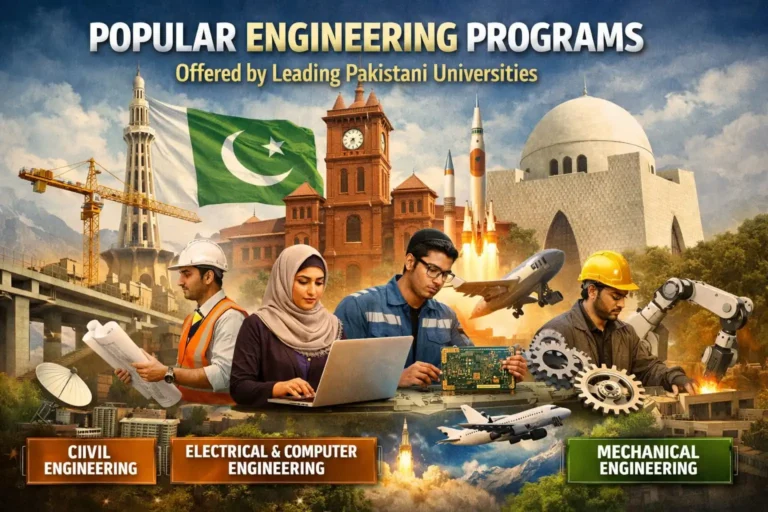
Pakistan’s premier engineering universities provide a wide array of undergraduate programs tailored to address the evolving technological and industrial landscape. Students have the opportunity to specialize in various fields, aligning their education with their career aspirations, whether in infrastructure development or cutting-edge digital technologies. Among the most popular degrees are the Bachelor of Engineering (BE) and the Bachelor of Science (BS) in Engineering, both of which emphasize a robust theoretical understanding coupled with hands-on technical training, preparing graduates for the demands of the workforce.

Bachelor of Engineering (BE)

The Bachelor of Engineering (BE) is a well-established and esteemed qualification offered by numerous leading public universities in Pakistan. This degree emphasizes fundamental engineering concepts, practical design applications, and effective problem-solving techniques relevant to industrial settings. BE programs typically cover essential disciplines such as Civil, Electrical, and Mechanical Engineering, all of which are accredited by the Pakistan Engineering Council (PEC), ensuring that graduates receive professional recognition and are well-prepared for their careers.

Bachelor of Science (BS) in Engineering

In recent years, the Bachelor of Science (BS) in Engineering has surged in popularity, particularly in fields driven by technological advancements. BS programs are designed with contemporary curricula that adhere to international educational standards, incorporating elements of research, innovation, and the latest technological trends. Institutions like NUST, FAST, and PIEAS offer BS degrees in areas such as Software, Electrical, and Computer Engineering, equipping students with the skills necessary to thrive in a rapidly changing job market.

Civil Engineering Programs in Pakistan

Civil engineering programs in Pakistan continue to attract significant interest, largely due to the country’s increasing infrastructure demands. These programs provide students with comprehensive knowledge in areas such as structural design, transportation engineering, geotechnics, and construction management, paving the way for careers in public works, real estate development, and large-scale construction projects that are vital to national progress.

Electrical Engineering Degree in Pakistan

An electrical engineering degree in Pakistan provides students with knowledge in power systems, telecommunications, electronics, and control systems. Graduates can find employment in energy sectors, telecommunications companies, automation industries, and renewable energy initiatives.

Mechanical and Software Engineering Courses

Mechanical engineering emphasizes manufacturing, thermodynamics, robotics, and automotive design, whereas software engineering courses equip students for careers in programming, artificial intelligence, cybersecurity, and application development — some of the most rapidly expanding technology sectors worldwide.
leading Pakistani universities offer comprehensive engineering programs that combine academic rigor with practical exposure, enabling students to pursue specialized and future-ready careers in engineering.

Admission Requirements & Application Process for Top Pakistani Engineering Institutes
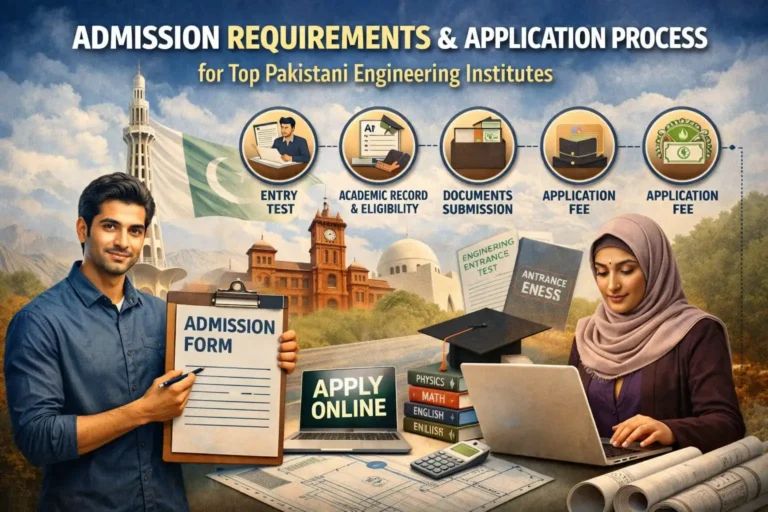
Gaining admission to top engineering universities in Pakistan necessitates thorough preparation, strong academic performance, and prompt submission of applications.

It is crucial for students aspiring to join competitive BE or BS engineering programs to comprehend the admission criteria for engineering in Pakistan, which encompasses entry tests, eligibility requirements, and necessary documentation.

Entry Test Requirements (ECAT)

Most leading public-sector engineering institutions necessitate that students successfully complete an entry examination, typically referred to as ECAT (Engineering College Admission Test). This standardized assessment measures candidates in:

  • Mathematics

  • Physics

  • Chemistry or Computer Science

  • English comprehension

High ECAT scores significantly improve admission chances, especially in competitive fields like Electrical, Mechanical, and Software Engineering. Some universities conduct their own tests (e.g., NET, GIKI Test), but ECAT remains widely recognized across Punjab engineering institutions.

Eligibility for BE/BS Programs

In order to apply for BE or BS engineering degrees, students are required to fulfill certain academic criteria:

Minimum Qualification:

Students with an Intermediate (FSc Pre-Engineering) qualification or its equivalent are eligible to apply. Students from the ICS stream may seek admission in Software or Computer-related fields. A-Level candidates are required to submit their IBCC equivalence certificate.

Minimum Marks Requirement:

Generally, an aggregate of 60% to 70% is expected, although this may differ by university. Merit is determined based on a combination of: Entry test scores, Intermediate examination results, Matric/O-Level performance.
Higher aggregate scores are necessary for admission into prestigious institutions due to the limited number of available seats.

Application Procedure

The admission process usually follows these steps:

  1. Online Registration – Create an account on the university admission portal

  2. Form Submission – Fill academic and personal details

  3. Document Upload – شهادات, transcripts, CNIC/B-Form, photos

  4. Fee Payment – Entry test or application processing fee

  5. Test & Interview – Appear in entry test (if required)

  6. Merit List Announcement – Selected candidates confirm admission

Application Deadlines & Tips

Engineering admissions in Pakistan generally open between May – August each year.

Helpful Tips:

  • Apply to multiple universities to increase chances

  • Prepare for ECAT at least 3–6 months early

  • Keep documents attested and ready

  • Track merit lists regularly

  • Don’t miss fee submission deadlines

In summary, comprehending the requirements for entry tests, the eligibility criteria for BE/BS programs, and the application timelines enables students to effectively navigate the competitive admission process and attain placement in the leading engineering institutes of Pakistan.

Scholarships and Financial Aid Opportunities for Aspiring Engineers

Pursuing a degree in engineering can pose financial difficulties, particularly when attending the top engineering universities in Pakistan, where tuition and academic costs may be elevated due to superior facilities and adherence to international standards. Nevertheless, there are numerous scholarships and financial aid programs available to assist talented and deserving students in reaching their educational aspirations.

One of the most prominent funding organizations is the Higher Education Commission (HEC), which provides a broad array of engineering scholarships in Pakistan. These scholarships encompass both fully funded and partially funded programs that cover tuition fees, monthly stipends, accommodation, and research assistance. HEC scholarships for engineers are granted based on both merit and financial need, thereby ensuring equitable opportunities for students from various financial backgrounds.

Merit-Based Grants and University Scholarships

Numerous prestigious engineering universities in Pakistan offer institutional scholarships to outstanding students. Grants based on merit are generally awarded according to:

Performance in entry tests

Results from Intermediate / A-Level examinations

Grade Point Average (GPA) for semesters

Students who rank at the top may be granted either partial or complete waivers of tuition fees, thereby promoting academic excellence throughout their engineering education.

Need-Based Financial Assistance Programs

Financial aid offices at universities evaluate the economic situations of students to provide need-based support. This support may encompass:

Reductions in tuition fees

Payment plans in installments

Emergency funds for students