BEST IT UNIVERSITIES IN PAKISTAN
 Finding the best IT universities in Pakistan can make or break your tech career. This guide is for high school
graduates, parents planning their children’s education, and professionals looking to advance their skills in
information technology.
Pakistan’s IT sector is booming, creating massive demand for skilled graduates. The right university choice impacts everything from your learning experience to job prospects after graduation.
We’ll explore the top-ranked institutions that consistently produce industry-ready graduates and examine what makes them stand out. You’ll also discover the key factors to consider when choosing an IT university, including program quality, faculty expertise, and campus facilities. Finally, we’ll break down the specialized degree options available and how industry partnerships at these universities can fast-track your career through internships and direct job placements.
Top-Ranked best IT Universities in pakistan for Career Excellence
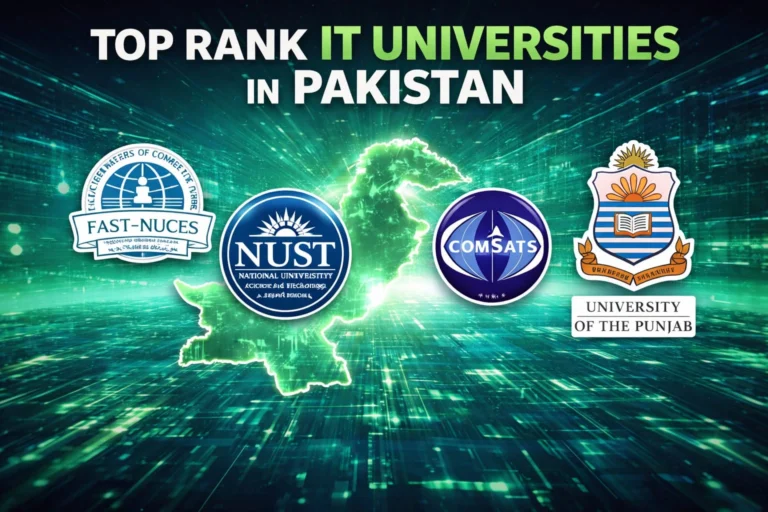
NUST Islamabad – Leading Engineering and Technology Programs
The National University of Sciences and Technology (NUST) stands as Pakistan’s premier IT university, offering world-class education in engineering and technology. As one of the top-ranked IT universities in Pakistan, NUST has earned global recognition through its cutting-edge research facilities and consistently strong international rankings. Its School of Electrical Engineering and Computer Science (SEECS) delivers exceptional programs in computer science, software engineering, and information technology — making it a leading destination for students pursuing computer science education in Pakistan. Graduates from NUST’s IT and computer science programs go on to build successful global tech careers, cementing the university’s place among the top 10 universities in Pakistan.
NUST’s IT programs feature a curriculum designed by industry experts and academic leaders, ensuring graduates are job-ready from day one. Students at this leading IT university in Pakistan gain hands-on experience through state-of-the-art laboratories equipped with the latest technology. The university’s strong emphasis on research and innovation creates opportunities for students to work on groundbreaking projects alongside renowned faculty members — a key reason why NUST consistently ranks among the top computer science universities in Pakistan. Whether pursuing a degree in computer science, software engineering, or information technology, students benefit from an environment built for real-world impact.
The institution’s impressive placement record speaks volumes about the quality of its IT and computer science programs. Major tech companies like Systems Limited, NetSol Technologies, and Teradata actively recruit graduates from this top-ranked IT university in Pakistan. International giants also recognize NUST’s reputation as a leading computer science university — with many alumni securing coveted positions at Google, Microsoft, and Amazon. This outstanding placement success makes NUST one of the most sought-after IT universities in Pakistan for students aiming at high-impact global tech careers.
The National University of Sciences and Technology (NUST) is recognized as a leading best IT university in Pakistan, noted for its strengths in computer science, software engineering, and emerging technologies. Its advanced research labs, industry-focused curricula, and commitment to innovation prepare graduates to excel nationally and internationally. NUST’s focus on artificial intelligence, cybersecurity, data science, and engineering technologies positions it at the forefront of Pakistan’s digital advancement, making it a top choice for students pursuing IT careers.
Lab technicians need 1-2 years of hands-on experience with relevant equipment — making these roles ideal entry points for fresh graduates exploring a university job in Pakistan. Senior technical staff require 5+ years of experience managing complex laboratory setups and training junior staff, representing some of the most stable and rewarding university jobs in Pakistan for seasoned professionals.
FAST National University – Premier Computer Science Education
FAST National University has built an exceptional reputation for producing skilled computer science professionals, establishing itself as one of the most respected IT universities in Pakistan. The university’s focused approach to computer science education and technology makes it a top choice among students seeking specialized knowledge at a leading IT university. FAST operates multiple campuses across Pakistan — including Islamabad, Lahore, Karachi, and Peshawar — ensuring that quality IT and computer science education remains accessible to students nationwide.
The university’s computer science program covers essential areas like artificial intelligence, machine learning, cybersecurity, and software development — core pillars of any world-class IT university curriculum. Faculty members bring both academic excellence and industry experience to the classroom, a hallmark of the best IT universities in Pakistan. Many professors have worked with leading technology companies, bringing real-world insights to their teaching and ensuring that computer science graduates are fully prepared for the demands of today’s global tech industry.
FAST maintains strong connections with the tech industry through regular seminars, workshops, and guest lectures by industry professionals — setting it apart from other IT universities in Pakistan. The university’s annual tech fest showcases computer science and IT student projects, while providing valuable networking opportunities with potential employers. This practical, industry-driven approach ensures that graduates of this leading IT university enter the job market fully equipped with relevant skills, making FAST one of the most career-focused computer science universities in Pakistan.
The National University of Computer and Emerging Sciences (FAST-NUCES) is widely recognized as one of the best IT universities in Pakistan, known for its rigorous programs in computer science, software engineering, and data sciences. FAST fosters a strong programming culture and a merit-based environment, emphasizing analytical thinking, algorithm design, and practical software development — core strengths that define a truly world-class IT university. Its computer science graduates are in high demand in the tech industry, both in Pakistan and abroad, due to their exceptional technical expertise and problem-solving skills. By focusing on innovation, research, and emerging technologies, FAST-NUCES continues to play a key role in advancing Pakistan’s IT and software development sectors, solidifying its position among the top IT universities in Pakistan for students passionate about technology and computer science education.
COMSATS University – Comprehensive IT Degree Options
COMSATS University Islamabad offers one of the most comprehensive IT university programs in Pakistan, delivering quality education across multiple campuses nationwide. As one of the top IT universities in Pakistan, COMSATS provides diverse degree options that make quality IT education accessible to students from every corner of the country. Programs include computer science, software engineering, information technology, and emerging fields like data science and cybersecurity — covering the full spectrum of modern computer science education that today’s tech industry demands.
The university’s computer science curriculum stays current with industry trends and technological advancements, a quality that sets top IT universities in Pakistan apart from the rest. Regular curriculum reviews ensure students learn the most relevant programming languages, development frameworks, and industry best practices — keeping this IT university ahead of the curve in an ever-evolving tech landscape. COMSATS also emphasizes practical learning through internship programs and industry collaborations, ensuring that computer science graduates are industry-ready from day one.
Research opportunities abound at COMSATS, with active research centers focusing on artificial intelligence, robotics, and telecommunications — making it one of the most research-driven IT universities in Pakistan. Computer science and IT students can participate in cutting-edge research projects that address real-world problems, a defining feature of this leading IT university. These hands-on research experiences not only build valuable skills but also prepare students for future careers or graduate studies in computer science and emerging technologies.
COMSATS University Islamabad (CUI) is widely recognized as one of the best IT universities in Pakistan, known for its strong academic structure in computer science, information technology, and software engineering. As a leading IT university, COMSATS focuses on research-based learning, innovation, and the development of technical skills that precisely match the demands of today’s industry. Through well-equipped computer labs and international collaborations, this top IT university in Pakistan provides students with exposure to emerging areas like artificial intelligence, data science, and cybersecurity — the building blocks of modern computer science education. COMSATS’s unwavering dedication to quality education and technological development has firmly established it as a significant player in Pakistan’s growing IT and software industry, making it a top destination for students pursuing computer science and technology careers.
University of Punjab – Established IT Department with Strong Alumni Network
The University of Punjab’s Institute of Computer Science represents decades of excellence in IT university education, standing as a pioneer among IT universities in Pakistan. As one of Pakistan’s oldest and most prestigious institutions, Punjab University has developed a robust computer science program that combines traditional academic rigor with modern technological training — a blend that defines the very best computer science universities in Pakistan.
The institute’s strong alumni network spans across Pakistan’s tech industry and beyond, a testament to the lasting impact of its computer science and IT programs. Graduates of this renowned IT university in Pakistan hold leadership positions in major corporations, government agencies, and successful startups. This extensive network provides current computer science and IT students with invaluable mentorship opportunities, internships, and job placements — proving why Punjab University remains one of the most trusted IT universities in Pakistan for building long-term tech careers.
The university’s location in Lahore, Pakistan’s cultural and business hub, gives IT university students numerous opportunities for internships and part-time work with local tech companies — an advantage rarely matched by other IT universities in Pakistan. The institute regularly organizes career fairs and networking events specifically tailored for computer science and IT students, connecting them with potential employers and industry veterans who understand the value of a strong computer science degree from a reputable Pakistani institution.
The University of the Punjab (PU) is widely recognized as one of the oldest and most prestigious IT universities in Pakistan, standing as a major force in the country’s information technology and computer science education. Through its College of Information Technology (PUCIT) and related departments, this leading IT university provides well-designed programs in computer science, information technology, and software engineering. Punjab University focuses on combining theoretical knowledge with practical development expertise, allowing students to achieve mastery in programming, data science, and modern computing technologies — core pillars of a world-class computer science education. With its qualified faculty, state-of-the-art research facilities, and long academic tradition, PU remains one of the most trusted IT universities in Pakistan for producing skilled and industry-ready IT professionals.
UINVERSITY
FOUNDED
NOTABLE PROGRAM
KEY STRENGTH
NUST Islamabad
FAST National
COMSATS
University of Punjab
1991
1980
1998
1882
CS, SE, IT
CS, SE
CS, SE, IT, Data Science
CS, IT
Research excellence, industry partnerships
Specialized focus, multiple campuses
Comprehensive programs, accessibility
Strong alumni network, established reputation
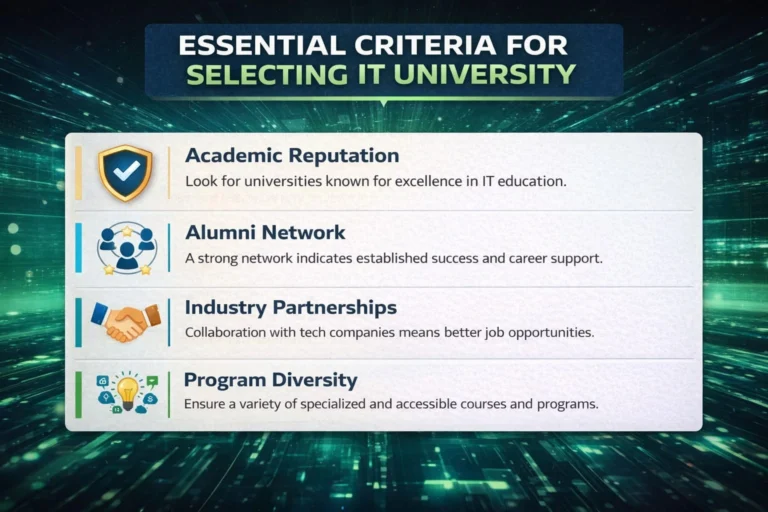
Essential Criteria for Selecting IT Universities
Accreditation Status and International Recognition
When choosing among the best IT universities in Pakistan, accreditation serves as your first and most important quality checkpoint. The Higher Education Commission (HEC) of Pakistan provides the primary accreditation that validates an IT university’s academic standards and degree recognition — a critical factor for any serious computer science or IT student. Universities with HEC recognition ensure your computer science degree holds value both domestically and internationally, making accreditation a non-negotiable criterion when evaluating IT universities in Pakistan.
International accreditations add another layer of credibility to any IT university in Pakistan. Look for IT universities in Pakistan with partnerships or recognition from global bodies like the Washington Accord for engineering programs, or affiliations with international computer science societies. These connections often translate into better opportunities for student exchanges, joint computer science degree programs, and enhanced career prospects abroad — making internationally accredited IT universities the smartest choice for students with global ambitions.
Best IT universities in pakistan have earned recognition from international ranking agencies like QS World University Rankings and Times Higher Education. This global visibility indicates research quality, academic reputation, and employer recognition that can significantly impact your career trajectory.Regional accreditations also matter. Universities recognized by neighboring countries’ education boards can facilitate easier credit transfers and provide more flexibility for higher studies abroad. Check if your target university maintains active memberships in regional educational consortiums or technology forums.
Faculty Qualifications and Industry Experience
The teaching quality at any IT institution depends heavily on faculty expertise and real-world experience. Strong IT programs feature professors with PhD degrees from reputable institutions, preferably with a mix of local and international educational backgrounds. This diversity brings varied perspectives and teaching methodologies to the classroom.
Industry experience among faculty members creates a crucial bridge between theoretical knowledge and practical application. Professors who have worked in software companies, tech startups, or research organizations bring current industry practices into their lectures. They understand market demands, emerging technologies, and the skills employers actually seek.Look for universities where faculty members actively engage in research publications, conference presentations, and industry collaborations. Active researchers stay updated with the latest technological advances and incorporate cutting-edge knowledge into their curriculum. Many best IT universities in pakistan encourage professors to consult for businesses or run their own tech ventures.The student-to-faculty ratio also impacts learning quality. Smaller class sizes allow for more personalized attention, better mentoring opportunities, and stronger professional relationships that can benefit your career long after graduation.
Modern Lab Facilities and Technology Infrastructure
Technology infrastructure forms the backbone of quality IT education. Visit potential universities to assess their computer labs, software availability, and hardware specifications. Modern IT programs require access to current programming environments, database systems, networking equipment, and specialized software tools.
High-speed internet connectivity throughout campus enables seamless online learning, research activities, and collaboration with international institutions. Universities investing in robust network infrastructure demonstrate their commitment to providing students with real-world technical environments.
Specialized labs for different IT disciplines enhance hands-on learning. Look for dedicated spaces for cybersecurity training, artificial intelligence research, mobile app development, and cloud computing. Universities with maker spaces or innovation labs often foster entrepreneurial thinking and project-based learning.
Regular technology upgrades indicate institutional commitment to maintaining relevance. Universities that refresh their equipment every 3-4 years ensure students learn on current systems rather than outdated technologies. This investment directly impacts graduate employability and industry readiness.
Cloud computing resources and access to enterprise-level software through educational partnerships provide exposure to professional tools students will encounter in their careers. Many top universities offer students access to platforms like AWS, Microsoft Azure, or Google Cloud for project development and learning.
Specialized IT Programs and Degree Options
Computer Science and Software Engineering Tracks
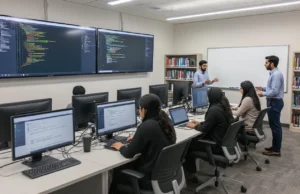
Computer science and software engineering programs form the backbone of IT education in Pakistan. These tracks typically offer comprehensive curricula covering programming fundamentals, data structures, algorithms, database management, and web development. Students dive deep into languages like Python, Java, C++, and JavaScript while mastering frameworks and development methodologies.
Most computer science programs span four years, providing hands-on experience through laboratory sessions and capstone projects. Software engineering tracks focus more heavily on the systematic approach to designing, developing, and maintaining large-scale software systems. Students learn about software architecture, project management, quality assurance, and user experience design.
Popular specialization areas within these tracks include mobile app development, game development, enterprise software solutions, and cloud computing. Many programs also integrate emerging technologies like blockchain development and Internet of Things (IoT) programming to keep pace with industry demands.
Artificial Intelligence and Machine Learning Specializations
AI and ML programs have gained tremendous popularity as Pakistani universities recognize the growing demand for these skills. These specializations cover neural networks, deep learning, natural language processing, computer vision, and predictive analytics. Students work with industry-standard tools like TensorFlow, PyTorch, and scikit-learn.
Core coursework includes statistical modeling, pattern recognition, robotics, and intelligent systems design. Many programs offer concentrations in specific AI applications such as healthcare informatics, autonomous systems, or recommendation engines. Research opportunities abound, with students often collaborating on projects related to Urdu language processing, agricultural technology, or financial modeling.
The curriculum balances theoretical foundations with practical implementation. Students build chatbots, image recognition systems, and predictive models while learning about the ethical implications of AI technology. Industry partnerships provide access to real-world datasets and mentorship from AI professionals.
Cybersecurity and Network Administration Programs
Pakistan’s cybersecurity programs address the critical need for information security professionals. These specialized degrees cover ethical hacking, penetration testing, digital forensics, and incident response. Students learn to identify vulnerabilities, implement security protocols, and manage security infrastructures.
Network administration tracks focus on designing, implementing, and maintaining complex network systems. Coursework includes routing and switching, network protocols, wireless technologies, and cloud networking. Students gain hands-on experience with Cisco, Juniper, and other enterprise networking equipment through dedicated laboratories.Cybersecurity specializations often include certifications preparation for industry standards like CEH (Certified Ethical Hacker), CISSP (Certified Information Systems Security Professional), and CompTIA Security+. Many programs collaborate with government agencies and private organizations to provide internship opportunities in critical infrastructure protection.
Data Science and Analytics Degrees
Data science programs blend statistics, computer science, and domain expertise to extract insights from complex datasets. Students master programming languages like R and Python while learning advanced statistical techniques, data visualization, and machine learning algorithms. The curriculum covers big data technologies including Hadoop, Spark, and NoSQL databases.
Business analytics concentrations focus on applying data science techniques to solve real business problems. Students learn about market research, customer segmentation, supply chain optimization, and financial analysis. Many programs include case studies from Pakistani industries like textiles, telecommunications, and banking.Advanced coursework explores specialized areas such as time series analysis, recommendation systems, and A/B testing. Students complete capstone projects using real datasets from partner organizations, developing skills in data cleaning, exploratory analysis, and presentation of findings to non-technical stakeholders.
The growing emphasis on data-driven decision making across industries has made these programs highly sought after among students seeking careers in consulting, finance, healthcare, and technology sectors.
Industry Partnerships and Job Placement Opportunities
Corporate Collaboration Programs with Tech Giants
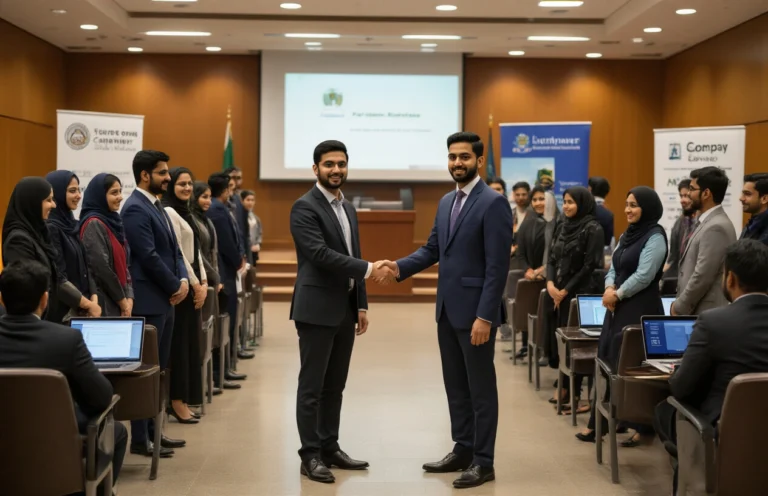
Pakistan’s leading IT universities have established strategic partnerships with major technology companies, creating direct pathways for computer science and IT students to access world-class training and career opportunities. These collaborations go beyond traditional academic boundaries, bringing real industry expertise directly into the computer science classroom — a defining feature that separates the best IT universities in Pakistan from the rest.
As top IT universities in Pakistan, NUST and FAST University maintain strong relationships with Microsoft, offering specialized Azure and .NET development programs to their computer science and IT students. Students gain hands-on experience with enterprise-level technologies while working on real-world projects — exactly the kind of practical training that defines a world-class IT university. Similarly, the University of Engineering and Technology Lahore has partnered with IBM to deliver AI and data science curricula, giving computer science students access to cutting-edge tools and methodologies that prepare them for the demands of today’s global tech industry.
Google’s Developer Student Club programs operate across multiple IT university campuses, including LUMS and Karachi University’s Institute of Computer Science, giving computer science students direct access to Google’s latest technologies and mentorship opportunities. These initiatives also open potential recruitment channels, making them one of the most valuable career-building resources available at top IT universities in Pakistan. Amazon Web Services (AWS) Academy partnerships at IT universities like COMSATS and Air University deliver cloud computing expertise to computer science graduates that is immediately applicable in today’s competitive job market.
Local tech giants like Systems Limited, TRG Pakistan, and Netsol Technologies regularly conduct workshops, hackathons, and collaborative projects with IT university students across Pakistan. These industry partnerships create a strong pipeline of job-ready computer science graduates who understand both international standards and local market requirements — a key reason why IT universities in Pakistan continue to produce some of the most sought-after tech talent in the region.
Internship Placement Success Rates
Top IT universities maintain impressive internship placement rates, with leading institutions achieving 85-95% successful placements for their students. NUST consistently reports placement rates above 90%, with students securing positions at both local and international companies during their third and fourth years.
FAST University’s internship program shows remarkable success, placing over 88% of eligible students in technology companies across Pakistan and abroad. Many students receive return offers, with approximately 60% of interns being offered full-time positions upon graduation. The university’s dedicated career services team maintains relationships with over 200 technology companies, ensuring diverse opportunities for students with different interests and skill sets.
LUMS School of Science and Engineering reports similar success rates, with their structured internship program placing students at companies like McKinsey Digital, Accenture, and local startups. The university’s emphasis on practical skills development means students arrive at internships well-prepared for immediate contribution.
Graduate Employment Statistics and Salary Packages
Employment statistics from Pakistan’s top IT universities paint an optimistic picture for graduates entering the technology sector. Leading universities report employment rates between 85-95% within six months of graduation, with many students receiving multiple job offers.
NUST graduates command some of the highest starting salaries in Pakistan’s IT sector, with fresh graduates earning between PKR 80,000 to 150,000 monthly at local companies. Those joining multinational corporations or remote positions with international companies often start at PKR 200,000 or higher. Software engineering and data science graduates typically receive the most competitive packages.
FAST University alumni show strong earning potential, with average starting salaries ranging from PKR 70,000 to 120,000 per month. The university’s strong industry connections mean many graduates skip entry-level positions entirely, starting in junior developer or analyst roles with accelerated career progression opportunities.
University
Average Starting Salary (PKR)
Employment Rate
Top Hiring Companies
NUST
FAST
LUMS
COMSATS
100,000 – 150,000
70,000 – 120,000
90,000 – 140,000
60,000 – 100,000
92%
89%
88%
85%
Systems Limited, TRG, Accenture
Netsol, IBM,
McKinsey Digital, P&G, Unilever
Telenor, Jazz, Local Startups
Many graduates who join international companies remotely or secure positions abroad report significantly higher compensation packages, often earning $800-1500 monthly as entry-level developers. These opportunities have become increasingly common as Pakistani developers gain recognition for their technical skills and English proficiency in global markets.
The technology sector’s rapid growth means career progression happens quickly for capable graduates. Many alumni report doubling their salaries within two years of graduation, particularly those who specialize in high-demand areas like cloud computing, mobile development, and artificial intelligence.
Admission Requirements and Application Process

Entry Test Requirements and Preparation Guidelines
Getting into Pakistan’s top IT universities requires passing standardized entry tests that evaluate your academic readiness and problem-solving abilities. The NTS (National Testing Service) GAT General is the most common requirement across universities, though some institutions conduct their own specialized tests.
Most best IT universities in Pakistan require a minimum GAT General score between 50-60%. However, competitive programs like Computer Science at LUMS or FAST often demand scores above 70%. The test covers verbal reasoning, quantitative analysis, and analytical writing, with special emphasis on mathematical concepts since IT universities rely heavily on logic and computational thinking.For preparation, students should focus on strengthening their mathematics foundation, particularly algebra, geometry, and basic statistics. English proficiency plays a crucial role too, as technical documentation and programming languages use English extensively. Many successful candidates recommend starting preparation 3-4 months in advance, taking practice tests weekly to build stamina and identify weak areas.
Some universities like COMSATS and UET conduct their own entry tests alongside or instead of GAT. These tests often include subject-specific questions related to physics, mathematics, and computer fundamentals. Check each university’s specific requirements early, as test formats and weightage can vary significantly.
Academic Prerequisites and GPA Standards
Academic performance in intermediate or A-levels serves as the foundation for admission evaluation. Most top-tier IT universities require a minimum of 60% marks in FSc Pre-Engineering, ICS, or equivalent qualifications. However, truly competitive programs often see admitted students with 80%+ marks.
Mathematics remains mandatory across in all IT universities, while physics is required for Computer Engineering and related disciplines. Students from non-science backgrounds can sometimes apply through additional qualifying courses, though this path requires extra preparation time.The grading system varies between institutions. Some universities use a combined merit formula weighing 50% entry test performance and 50% academic record, while others might allocate 60% to academic performance and 40% to test scores. NUST, for example, places significant emphasis on their own NET test results, while universities like COMSATS give more weight to intermediate marks.International qualifications like A-levels, American High School Diploma, or other equivalent certifications are generally accepted, but students must obtain equivalence certificates from the Inter Board Committee of Chairmen (IBCC) before applying
Application Deadlines and Documentation Needed
Application periods typically run from March to June for fall semester admissions, with most universities announcing their schedules by February. Early application submission often provides advantages, especially for scholarship consideration and hostel accommodationEssential documents include:
Academic transcripts from matriculation and intermediate/A-levels
Entry test score reports (GAT, NET, or university-specific tests)
CNIC copies of student and parents
Character certificate from the last attended institution
Medical fitness certificate from a registered medical practitioner
Recent photographs meeting specific size requirements
Some universities require additional documentation like domicile certificates for provincial quota seats, income certificates for need-based scholarships, or portfolio submissions for design-related IT programs.Digital application systems have become standard, but universities often require physical document submission or verification at later stages. Keep both digital scans and original documents readily available throughout the process.
Scholarship Opportunities for Deserving Students
Private sector partnerships create additional opportunities. Tech companies often sponsor high-performing students in exchange for internships or employment commitments. These industry-linked scholarships frequently include mentorship programs and guaranteed job placement upon graduation.Government initiatives like the Higher Education Commission’s scholarship programs provide opportunities for exceptional students. The Ehsaas Undergraduate Scholarship Program offers comprehensive support including tuition, boarding, and books for students from underprivileged backgrounds.
Many best IT universities in Pakistan maintain their own scholarship funds. LUMS offers need-blind admissions with full financial aid for qualifying students. FAST provides various scholarship categories including merit-based, need-based, and special programs for students from less developed areas.
Private sector partnerships create additional opportunities. Tech companies often sponsor high-performing students in exchange for internships or employment commitments. These industry-linked scholarships frequently include mentorship programs and guaranteed job placement upon graduation.Regional and minority quota scholarships ensure representation from all areas of Pakistan. Students from Balochistan, tribal areas, and minority communities can access reserved seats with relaxed merit requirements and additional financial support.
Conclusion
 Pakistan’s top IT universities offer incredible opportunities for students ready to build successful tech careers. Schools like NUST, LUMS, and COMSATS lead the way with strong academic programs, experienced faculty, and solid connections to the tech industry. When choosing your university, focus on factors like program quality, industry partnerships, and job placement rates rather than just rankings.
The application process might seem overwhelming, but it’s your gateway to joining Pakistan’s booming tech sector. Research each university’s specific requirements early, prepare for entrance tests, and don’t hesitate to reach out to admissions offices with questions. Your choice of IT university will shape your career path, so take time to find the program that matches your goals and interests. Start your application process now and take the first step toward becoming part of Pakistan’s next generation of tech leaders.